How to Get to Machu Picchu from Cusco
There’s no road to Machu Picchu. From Cusco it’s taxi to Ollantaytambo, train to Aguas Calientes, then shuttle bus—about 4 hours total. Here’s the smartest route.
A short train ride is only one leg. Compare hotel pickup, mountain buses, guiding and the return journey together.
There is no road to Machu Picchu. The standard route is: taxi or shuttle from Cusco to Ollantaytambo (1.5–2 hrs), then train to Aguas Calientes (1.5 hrs), then Consettur shuttle bus to the site entrance (25–30 min). Total: about 4 hours one way from Cusco. The budget alternative via Hidroeléctrica adds a 10 km walk and takes 8–10 hours. The Inca Trail is the trekking option, requiring permits booked 6 months ahead. For almost every traveler, the train is the right choice.
Quick Facts: Routes from Cusco to Machu Picchu
| Route | Total Time (one way) | Approx. Cost | Best For |
|---|---|---|---|
| Cusco to Ollantaytambo + train (standard) | ~4 hours | $110–$200 USD (transport only) | Most travelers; best time-to-comfort ratio |
| Cusco direct bimodal train | ~5.5–6 hours | $130–$230 USD | Travelers who prefer a single booking; available Jan–Apr |
| Hidroeléctrica budget route | 8–10 hours + overnight | $30–$50 USD (transport only) | Budget travelers; avoid in wet season |
| Classic Inca Trail (4 days) | 4 days trekking | $600–$1,100 USD (full package) | Serious hikers; book 6+ months ahead |
| Salkantay or alternative treks | 4–5 days trekking | $400–$800 USD (full package) | Hikers when Inca Trail is full |
Prices verified February 20, 2026. Train prices vary significantly by class and season. Check perurail.com and incarail.com for current fares.
What Are the Main Ways to Get to Machu Picchu from Cusco?
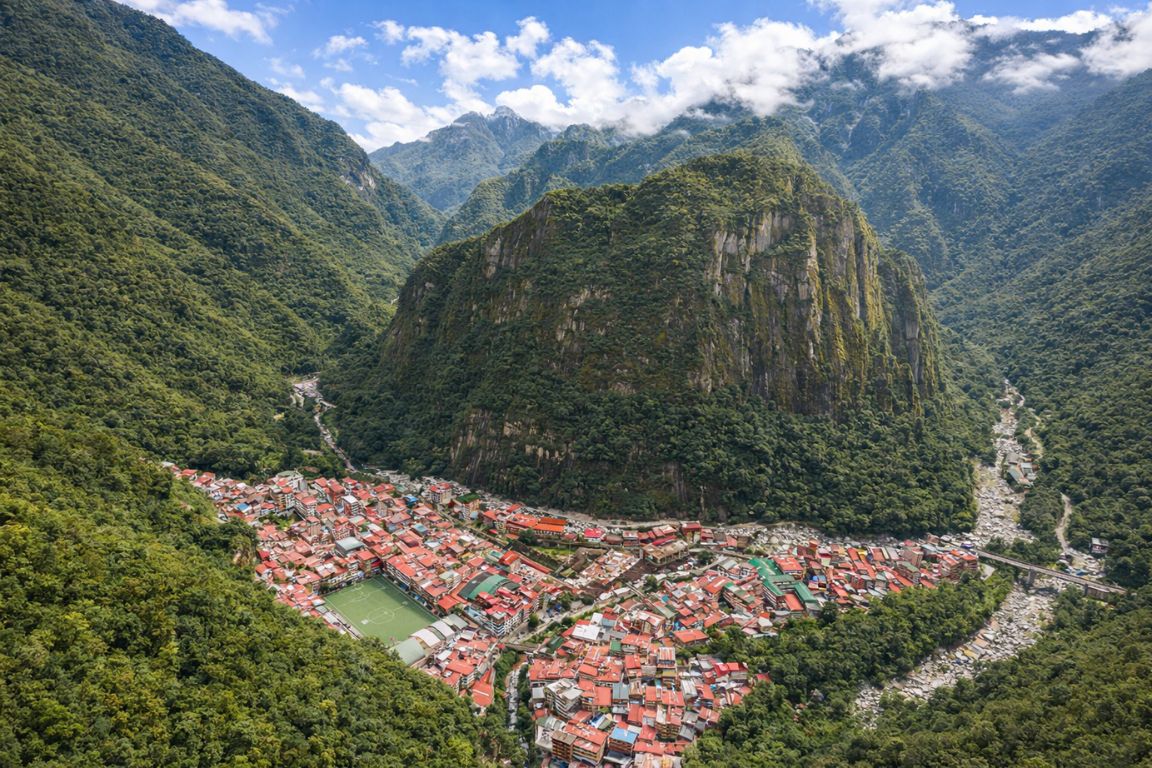
There is no road to the site. Every traveler reaches Machu Picchu by arriving first at Aguas Calientes (the town at the base of the mountain), then taking a shuttle bus or hiking 1.5 hours uphill to the entrance gate. Getting to Aguas Calientes from Cusco is done by train, or by a long overland route through Santa Teresa that most travelers shouldn’t attempt without good reason.
That single fact shapes everything. You cannot drive to Machu Picchu. You cannot take a direct bus from Cusco. The town of Aguas Calientes sits at the end of a single-track railway in a valley that has no road access, by design. The Peruvian government has kept it that way to protect the surrounding cloud forest and manage visitor flow. The result is a journey that feels genuinely remote, which is part of what makes arriving feel like an event.
In practical terms, the standard route goes like this: taxi or shared shuttle from Cusco to Ollantaytambo (1.5–2 hours by road through the Sacred Valley), then a scenic train from Ollantaytambo to Aguas Calientes (about 1.5 hours), then the Consettur shuttle bus from the town up to the site entrance (25–30 minutes). That puts you at the gate roughly 4 hours after leaving Cusco. It is efficient, comfortable, and the train portion is one of the more genuinely beautiful short rail journeys in South America.
The other ways to get there exist, and they serve specific purposes. The budget route via Hidroeléctrica cuts the train fare by substituting a long drive and a 10-kilometer walk along the tracks. The Inca Trail is the trekking pilgrimage, arriving at dawn through the Sun Gate (book tour here) after four days in the mountains. We’ll cover each route honestly below.
Need help with the logistics? Check out our breakdown on how to visit Machu Picchu guided tours – from permits to transportation to choosing the right operator.
Everything above assumes you’re already in Cusco. A lot of travelers aren’t, not at the start of the trip. If you’re coming up from Lima overland rather than flying, Peru Hop (check prices here) runs a hop-on hop-off bus network that covers that other leg: Lima, Paracas, Huacachina, Nazca, Arequipa, Puno, then Cusco, with hotel pickup at every stop and a bilingual host riding the bus. It ends in Cusco, not at the citadel, so once you arrive you’re back to the train-and-bus route described on this page. We’ve laid out the whole overland leg in Lima to Cusco overland.
How Does the Train Route Work (Cusco/Ollantaytambo to Aguas Calientes)?
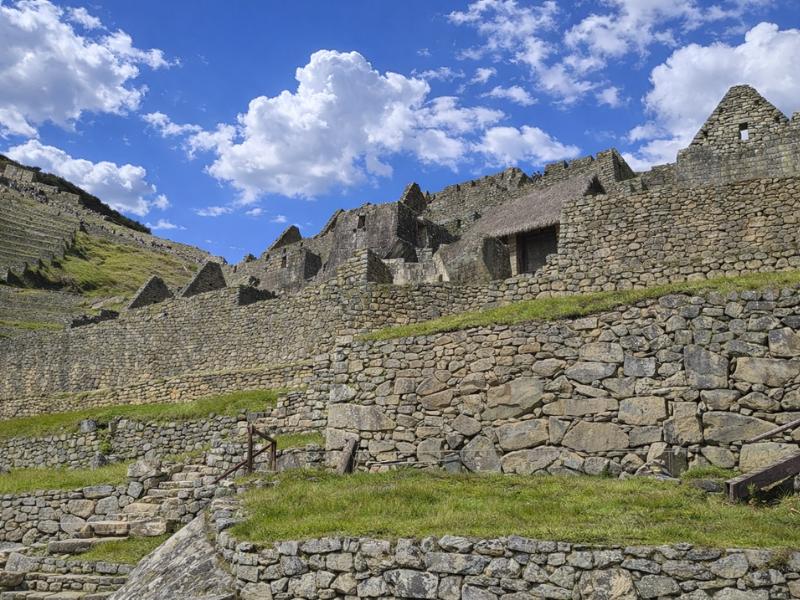
Trains to Aguas Calientes depart from four stations: San Pedro (central Cusco), Wanchaq (Cusco district), Poroy (30 min outside Cusco), and Ollantaytambo (Sacred Valley, 1.5–2 hrs from Cusco by road). Ollantaytambo is the best starting point for most travelers because it cuts the train ride to 1.5 hours, offers earlier arrival times, and the Ollantaytambo ruins right at the station are worth the trip on their own.
Most people sleep in Cusco and wonder whether to go to Ollantaytambo first or take the direct train. Here is the honest breakdown. The direct Cusco-to-Aguas Calientes journey via Poroy takes 3.5–4 hours on the train. It is available, but Poroy is 30 minutes from the city center, which adds time at both ends. The Wanchaq station runs a bimodal service: a bus transfer to Ollantaytambo followed by the train, available January through April when other Cusco departures are affected by seasonal rail conditions. Either way, you’re spending more transit time than the Ollantaytambo-only option.
The optimal setup for most travelers: drive or take a shared shuttle from Cusco to Ollantaytambo the afternoon before. The road passes through Urubamba and Pisac, the core of the Sacred Valley. You can stop at ruins along the way, have dinner in Ollantaytambo, sleep there, and board a 6:00–7:00 AM train that gets you to Aguas Calientes by 8:00–9:00 AM. That timing works perfectly for a late-morning Machu Picchu entry.
Train timing to Aguas Calientes is not flexible on your end. The trains run on fixed schedules, both companies publish their timetables on their websites, and departures sell out weeks ahead in peak season. You need to book the train that arrives in Aguas Calientes at least 90 minutes before your Machu Picchu entry slot, accounting for the bus line and walk to the gate. Book entry ticket first. Then match your train to that time. Getting those two things out of sync is one of the most common transport problems we see.
Coordinating trains, entry times, and hotels in a single booking is what the 2-day Sacred Valley and train tour is set up to do. A guided day trip from Cusco books the train against your entry slot so the two stay aligned.
We’ve created a detailed Machu Picchu train guide because the different services, routes, and pricing tiers make it way more confusing than it needs to be.
Which Train Company Should You Choose: PeruRail or Inca Rail?
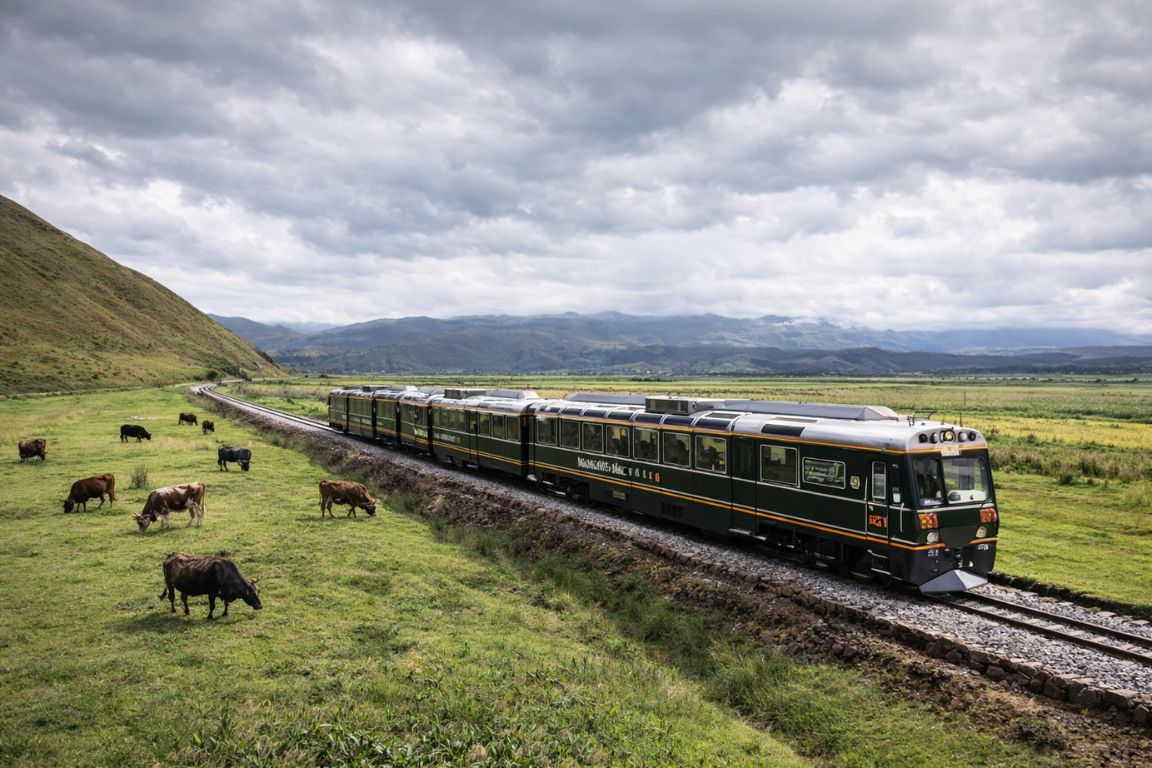
PeruRail has more daily departures, more route options, and runs the only luxury train (Hiram Bingham). Inca Rail has fewer departures but newer carriages, and their premium services include an open-air observatory car that many travelers prefer for photography. For budget travelers, both companies’ entry-level trains (PeruRail Expedition and Inca Rail Voyager) offer the same essential experience at similar prices. The difference comes down to specific departure times, not quality.
Both companies run year-round, both require passport for boarding, and both have the same strict baggage limit: one bag per passenger, maximum 8 kg, total linear dimensions under 118 cm (Inca Rail) or roughly similar for PeruRail. This matters more than most blogs acknowledge. You cannot bring a full-size rolling suitcase. Both companies offer free luggage storage at Ollantaytambo and Cusco stations, and every hotel in the Sacred Valley stores bags without charge. Pack a small daypack for the Machu Picchu segment. Leave the large bag behind.
The service tiers worth knowing:
PeruRail: The Expedition is the affordable workhorse, Inca-inspired interior with panoramic windows and audio tour. The Vistadome adds larger windows and light snack service. The Vistadome Observatory adds an observation car with live music and cultural performances. The Hiram Bingham (Belmond) is a full-service luxury train with a gourmet dining experience and bar car, priced at $500–$600+ round trip. It is exceptional and worth it if that fits your budget.
Inca Rail: The Voyager is the entry-level option. The 360 adds an open-air observatory car and infotainment, plus a snack. The Prime includes a dining car with a curated regional menu and live Andean music. The First Class is the top tier with fine dining, wine pairings, and a bar-lounge car. Inca Rail‘s boutique feel and slightly smaller trains make for a quieter onboard experience.
One practical note about prices: several sources suggest Ollantaytambo departures are cheaper than Cusco departures for the same class of service, which historically was true. In 2026 both companies have adjusted pricing and this gap has narrowed. Compare current fares on both official sites (perurail.com and incarail.com) before booking, and factor in that you’ll pay separately to get yourself from Cusco to Ollantaytambo if you don’t start there.
Not sure which train company to book? Check out our breakdown with PeruRail vs IncaRail compared in Machu Picchu guided tours – the differences are bigger than just price.
PeruRail vs Inca Rail at a Glance (2026)
| Feature | PeruRail | Inca Rail |
|---|---|---|
| Entry-level service | Expedition (~$60–$95 one way) | Voyager (~$60–$95 one way) |
| Mid-range service | Vistadome / Vistadome Observatory | 360° (open-air observatory car) |
| Top-tier service | Hiram Bingham by Belmond ($500–$600+ RT) | First Class (fine dining, bar lounge) |
| Departure stations | Poroy, San Pedro, Wanchaq, Ollantaytambo | Ollantaytambo, bimodal from Cusco (Av. El Sol) |
| Direct from Cusco | Yes (Poroy/Wanchaq, some services) | Bimodal only (bus + train) |
| Baggage limit | 8 kg / 100 cm (backpack); 8–12 kg carry-on | 8 kg / 118 linear cm |
| Free luggage storage | Yes, at Ollantaytambo, Cusco stations | Yes, at Ollantaytambo, Cusco offices |
| Book at | perurail.com | incarail.com |
Prices verified February 20, 2026. Fares vary by date, class, and availability. Always check official sites for current pricing.
What Happens After the Train: Bus, Walk, or Something Else?
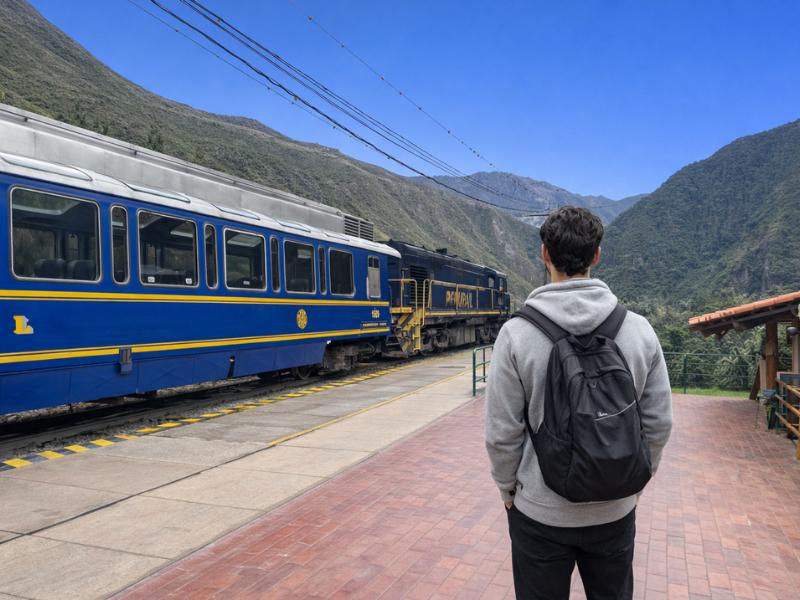
After arriving in Aguas Calientes, you have two options to reach the Machu Picchu entrance gate: the Consettur shuttle bus (25–30 minutes, $23 one-way or $35 round-trip as of 2026), or the uphill hike (1.5–2 hours, about 1,700 stone steps through cloud forest). Most travelers take the bus up and walk down, or take the bus both ways. The hike up is steep and hot. The hike down is steep and hard on the knees.
Consettur is the only company authorized to run this route. Buses depart from Avenida Hermanos Ayar in Aguas Calientes, a short walk from the train station. The first bus leaves at 5:30 AM. Frequency is every 10 minutes during peak morning hours. No assigned departure times, you just queue and board. Return buses from the site run until all passengers are transported, with the last uphill departure at 4:00 PM and last downhill bus leaving around 5:30 PM.
In high season, lines for the first buses form before 4:30 AM. If your entry slot is 6:00 AM, you need to be in that line by 5:00 AM at the latest. Not 5:25 AM. The walk from your hotel to the bus queue, the queue itself, the 30-minute ride, and the walk from the bus drop-off to the ticket gate all take time, and arriving two minutes after your entry window starts costs you that entry window. There is a 30-minute tolerance buffer as of 2024, but relying on that is not a strategy.
The hike up is a real option for the right traveler. It follows a path alongside the zigzagging bus road, through dense vegetation. The ascent takes most people 1.5 hours at a moderate pace, and it is genuinely beautiful once you get past the first sweaty 20 minutes. The main practical advantage: you skip the bus queue entirely. The main disadvantage: it’s taxing, especially at altitude, and you’ll arrive at the gate already tired before a 2.5-hour circuit. We see it work well for younger travelers staying overnight and doing a relaxed early-morning hike. We see it work poorly for first-timers doing a day trip who didn’t sleep much and are already altitude-affected.
Can You Drive to Machu Picchu?
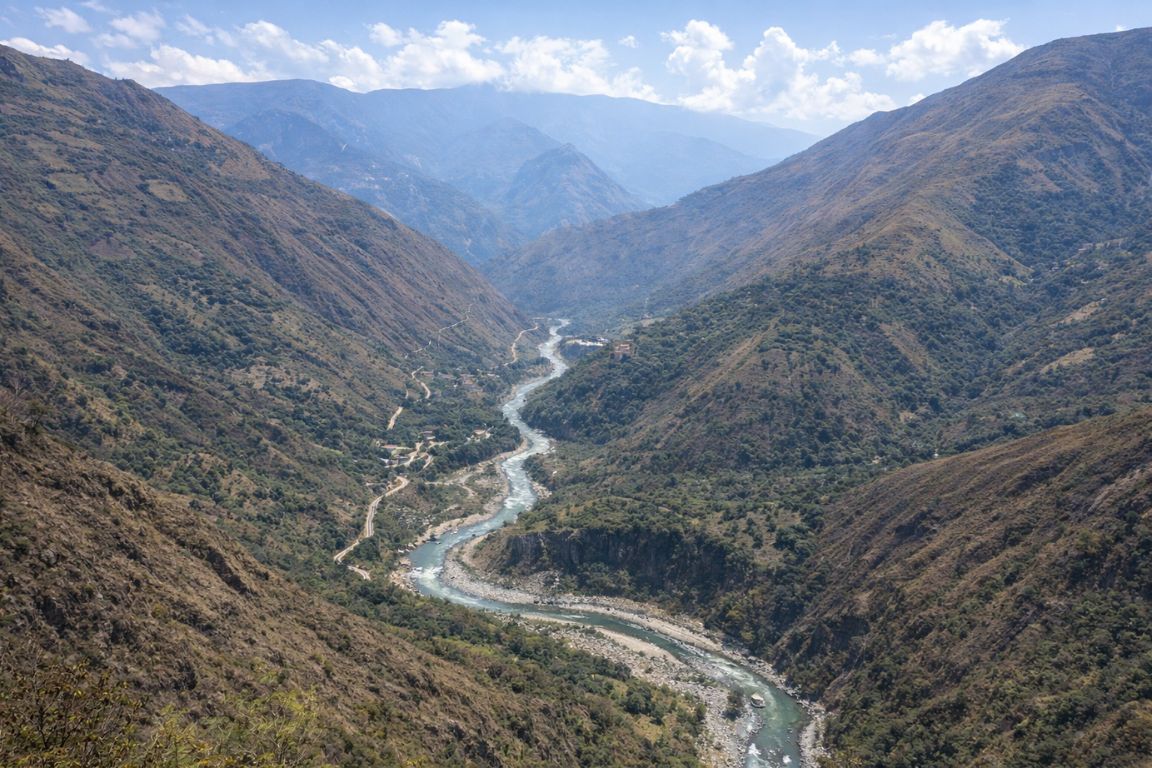
No, not to the site itself. There is no road that connects to Machu Picchu or Aguas Calientes. You can drive to Ollantaytambo (2 hours from Cusco by road) and park at the Inca Rail station free of charge, then take the train. You can also drive to Santa Teresa via the Hidroeléctrica route (6–7 hours from Cusco by road), which is the budget alternative. But the last 10 km to Aguas Calientes is always on foot or by train.
Driving to Ollantaytambo is a viable choice for travelers renting a car in the Sacred Valley. The station has a free parking lot managed by Inca Rail. Inca Rail’s office on Calle Ferrocarril is 30 meters from the station. PeruRail also uses Ollantaytambo. You park, store your large bag at the station, and board your train. On return, the car is waiting. This is actually a useful setup if you’re combining Machu Picchu with a self-drive Sacred Valley itinerary and don’t want to deal with shared shuttles.
Driving to the Hidroeléctrica station via the Santa Teresa route is the budget traveler’s option and worth explaining honestly. The road goes from Cusco through Santa María and Santa Teresa, eventually reaching the Hidroeléctrica hydroelectric station. From there, the railway track runs alongside the Urubamba River for about 10 km to Aguas Calientes. There is no road beyond Hidroeléctrica. That 10 km is a flat walk, mostly on the trackside path, taking 2–3 hours depending on pace.
The total journey Cusco to Aguas Calientes via this route: 6–7 hours by road plus 2–3 hours walking. Most travelers using this route take a minibus from Cusco to Santa Teresa (about 7 hours), then walk in, arrive in the evening, sleep in Aguas Calientes, and visit Machu Picchu the next day. Cost savings are real: the transport portion runs $30–$50 compared to $90–$200 for the train. But the route has genuine risks in the wet season. Landslides and road closures between November and April are not rare. If the route closes, you can be stranded without a good alternative, because you’re already far from Cusco and the train back from Aguas Calientes will be full.
What Does the Inca Trail Route Actually Involve?
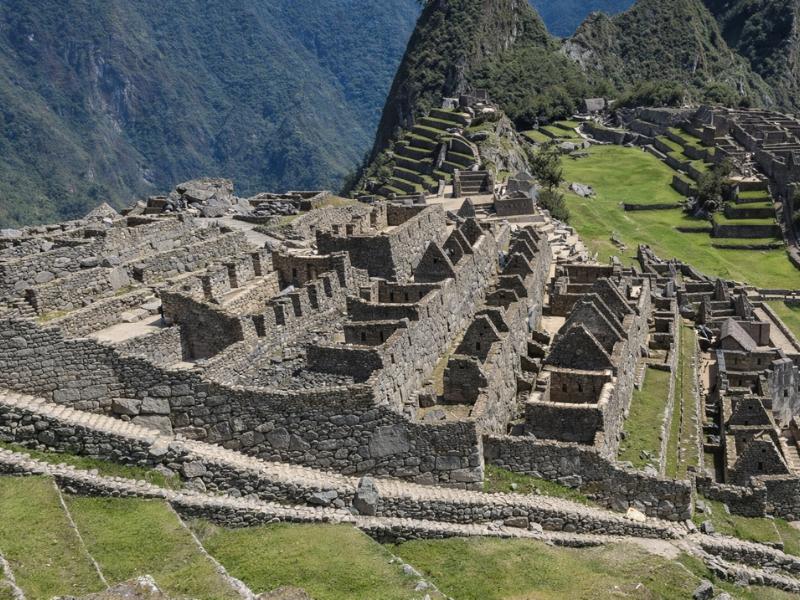
The Classic Inca Trail is a 43-kilometer, 4-day, 3-night trek through high-altitude mountain terrain, requiring a licensed tour operator, a government permit, and a booking made 6–8 months in advance. It closes every February for maintenance. The trail maxes at about 4,200 meters at Dead Woman’s Pass. You arrive at Machu Picchu on the morning of day four, descending through Intipunku (the Sun Gate) as the citadel appears below you in the valley. It is a different experience from arriving by bus.
Permits are limited to 500 people per day (including guides, porters, and cooks). The government allocates them through licensed operators, and the most popular months sell out within hours of the booking window opening, which typically happens in late October for the following year. If the Classic Trail is your goal, you need to act in October/November for any travel between March and September the following year.
The 2-day short Inca Trail (book tour here) starts at Km 104 and arrives at Machu Picchu through the Sun Gate, following a portion of the original route. It’s a good option if the 4-day trail doesn’t fit your schedule or fitness level, though you get less of the full Andean experience. Permits are also limited, though less competitive than the classic version.
For travelers who want the trekking experience but find the Inca Trail permits unavailable, the Salkantay Trek is the most popular alternative. It’s 4–5 days, passes through Salkantay Pass at about 4,600 meters, and arrives in Aguas Calientes where you board the standard shuttle to the site. No government permit required. The scenery is different from the Inca Trail, in some ways more dramatic, with glaciated peaks and abrupt altitude changes. Unlike the Inca Trail, Salkantay doesn’t close in February.
One thing we tell every trekking client: the trail delivers the journey, but Machu Picchu itself is the same site regardless of how you arrive. The magic of walking in through the Sun Gate is real and earned. But if you’re deciding between the Inca Trail and the train purely because you feel the train is somehow “less authentic,” drop that idea. The citadel doesn’t care how you got there.
Whether you want the train from Cusco or the 4-day Classic Inca Trail, both can be booked as one organized tour. The 2-day Sacred Valley and train tour is a straightforward way to go from Cusco to the gate in one booking.
We’ve broken down Machu Picchu by train vs Inca Trail so you can figure out which makes more sense for your trip without romanticizing the trek or dismissing it entirely.
What Are the Most Common Transport Mistakes Travelers Make?
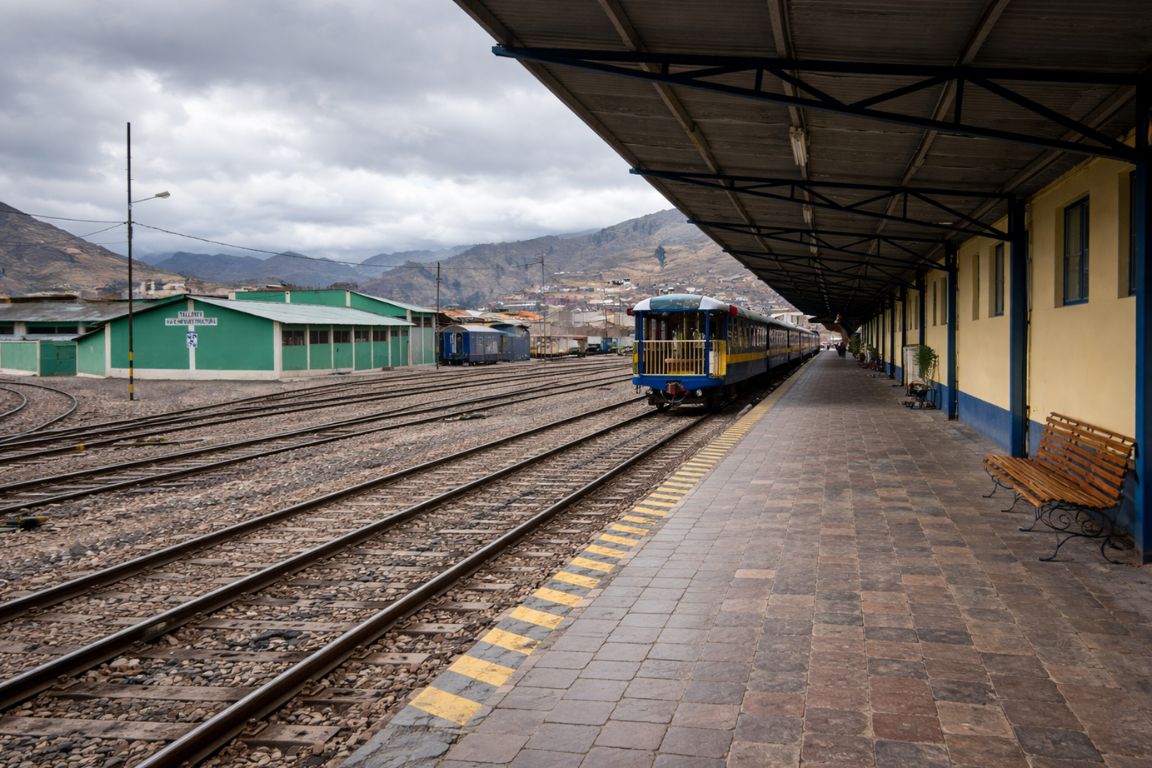
The five mistakes we see most: booking trains before entry tickets (meaning they can’t match train timing to their assigned entry hour), underestimating the bus queue time for early entry slots, trying to bring a full-size rolling suitcase on the train, booking return trains too close to their exit time from the site, and using the Hidroeléctrica route in the wet season without understanding the landslide risk.
Let’s go through each one properly.
Booking trains before entry tickets. The Machu Picchu entry system assigns an hourly time slot to your ticket. That slot determines which train you need. Book entry on tuboleto.cultura.pe first. Check the exact entry time displayed on your confirmed ticket. Then go to perurail.com or incarail.com and find a train that arrives in Aguas Calientes at least 90 minutes before that slot. This buffer covers the bus queue, the 30-minute bus ride, and the 10-minute walk from the bus drop to the entrance gate. Getting this sequence backwards creates a mismatch that is genuinely difficult to fix because entry tickets are non-changeable and trains in peak season are fully booked.
Not sure how the booking system works? I’ve broken down how to buy tickets in Machu Picchu guided tours so you don’t get stuck navigating the confusing official website.
Underestimating the morning bus queue. For a 6:00 AM entry, the queue starts forming before 4:30 AM. People who show up at 5:30 AM often miss their entry window. The practical fix: stay in Aguas Calientes the night before, set your alarm for 4:45 AM, and be at Avenida Hermanos Ayar by 5:00 AM. There are no shortcuts to that first bus.
Rolling luggage on the train. Both PeruRail and Inca Rail enforce a one-bag limit with strict size restrictions. A standard rolling suitcase won’t make it. Hotels in Cusco, Ollantaytambo, and Urubamba all offer free luggage storage while you’re at Machu Picchu. Pack one lightweight daypack or small duffel for the 1–2 nights in Aguas Calientes. Everything else stays behind.
Return trains booked too tight. From the moment you exit the Machu Picchu gate to arriving back at your Aguas Calientes hotel takes about 30–40 minutes (bus + walk). Then to the train station is another 5–10 minutes. Buffer that correctly. If you’re doing a mountain add-on hike (Huayna Picchu or Machu Picchu Mountain), you may exit later than planned because those hikes cannot be rushed. Book your return train at least 2.5–3 hours after your scheduled circuit exit time. The last trains back fill up fast; don’t leave yourself with only one option.
Hidroeléctrica in the wet season. The road to Santa Teresa passes through areas prone to landslides between November and April. Multiple travelers per season find themselves stranded mid-route when sections wash out or close. If you’re using this route, do it in dry season (May–October) and build in a spare day. In wet season, the train is worth the extra cost.
How Our Travelers Get to Machu Picchu: Route Breakdown
Based on client data from our 2024–2025 groups (1,600+ travelers guided since founding):
| Route Chosen | % of Clients | Avg. Satisfaction | Most Common Issue |
|---|---|---|---|
| Cusco to Ollantaytambo + train (Expedition or Voyager) | ~58% | 95% | None when planned; luggage issue when not |
| Ollantaytambo direct (overnight in Sacred Valley) | ~24% | 97% | Rare; this is the smoothest option |
| Classic Inca Trail (4 days) | ~11% | 96% | Altitude fatigue on arrival day; need buffer day for citadel |
| Hidroeléctrica budget route | ~5% | 84% | Road closures in wet season; underestimated total time |
| Premium train (Vistadome Observatory or First Class) | ~2% | 99% | None reported; high satisfaction across the board |
Data from Machu Picchu Guided Tours client feedback surveys, 2024–2025 season.
Frequently Asked Questions
Can you get to Machu Picchu without taking the train?
Yes, via the Hidroeléctrica route. From Cusco, take a minibus to Santa Teresa (6–7 hours), then walk 10 km along the railway tracks to Aguas Calientes (2–3 hours), then the Consettur bus to the site. It works, but takes a full day of travel and carries real risk in the wet season due to landslides. The train is faster, more reliable, and only modestly more expensive once you factor in the extra night and transport costs of the overland route. If you’re trying to keep the whole Peru trip overland rather than just the last stretch, that’s a separate question from how you get around Cusco: Peru Hop handles the Lima-to-Cusco portion by bus, not this final leg to Aguas Calientes.
How far in advance should I book the train to Machu Picchu?
Book entry tickets first on tuboleto.cultura.pe, then book trains immediately after on the same day. For peak season (June through early November), train tickets ideally should be booked 8–12 weeks ahead. Good departure times sell out fast. Book trains the same session as your entry ticket so the timing aligns correctly.
Should I take the train from Cusco or Ollantaytambo?
Ollantaytambo is almost always the better choice. The train ride is 1.5 hours instead of 3.5–4 hours, fares are often similar or lower, and sleeping in the Sacred Valley the night before means you arrive in Aguas Calientes earlier and more rested. Spend the afternoon before your Machu Picchu day exploring Ollantaytambo town and its Inca ruins. It’s a genuinely good stop on its own.
Is the walk from Aguas Calientes to Machu Picchu worth it?
For some travelers, yes. The uphill hike takes 1.5–2 hours and follows a stone path through cloud forest. It’s steep but beautiful, and you skip the bus queue entirely. It makes most sense for travelers who are physically comfortable at altitude, staying overnight in Aguas Calientes (so no rush), and have an entry slot of 7 AM or later. For day-trippers trying to make a 6 AM slot, the bus is the practical choice.
What luggage can I bring on the train to Machu Picchu?
One bag per person, maximum 8 kg, within dimension limits (approximately carry-on size, not a full rolling suitcase). Both PeruRail and Inca Rail provide free luggage storage at Ollantaytambo and their Cusco offices. Every hotel in Cusco and the Sacred Valley will store your large bags while you’re at Machu Picchu. Bring only a small daypack to Aguas Calientes.
Is the Inca Trail worth the extra cost and planning?
For the right traveler, absolutely. Arriving at Machu Picchu through Intipunku after four days of high-altitude trekking is a completely different experience from stepping off a bus. It requires good fitness, tolerance for camping, and advance planning of 6+ months. If that sounds right for you, it’s worth every bit of it. If you’re hesitant about any part of it, the train is not a lesser choice. The citadel is the same.
Ready to Plan Your Route?
Getting the transport sequence right (entry tickets, trains, buses, hotels) is simpler on a 2-day tour that books those pieces together. Diego and the team have done it over 1,600 times. A private full-day tour by train puts the route from Cusco to the gate in a single booking.
Written by Diego Alejandro Ramirez
Peruvian tour guide since 2009 · Founder, Machu Picchu Guided Tours
Diego has guided over 1,600 travelers through Machu Picchu and the Sacred Valley since founding the agency.
Choose The Complete Route From Cusco
Check your date before arranging the rest. We may earn commission through this booking link.