PeruRail vs IncaRail Compared
PeruRail vs Inca Rail? More departures and true luxury with Hiram Bingham, or newer trains and better mid-range in the 360°—here’s how to choose.
A package may select the rail operator for you. If the train brand is the reason for booking, use the named-service options.
PeruRail has more departures, more station options, and the only true first-class luxury train (Hiram Bingham by Belmond). Inca Rail has newer rolling stock, a genuinely better mid-range option in the 360°, and a more intimate onboard feel at every tier. For most independent travelers, the choice comes down to timing: if you need a specific departure window, PeruRail is more likely to have it. If timing is flexible, Inca Rail is worth serious consideration, especially the 360° or Prime. At the economy end, they are interchangeable. At the luxury end, the Hiram Bingham is in a category of its own.
At a Glance: PeruRail vs Inca Rail (2026)
| Category | PeruRail | Inca Rail |
|---|---|---|
| Founded | 1999 | 2009 |
| Departure stations | Ollantaytambo, Poroy, San Pedro, Wanchaq, Urubamba | Ollantaytambo; bimodal from Av. El Sol 843, Cusco |
| Daily departures (Ollantaytambo) | 6–8 per day (peak season) | 3–5 per day (peak season) |
| Economy class | Expedition (~$40–$48 one-way) | Voyager (~$38–$45 one-way) |
| Mid-range class | Vistadome / Vistadome Observatory (~$70–$90 one-way) | 360° (~$70–$90 one-way) |
| Premium class | Hiram Bingham (~$250–$300+ one-way) | Prime / First Class (~$130–$250 one-way) |
| Baggage limit | 8 kg backpack / up to 12 kg carry-on | 8 kg / 118 linear cm |
| Change deadline | 24 hours before departure | 24–15 days depending on fare class |
| Bimodal from Cusco? | Yes (all departures Jan–Apr; selected year-round) | Yes (year-round from Av. El Sol 843) |
| Book at | perurail.com | incarail.com |
Prices verified February 20, 2026 and represent approximate one-way fares from Ollantaytambo. Fares shift by date, season, and availability. Always confirm on official sites before booking.
What Is the Core Difference Between PeruRail and Inca Rail?
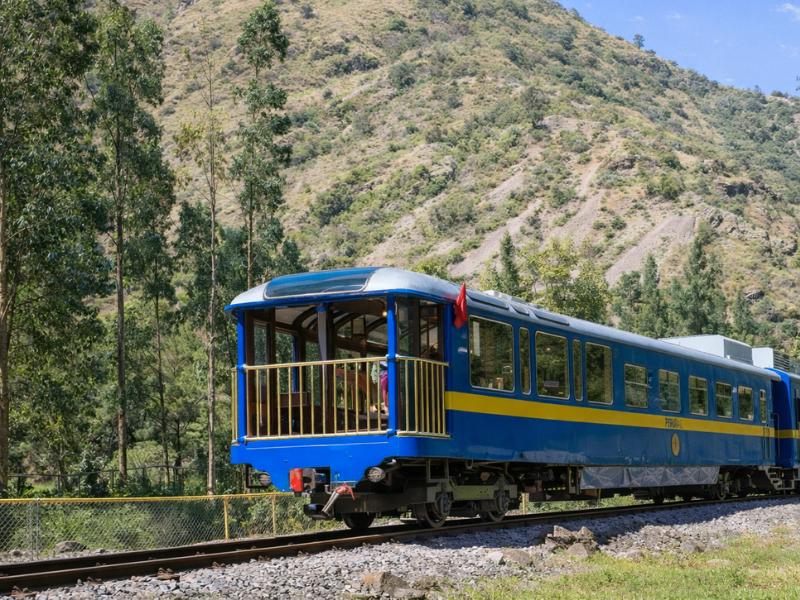
PeruRail is the established operator that has run the route since 1999, has significantly more daily departures, and controls the Hiram Bingham luxury service through its Belmond partnership. Inca Rail launched in 2009 with newer trains, fewer departures, and a focus on mid-range and boutique luxury travelers. Both are safe, reliable, and used by hundreds of thousands of people per year. The meaningful differences are in schedule flexibility, specific train experiences, and how each handles bookings.
The simplest way to think about it: PeruRail (book tour here) is the incumbent. Decades of infrastructure, the widest route network, more daily slots, and the backing of Belmond for its luxury tier. Inca Rail is the challenger. Newer carriages, a more intimate atmosphere on board, competitive pricing, and a particular strength in the 360-degree panoramic and premium dining categories. Neither company is dramatically better than the other for most travelers. The gap between them is real but not large.
What matters in practice is usually one of three things: whether a particular departure time is available on the day you need it, which specific train experience you’re buying, and whether the Hiram Bingham is your target (in which case it’s PeruRail by default). Everything else is close enough that either company would serve most travelers well.
One historical note worth knowing: PeruRail‘s dominant market position comes from being the concessionaire of ENAFER, the former state rail company, when Peru privatized rail in 1999. That origin explains both its advantages (established infrastructure, more departures, more stations) and the complaints you occasionally see in traveler forums about a certain complacency in customer service. Inca Rail entered the market hungry and has maintained a reputation for attentive service at the counter and on board. Both operators book directly through their own websites, both accept international credit cards, and both require your original passport to board.
Need help choosing between train services? Our Machu Picchu train guide compares all the options so you know what you’re paying for and when to splurge versus when to save.
How Do the Schedules and Departure Options Compare?
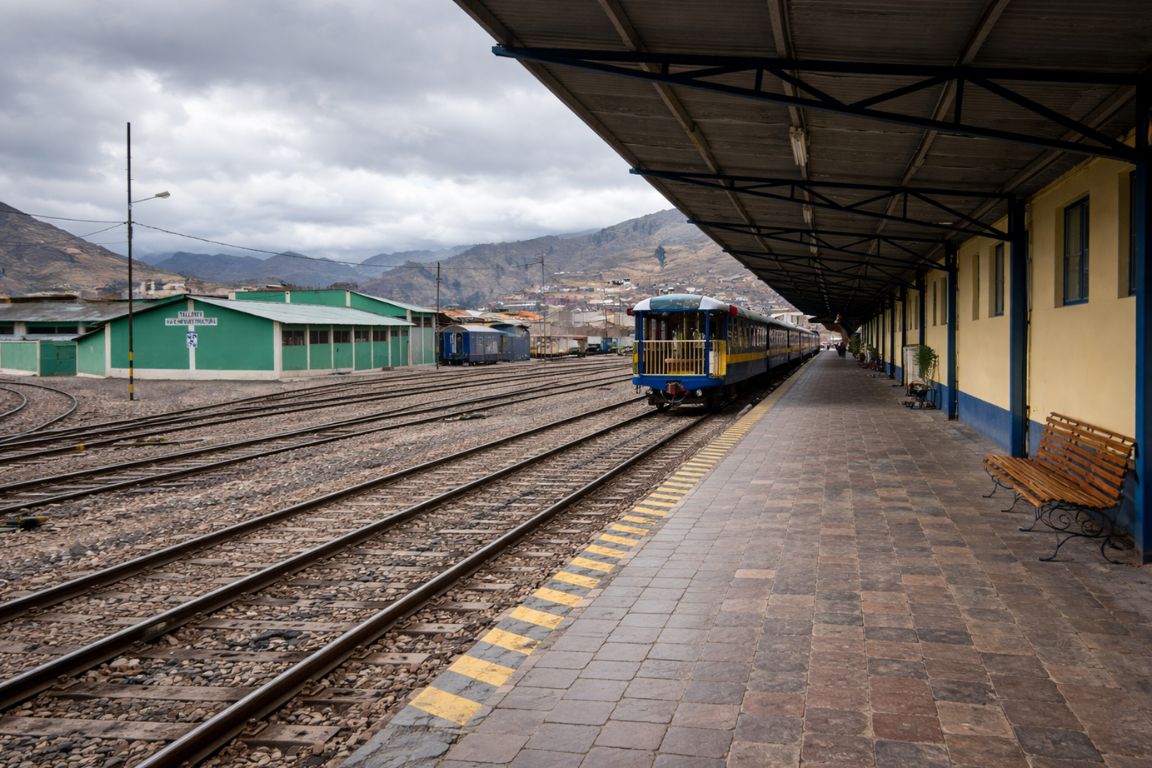
PeruRail runs significantly more daily departures and serves more stations. From Ollantaytambo in peak season, PeruRail typically operates 6–8 trains per day to Aguas Calientes; Inca Rail runs 3–5. This difference is most consequential if your entry slot is in an unusual time window. For standard morning departures targeting 8 AM–11 AM entry slots, both companies usually have suitable options. PeruRail‘s edge shows when you need 6 AM or 12:30 PM or a very specific time that falls outside the common peak windows.
The station picture is also meaningfully different. PeruRail serves Ollantaytambo, Poroy (about 25 minutes outside Cusco, open May–December), San Pedro (central Cusco, limited services), Wanchaq (Cusco, bimodal only), and Urubamba. Inca Rail primarily runs from Ollantaytambo and offers bimodal service from its Cusco office on Av. El Sol 843 (Plaza de Armas area) year-round.
The bimodal comparison is actually where Inca Rail has a practical edge for Cusco-based travelers who don’t want to pre-travel to Ollantaytambo. PeruRail‘s bimodal from Cusco runs from Wanchaq station, which requires getting to a district station. Inca Rail‘s bimodal picks up near the Plaza de Armas, which is more central and easier to reach from most Cusco hotels. This is a minor difference that affects day-trippers more than anyone planning an overnight in Ollantaytambo.
Seasonal variations matter too. January through April, the Poroy – Aguas Calientes track section is closed for maintenance and landslide prevention. During this window, PeruRail runs all Cusco departures as bimodal (bus to Ollantaytambo, train from there). Inca Rail also switches to bimodal for its Cusco-origin services. In both cases the train segment is the same; it’s just the first leg that changes. If you’re traveling in the wet season, confirm which station your train actually departs from when you receive your booking confirmation.
One scheduling detail specific to Inca Rail: the First Class train operates Monday to Saturday only and is suspended during Holy Week, Inti Raymi (late June), July 1 through October 31, and the year-end holidays (December 27–31). If your dates overlap with those periods and First Class is your target, you’ll need to check the Inca Rail calendar carefully before booking.
Not sure about the journey? I’ve broken down how to get to Machu Picchu from Cusco with all your transportation options – train, trek, or bus combinations.
How Do the Train Classes Stack Up Side by Side?
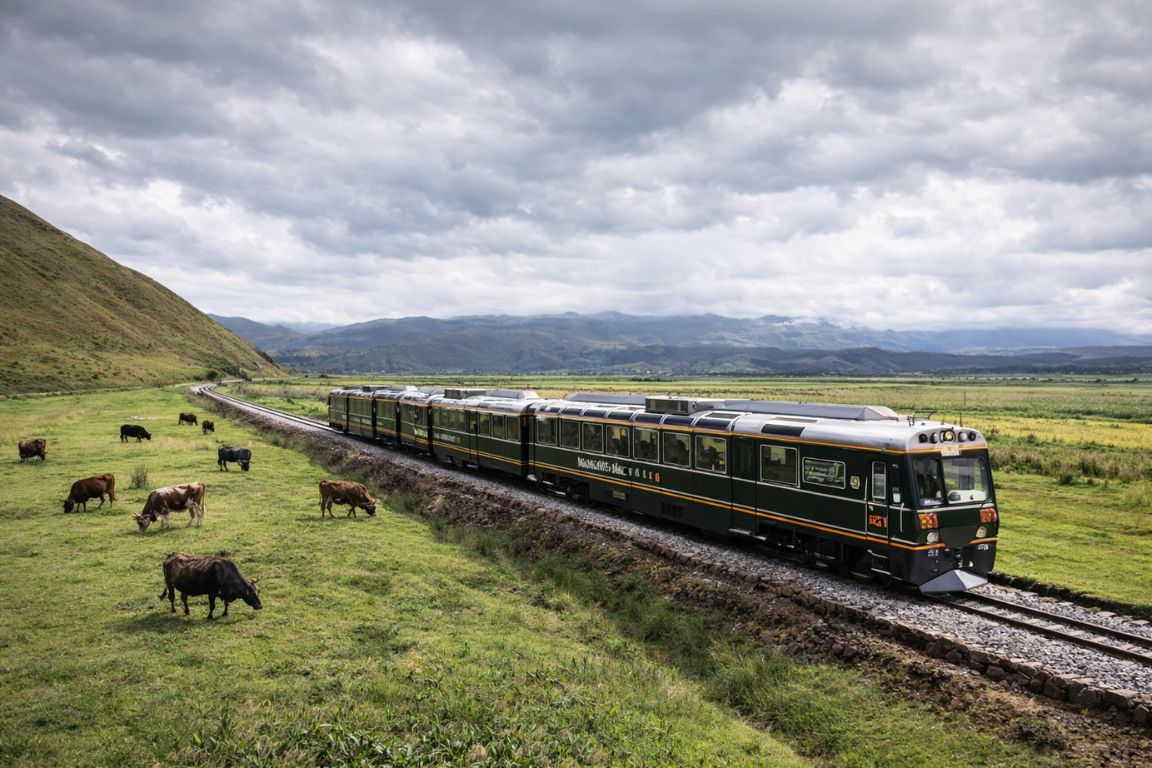
At the economy tier, they’re close to equivalent with minor differences in seat configuration and snack service. At mid-range, Inca Rail‘s 360° has a slight edge over the standard Vistadome but trades blows with the Vistadome Observatory depending on what you value. At the luxury end, the Hiram Bingham is a different category entirely, with no Inca Rail equivalent at the same price or service level. Inca Rail’s Prime and First Class are strong mid-premium options that compete on value rather than absolute luxury.
Going tier by tier:
Economy: Expedition vs Voyager. Both have large panoramic windows, assigned seating, and basic snack or beverage service. The Expedition has Inca-inspired interior design and a slightly more airline-style seat layout with passengers facing forward. The Voyager has a more relaxed seating arrangement with tables between seat pairs (some travelers prefer this for groups traveling together, some find knee contact awkward on a full train). Both are comfortable for the 1.5-hour Ollantaytambo journey. For a solo traveler or couple, either works fine. At the economy tier, book whichever has the departure time you need.
Mid-range: Vistadome vs 360°. The standard Vistadome has large windows on the sides and ceiling, which is already a significant upgrade over economy. The 360° from Inca Rail (book tour here) adds an open-air observatory section and has newer rolling stock with a more modern interior. For photographers, the 360° is the better choice: you can stand in the observatory car and shoot without glass reflections. The Vistadome Observatory from PeruRail closes the gap by adding its own observatory car and live Andean music. At this tier the two companies have genuinely matched each other, and your choice should come down to departure timing and price on the specific date you’re traveling.
Premium: Hiram Bingham vs Prime and First Class. This is where the companies diverge sharply. The Hiram Bingham by Belmond runs from Poroy and includes: gourmet brunch outbound, four-course dinner on return, bar car, live music, Belmond-level service, Sanctuary Lodge afternoon tea on the return, and a private bus directly to the Machu Picchu gate (no Consettur queue). It carries very few passengers per departure. There is nothing in the Inca Rail lineup that directly competes. The Inca Rail Prime and First Class are genuinely good premium trains with dining cars, wine ceremonies, and personalized service, and they deliver a meaningful premium experience at a fraction of the Hiram Bingham price. If the Hiram Bingham is out of reach, Inca Rail‘s premium options are worth serious consideration over just upgrading within PeruRail.
Wondering if you should hike in or ride the rails? Check out our breakdown of Machu Picchu by train vs Inca Trail – they’re completely different experiences with different tradeoffs.
Train Class Head-to-Head (2026)
| Tier | PeruRail Option | Inca Rail Option | Verdict |
|---|---|---|---|
| Economy | Expedition ~$40–$48 OW Forward-facing seats, panoramic windows, light snack |
Voyager ~$38–$45 OW Table-paired seats, large windows, beverage included |
Tie. Book whichever has your departure time. |
| Mid-range | Vistadome Observatory ~$75–$90 OW Observatory car, open-air balcony, live Andean music, snack |
360° ~$70–$90 OW Open-air observatory deck, panoramic all-direction windows, snack |
Slight Inca Rail edge for photographers; Vistadome Observatory better for onboard entertainment. |
| Upper mid | Vistadome ~$55–$70 OW Large side and ceiling windows, cultural show on return, snack |
Prime ~$130–$180 OW Dining car, 3-course regional menu, live music, VIP transfer included |
Different tiers. Prime is significantly more expensive but adds real dining. |
| Luxury | Hiram Bingham (Belmond) ~$250–$300+ OW Gourmet meals, bar car, private bus to gate, Sanctuary Lodge tea on return |
First Class ~$180–$250 OW Fine dining, bar-lounge, wine ceremony, open-air balcony |
PeruRail wins. Hiram Bingham private bus to gate alone is worth significant premium for many travelers. |
OW = one-way from Ollantaytambo. Prices are approximate, verified February 20, 2026. Always confirm current fares on official operator sites before booking.
Which Company Has Better Booking Experience and Flexibility?
PeruRail allows changes up to 24 hours before departure, through an online form, with no fare-class distinction. Inca Rail‘s flexibility depends on which fare class you purchased: Light fares allow changes only up to 24 hours out; Plus, Flex Plus, and All-Inclusive fares allow changes up to 15 days before departure. For travelers who want real flexibility to adjust plans, Inca Rail‘s premium fare classes are significantly more accommodating. For travelers who just want a simple booking with a standard 24-hour window, both companies are equivalent.
The booking experience online is functional on both sites. PeruRail‘s website is slightly more polished and has more English-language support, which matters if you’re booking independently without Spanish. Inca Rail’s site works well but can occasionally run slow or time out during high-demand periods. Both accept Visa and Mastercard. Both send confirmation emails with QR codes that can be used for boarding without a printed ticket.
One important distinction: Inca Rail‘s promotional and discount fares carry no change or refund rights at all. The standard terms and conditions make this explicit. When you see a discounted fare on their site, read the conditions before purchasing. PeruRail similarly restricts its promotional fares, though the standard economy fares retain the 24-hour change window. Neither company will refund a no-show regardless of circumstances, and neither will allow changes after the 24-hour window closes.
For groups traveling together, both companies do automatic seat allocation at purchase. Inca Rail explicitly states you can contact their customer center to verify and adjust seating if you want to confirm adjacent seats for a group. PeruRail’s site allocates seats automatically as well and requests for changes go through their modification form. In practice, for groups of 2–4, the automatic allocation usually places you together. For larger groups, confirm at the time of booking.
One process difference worth knowing: PeruRail‘s modification form is entirely online and self-service. Inca Rail‘s refund process requires either an email to their direct passenger email or a visit to their office in Cusco. If you’re managing a change remotely from another country, PeruRail‘s online form is slightly simpler. If you’re already in Cusco, both are straightforward.
What Do Real Travelers Say About Each Company?

Most travelers who’ve used both companies describe the experience as comparable on the economy tier and meaningfully different on the mid-range and luxury tiers. The consistent Inca Rail positives: newer carriages, quieter atmosphere, slightly more attentive service on board, and the 360° observatory as a genuinely distinctive experience. The consistent PeruRail positives: more departure options, stronger infrastructure, and the Hiram Bingham as something travelers who’ve done it tend to consider once-in-a-lifetime.
One theme that comes up repeatedly in traveler accounts from platforms like TripAdvisor and travel forums: Inca Rail tends to run with fewer passengers per departure, which gives the journey a calmer, less crowded feel even when trains are technically full. PeruRail, as the higher-volume operator, has more peak-season trains that feel genuinely packed. This isn’t a reason to avoid PeruRail. The journeys are short, but if a quiet, spacious ride matters, Inca Rail‘s smaller capacity trains are the better call.
The Hiram Bingham generates its own category of reviews. Most people who book it describe it as transformative rather than just comfortable. The combination of being on a train with very few fellow passengers, being served a gourmet meal while cloud forest goes past the windows, and then stepping off in Aguas Calientes feeling genuinely unhurried is something that almost everyone says exceeded expectations. It is expensive and the price jump from First Class is steep, but the reviews consistently say it earns it.
On the customer service front, the occasional complaint about PeruRail is that its counter staff in high-demand periods can be brusque, reflecting the attitude of a near-monopoly operator. Inca Rail‘s counter staff at Ollantaytambo and in Cusco get notably more consistent praise for helpfulness and patience. This matters most if you have a problem that needs resolving in person. For smooth journeys with no complications, you’re unlikely to notice the difference.
Punctuality: both companies run on time the vast majority of the time. Disruptions do occur occasionally: rail maintenance, weather events, labor actions. Both companies manage these with similar levels of communication and rebooking support. Neither has a meaningfully better track record on punctuality than the other based on traveler reports over the past two years.
How Our Clients Split Between Operators (2024–2025)
Based on bookings from Machu Picchu Guided Tours clients over the 2024–2025 season:
| Operator + Class | % of Total Bookings | Most Common Reason Cited | Post-Trip Satisfaction |
|---|---|---|---|
| PeruRail Expedition | ~27% | “Needed an early morning departure that Inca Rail didn’t offer that day” | 90% |
| PeruRail Vistadome / Observatory | ~31% | “Wanted the cultural show on return; Vistadome Observatory specifically recommended” | 95% |
| Hiram Bingham | ~8% | “Special occasion / honeymoon / bucket list” | 99% |
| Inca Rail Voyager | ~14% | “Slightly cheaper; schedule worked; liked the table seating for our group” | 91% |
| Inca Rail 360° | ~13% | “Wanted the open-air car for photography; heard Inca Rail is quieter” | 96% |
| Inca Rail Prime / First Class | ~7% | “Wanted premium dining experience; Hiram Bingham was sold out / too expensive” | 97% |
Data from Machu Picchu Guided Tours client booking records and post-trip feedback, 2024–2025 season.
Which Is Better for Different Types of Travelers?

There is no single right answer, which is why most comparison articles frustrate people by hedging. Here is how we actually advise clients when they ask us directly.
Budget travelers: Check both operator sites for your specific date before deciding. At the economy tier the Voyager is often marginally cheaper than the Expedition on equivalent departure times. But PeruRail runs more departures, and the cheapest slots sell out first. Whoever has the lower price on the early-morning departure you need is the right answer. Don’t overthink it.
If you’re working with limited funds, here’s how to visit Machu Picchu guided tours on a budget so you can afford the trip without falling for every upsell.
Photographers and scenic-view seekers: Inca Rail 360°. The open-air observatory deck without glass between you and the landscape is a real advantage. The PeruRail Vistadome Observatory comes close but the 360° observatory car has slightly more space and freedom of movement. If you’re serious about shooting the cloud forest descent, book the 360° and position yourself in the observatory section before Ollantaytambo even leaves the station.
Cultural experience seekers: PeruRail Vistadome Observatory on the outbound; the standard Vistadome on the return works fine too because the cultural show (traditional music and dance, Andean snacks, alpaca fashion presentation) happens on the inbound direction toward Cusco. If you want the show specifically, book the return leg on Vistadome or Vistadome Observatory.
Couples on a special trip: Inca Rail First Class or PeruRail Vistadome Observatory. Both deliver atmosphere at similar prices. First Class has the more intimate, boutique feel and the wine ceremony. Vistadome Observatory has more theatrical entertainment. Honeymoon or anniversary travelers who want the full statement should seriously consider the Hiram Bingham even if budget is a stretch, because the reviews from that category of traveler are almost uniformly exceptional.
Families with children: PeruRail Expedition or Inca Rail Voyager. Children’s discounts apply at both (25% off for ages 3–11, free under 3 sharing a seat). The shorter Ollantaytambo departure works better for kids than a long Cusco bimodal. The economy trains are comfortable enough for a 1.5-hour ride and the panoramic windows keep children engaged. Don’t upgrade to premium trains with children unless the kids specifically want it; the quieter atmosphere of Inca Rail’s premium services will be disrupted anyway.
Not sure if your kids are ready for the elevation and walking? Our guide on visiting Machu Picchu guided tours with kids covers age recommendations, physical demands, and how to make it genuinely enjoyable.
Large groups (8+): PeruRail. More departures means more seat availability in adjacent rows or blocks. Group seating requests are more easily accommodated when there are 6–8 trains per day to choose from rather than 3–5. Contact both operators directly for group rates. Both offer volume discounts for 10+ passengers that aren’t visible in the standard online booking flow.
Day-trippers from Cusco who don’t want to pre-travel to Ollantaytambo: Inca Rail bimodal from Av. El Sol 843, Plaza de Armas. The pickup location near the Plaza de Armas is significantly more convenient than PeruRail‘s Wanchaq bimodal station. For a one-day trip where you’re staying in central Cusco and don’t want to manage pre-transport to a station, this is a meaningful practical advantage.
Which Company Should You Actually Book With?
Our recommendation for most independent travelers: go to both sites on the same day, search your specific departure dates, compare what’s actually available at the departure time you need, and book whichever has the right slot at the better price. If you’re at economy tier, the choice is essentially a coin flip. If you’re mid-range, consider Inca Rail 360° for photography trips and PeruRail Vistadome Observatory for entertainment. If you’re targeting luxury and the Hiram Bingham is available for your dates, book it. If it isn’t, Inca Rail First Class is a strong fallback.
The one scenario where we give a firm directional recommendation: if you’re doing a same-day trip from Cusco and want the simplest possible morning logistics, Inca Rail‘s bimodal from near Plaza de Armas wins on convenience. You walk out of your hotel, walk five minutes, board, and go. No taxi to Wanchaq, no pre-timing issues.
The one scenario where we give a firm recommendation the other way: if you need a specific time that Inca Rail doesn’t offer on your date, PeruRail will almost always have a departure within 30–60 minutes of your target. That schedule depth is the most practical reason to default to PeruRail when timing is tight.
One thing to resist: booking either company through a third-party travel aggregator that marks up the train component without adding any value. Both operators’ own websites have full availability, allow direct modifications, and offer the same or lower prices than most resellers. Book direct, keep your confirmation email, screenshot everything, and bring your original passport.
Frequently Asked Questions
Is PeruRail or Inca Rail more reliable?
Both are reliable. On-time performance is comparable across both operators based on traveler reports from 2024–2025. Disruptions affect both equally since they share the same physical rail corridor, and weather or maintenance issues that close a section close it for everyone. Neither company has a meaningfully better punctuality record.
Can I book Inca Rail from the PeruRail website or vice versa?
No. They are separate companies with separate booking systems. PeruRail tickets are purchased only on perurail.com. Inca Rail tickets are purchased only on incarail.com. Some authorized travel agencies can book both, but the official and most reliable route is to book directly on each company’s own website.
Do both operators require a passport to board?
Yes. Both PeruRail and Inca Rail require your original passport at the platform before boarding. Not a copy, not a photo on your phone. The passport number you provide at booking must match the passport you present at the station. Leave your passport in the hotel safe and you won’t be boarding the train that morning.
Which company has better customer service if something goes wrong?
Inca Rail consistently receives higher marks for counter staff and email responsiveness in traveler reviews. PeruRail’s online modification system is more self-service, which some travelers prefer and others find impersonal. For in-person problem-solving at the station, Inca Rail has the better reputation. For online self-service changes, PeruRail’s form is slightly simpler. If something goes wrong badly enough that you need escalation, both companies have the same response: visit the office in Cusco or Ollantaytambo in person.
Are there any exclusive deals or discounts worth knowing about?
Both companies run promotional fares periodically. PeruRail occasionally releases coupon codes (check their social media and promotional emails). Inca Rail runs early-season promotions, particularly for January through March travel, where 15–20% discounts appear on select services. Critical note: promotional fares on both operators are strictly non-changeable and non-refundable. If you book a promotion and your plans change, you’ve lost the fare.
Does Inca Rail have Wi-Fi on board?
Inca Rail has promoted Wi-Fi availability on its newer premium carriages, though signal reliability through a mountain valley and cloud forest is naturally limited. PeruRail offers station Wi-Fi at Poroy, Ollantaytambo, and Aguas Calientes. Don’t count on reliable connectivity during the journey on either operator. Download anything you need for the trip before boarding.
Ready to Book Your Machu Picchu Train?
Check both operators for your travel dates: perurail.com and incarail.com. If you want entry tickets, train timing, and a guide in one itinerary, start with the Machu Picchu day trip from Cusco.
Written by Diego Alejandro Ramirez
Peruvian tour guide since 2009 · Founder, Machu Picchu Guided Tours
Diego has arranged train travel for over 1,600 clients across both PeruRail and Inca Rail since founding the agency. The data and observations in this article reflect that direct experience.
Compare The Service You Will Actually Book
Check your date before arranging the rest. We may earn commission through this booking link.