Machu Picchu by Train vs Inca Trail
Train or Inca Trail? They’re not two routes to the same trip—they’re two completely different experiences. Here’s how to choose the one that fits you.
Compare a train day with a short trail and a camping trek. Count briefing and acclimatization time separately.
Quick Facts: Train vs Inca Trail 2026
| Total time commitment | 1 day (day trip) or 2 days with overnight | 4 days / 3 nights minimum |
| Typical cost (2026) | $200–$350 all-in (economy) | $700–$1,000 group package |
| Maximum altitude | ~3,400m / 11,150ft (Cusco) | 4,215m / 13,828ft (Dead Woman’s Pass) |
| Distance walked | 2–4 km inside Machu Picchu | 43 km / 26 miles total |
| Advance booking needed | 1–6 weeks (season dependent) | 6–8 months (peak); October release date |
| Fitness required | Minimal (some stairs at site) | Moderate-high; 6–8 hours hiking daily for 4 days |
| Operates in February | Yes | No (trail closed all month for maintenance) |
| Independent booking | Yes (perurail.com or incarail.com) | No: licensed operator required by law |
| Arrival at Machu Picchu | By bus from Aguas Calientes | On foot through the Sun Gate (Inti Punku) |
These numbers already show a lot. But let’s go deeper on each factor.
What Are the Two Main Ways to Reach Machu Picchu?
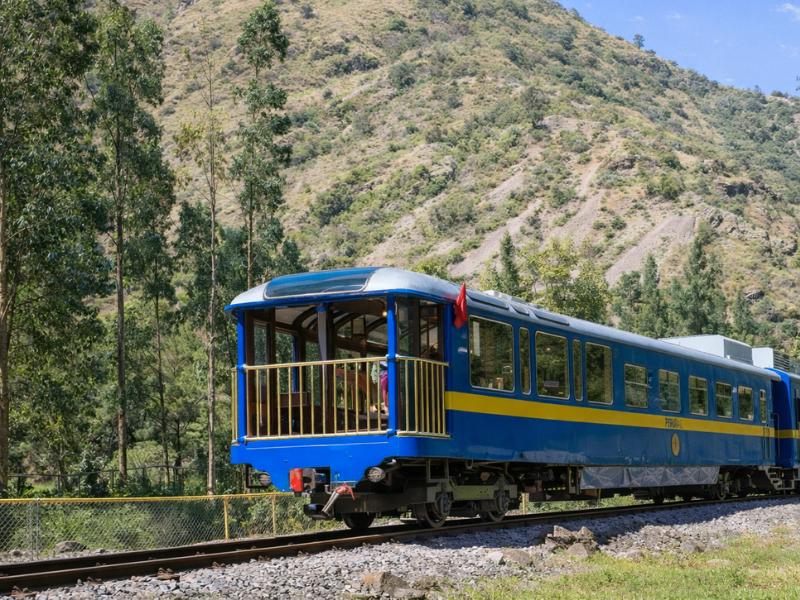
The train is the backbone of all Machu Picchu tourism. Even Inca Trail trekkers use the train: they ride it in to the trailhead, then take it back from Aguas Calientes on the final day. About 70% of all visitors arrive by rail, and the journey itself is legitimately scenic: the Urubamba River running alongside the track, the Sacred Valley widening and then narrowing, the vegetation thickening and changing as you drop from high plateau into cloud forest.
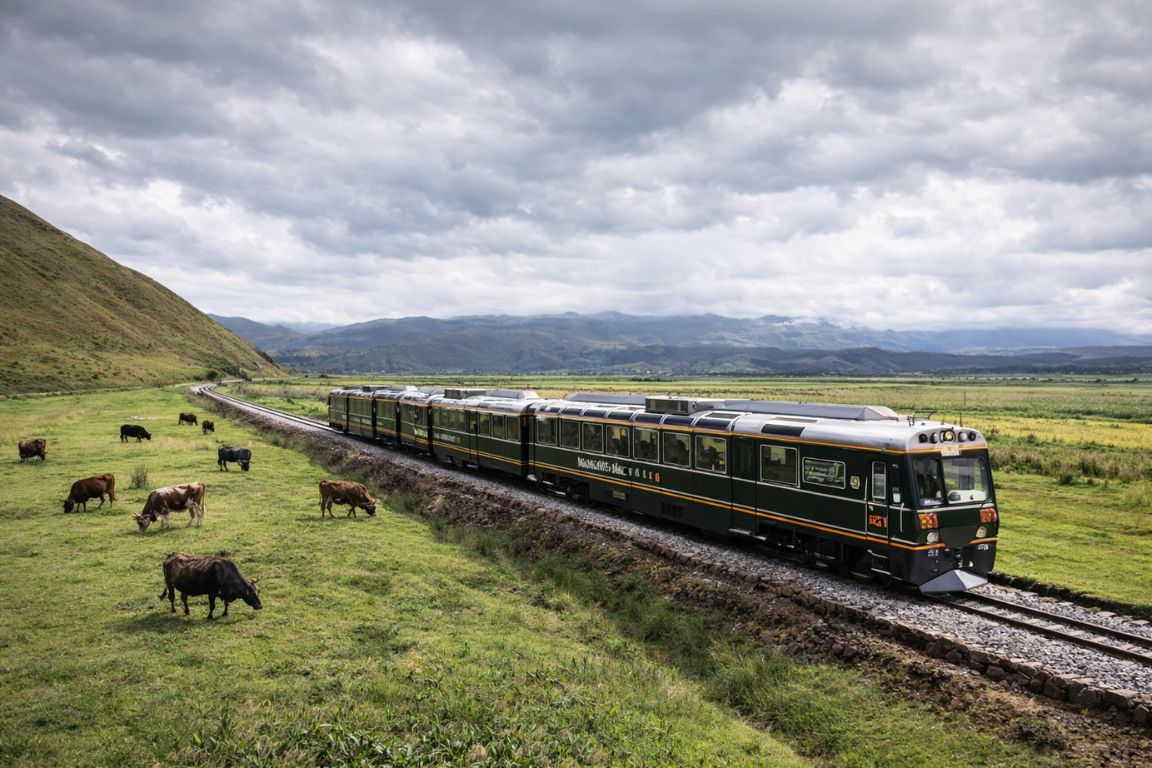
Two operators run the route: PeruRail (since 1999) (book tour here) and Inca Rail (since 2009) (book tour here). Trains leave primarily from Ollantaytambo station, 1.5 hours from Cusco, and arrive at Aguas Calientes in another 1.5 hours. From there, shuttle buses run every few minutes up the switchback road to the Machu Picchu gate. You can be standing inside the citadel about four hours after leaving your Cusco hotel.
The Inca Trail is a different proposition entirely. It starts at Km 82 of the train line: passengers on the train watch hikers begin crossing the footbridge into the protected sanctuary: and follows 43 km of original Inca stonework through three ecosystems and over three mountain passes before finishing at the Sun Gate above Machu Picchu. You walk in on the same path the Incas used. You see the citadel from the same vantage point they did. The entrance itself is earned.
There are also alternative treks: the Salkantay trek (5 days), Lares (4 days), and the Short Inca Trail (2 days from Km 104), which are the middle-ground options if the classic trail is not a fit.
Can’t decide between operators? I’ve got PeruRail vs IncaRail compared in Machu Picchu guided tours so you know which one actually gives you better value for the journey.
How Do the Physical Demands Compare?
This is where the comparison splits most sharply. The train asks almost nothing physical from you. You board, you ride, you walk around a ruin for a few hours. There are some stairs inside Machu Picchu but nothing approaching strenuous.
The Classic Inca Trail is a sustained physical challenge across multiple days. The distances per day are not enormous by trail standards: roughly 14 km on Day 1, 16 km on Day 2, 10 km on Day 3, and 5 km on Day 4. What makes it hard is the combination of altitude, the relentless stone staircases (estimated at 3,000 steps up and down), and doing it on consecutive days while camping. Day 2 is the hardest. You climb from about 3,000m to the Dead Woman’s Pass at 4,215m: nearly 1,200m of elevation gain in a single day, most of it steep. At that altitude, oxygen is roughly 60% of what it is at sea level. Even fit people move slowly.
Here is the thing most articles do not separate clearly enough: fitness and altitude response are two different variables.
Fitness can be trained. Twelve weeks of stair climbing, hill hiking with a loaded pack, and cardiovascular conditioning will get most reasonably healthy adults ready for the trail. Altitude response cannot be predicted or trained away. It is not correlated with age, fitness level, or prior hiking experience. A 25-year-old marathon runner can be hit hard by altitude sickness while a 60-year-old occasional hiker breezes through Dead Woman’s Pass. The only mitigation is arriving in Cusco 2-3 days before the trek starts, avoiding alcohol and heavy meals, and taking it slow on acclimatization walks.
Train travelers never exceed Cusco’s elevation of 3,400m. Machu Picchu itself sits at 2,430m: lower than Cusco. If altitude has affected you during your Cusco stay, the train is the right call. The trail sends you nearly 800m higher than Cusco before bringing you back down.
We’ve got altitude at Machu Picchu guided tours explained in detail because understanding the elevation differences between Cusco, Aguas Calientes, and the ruins matters for acclimatization.
Day-by-Day Physical Profile: Classic Inca Trail
| Day 1 | 14 km | 5–6 hrs | 3,300m | Moderate | Km 82 start, Llactapata ruins, Wayllabamba camp |
| Day 2 | 16 km | 8–11 hrs | 4,215m (Dead Woman’s Pass) | Hard | Dead Woman’s Pass, Runkurakay Pass, Pacaymayo camp |
| Day 3 | 10 km | 5–7 hrs | 3,680m | Moderate | Sayacmarca, Phuyupatamarca, Wiñay Wayna: longest run of ruins |
| Day 4 | 5 km | 2–3 hrs | 2,730m (Sun Gate) | Easy (wake-up at 3:30 AM) | Sun Gate (Inti Punku), first view of Machu Picchu, guided site tour |
Day 3 surprises people. It is technically moderate, but it crosses two additional high passes and visits the most extensive ruins on the trail. By this point legs are tired and minds are full. Most groups describe Day 3 as emotionally the richest day despite the fatigue.
How Do the Costs Compare?
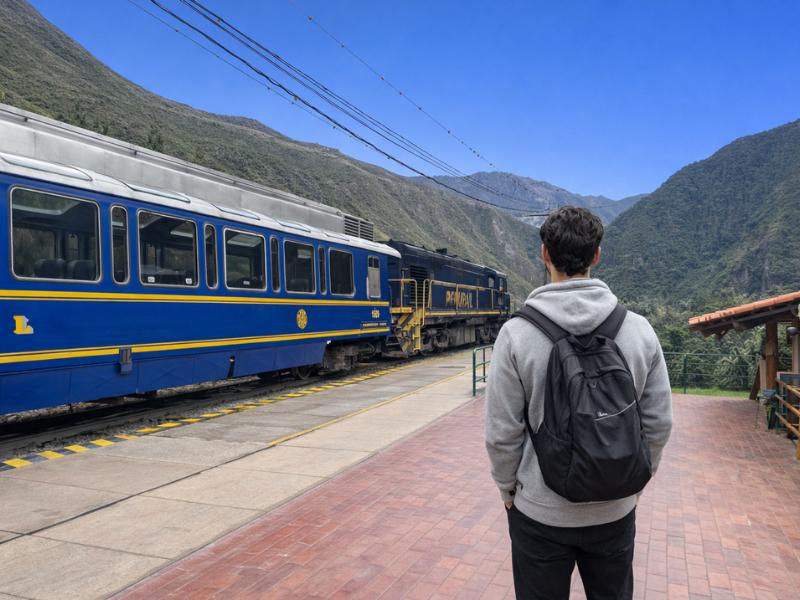
The headline numbers look like a big gap. They are not as large as they appear once you account for what is included.
A well-organized train day trip from Cusco runs roughly $200-350 per person. That covers transport from Cusco to Ollantaytambo, a round-trip train ticket on the Expedition or Voyager class, shuttle buses up to Machu Picchu, and entry to the citadel. It does not include meals beyond whatever you bring, any guide at the site, or accommodation if you spend a night.
A mid-range Classic Inca Trail package with a reputable licensed operator runs $700-900 per person in 2026. That price includes four days of food (from lunch on Day 1 through breakfast on Day 4), three nights of camping with tents and sleeping mats, a bilingual certified guide, porters carrying group equipment, the Inca Trail permit, Machu Picchu entry, and the return train from Aguas Calientes to Ollantaytambo. If you add up equivalent spending on hotels, food, guides, and transport over four days, the real premium the trail charges over a comparable train-based visit comes closer to $300-400 for mid-range travelers.
That gap narrows further when you consider this: an Inca Trail (book tour here) package is essentially an all-inclusive multi-day tour. The train is just transportation. You are comparing different things.
There are additional costs worth budgeting for the trail regardless of package tier. Tipping porters and guides is culturally expected and ethically important: a standard is $15-25 per staff member, totaling roughly $60-100 per trekker. Hiking poles ($10-15 rental), sleeping bags ($15-25 rental if not included), and any personal porter for extra gear ($80-120 extra) are common additions.
We’ve mapped out how to visit Machu Picchu guided tours on a budget because the costs add up fast – but you can cut them significantly with smart choices.
How Far in Advance Do You Need to Plan Each Option?
This is where the comparison gets decisive for many travelers. The Inca Trail permit system is the most constrained booking process in adventure travel. The Peruvian Ministry of Culture releases 2026 permits for licensed operators starting October 27, 2025: and for peak season months like June, July, and August, permits often sell out within hours or days of that release. You cannot buy a permit independently. You must book through a licensed operator, who purchases it on your behalf. Non-refundable, non-transferable, issued to your specific passport.
For dry season dates (May through September), booking 6-8 months in advance is the minimum realistic lead time. Shoulder months like April and October are more forgiving: 3-4 months out is usually sufficient. The 2-day Short Inca Trail from Km 104 operates on a separate quota (250 per day) and is generally bookable 2-3 months ahead.
Train tickets exist in a different universe. Economy class trains departing from Ollantaytambo are often available 1-2 weeks in advance during low and shoulder seasons. During peak season (June-August), you want 6-8 weeks for your preferred departure time, especially for early morning trains that allow 6 AM Machu Picchu entry. Entry tickets are a separate purchase and have their own capacity limits, but they do not require the same extreme lead time as the trail. Most train travelers booking 4-6 weeks ahead can secure their preferred dates without difficulty.
Practically speaking: if you are reading this in May and want to hike the Classic Inca Trail in July 2026, there is a very good chance permits are already sold out. The train remains fully accessible.
What Does the Experience Actually Feel Like?
Both experiences are genuinely good. They are just different.
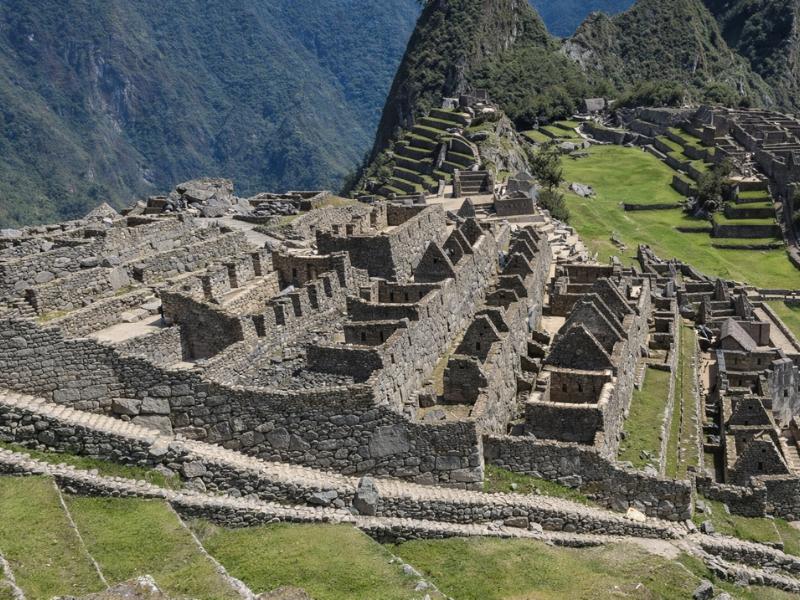
On the train route, the experience is concentrated at Machu Picchu itself. You arrive fresh, rested, and able to spend your full 3-4 hours absorbing the citadel without the accumulated exhaustion of four hiking days. You can slow down, reread the guide, find a quiet terrace and just sit with it. The train journey through the Sacred Valley and cloud forest is a genuine highlight in its own right: the last 40 minutes through lush vegetation along the river has a cinematic quality. Nothing about this is compromised. Machu Picchu is extraordinary from any approach.
The trail experience is layered in a way that the train cannot replicate. You spend four days building toward the citadel. The guide explains the agricultural experiments at Llactapata on Day 1, the hydraulic engineering at Phuyupatamarca on Day 3, the logistics of Inca road runners who once covered these paths at speed. Each day adds context. The archaeological sites along the trail: Runkurakay, Sayacmarca, Wiñay Wayna: are available only to trekkers, and several are comparable in quality to sections of Machu Picchu itself. Then Day 4 begins at 3:30 AM. You wait at the checkpoint in the dark, hike in by headlamp through cloud forest, and arrive at the Sun Gate as dawn breaks over the mountains. Machu Picchu appears below you, terraced and precise, framed by peaks. People cry. It is not hyperbole: the physical effort and the four-day anticipation make it land differently than any day-trip arrival possibly could.
There is one honest counterpoint to acknowledge. Some trekkers arrive exhausted enough that they rush through Machu Picchu and head straight for Aguas Calientes and a hot shower. Train travelers, fresh off the bus, sometimes spend more considered time at the citadel. Both outcomes are real and worth knowing about before you commit.
Which Option Is Better for Your Travel Style?
| Under 7 days total in Peru region | Train | Trail requires at least 7-8 days including acclimatization; train fits in a single day |
| Visiting in February | Train | Trail is closed all month for maintenance; train runs year-round |
| Children under 12 | Train | No official age limit on trail but operators recommend 12 minimum; descent is hard on young knees |
| Knee or joint issues | Train | Thousands of stone steps downhill after Dead Woman’s Pass; descent is harder than ascent on joints |
| Altitude concerns or history of AMS | Train | Trail peaks 800m higher than Cusco; Machu Picchu sits 1,000m lower than the Dead Woman’s Pass |
| Dedicated hiker with 10+ days | Classic Inca Trail | If fitness and time allow, no other approach delivers this level of context and earned arrival |
| Limited time but want trekking element | 2-day Short Inca Trail (Km 104) | 12 km, visits Wiñay Wayna and Sun Gate, arrives at Machu Picchu on foot with far less planning pressure |
| Budget travelers | Train + overnight in Aguas Calientes | Economy trains, one hotel night, and an early start beats 4-day trail cost while still getting morning citadel access |
| Luxury travelers | Hiram Bingham train or premium Inca Trail | Both options exist at high-end; Hiram Bingham is easier to plan; premium trail packages offer smaller groups and better food |
The most underused option in that table is the 2-day Short Inca Trail. It boards a train from Ollantaytambo to Km 104 (a brief stop before Aguas Calientes), hikes 12 km in a single day through cloud forest to the ruins of Wiñay Wayna, continues to the Sun Gate, and descends to Machu Picchu. Permit availability is far better than the Classic Trail. The booking window is typically 2-3 months rather than 6-8. It requires good fitness for one long hiking day but nothing approaching the four-day commitment. You still arrive through the Sun Gate on foot. The experience is compressed but genuine.
Confused by all the train options? Check out our Machu Picchu train guide – it breaks down PeruRail vs Inca Rail and what you actually get at each price point.
Want help deciding which option fits your specific trip dates and fitness level? Compare open dates on the 4-day Classic Inca Trail and the train day trip from Cusco.
Can You Combine Both on the Same Trip?
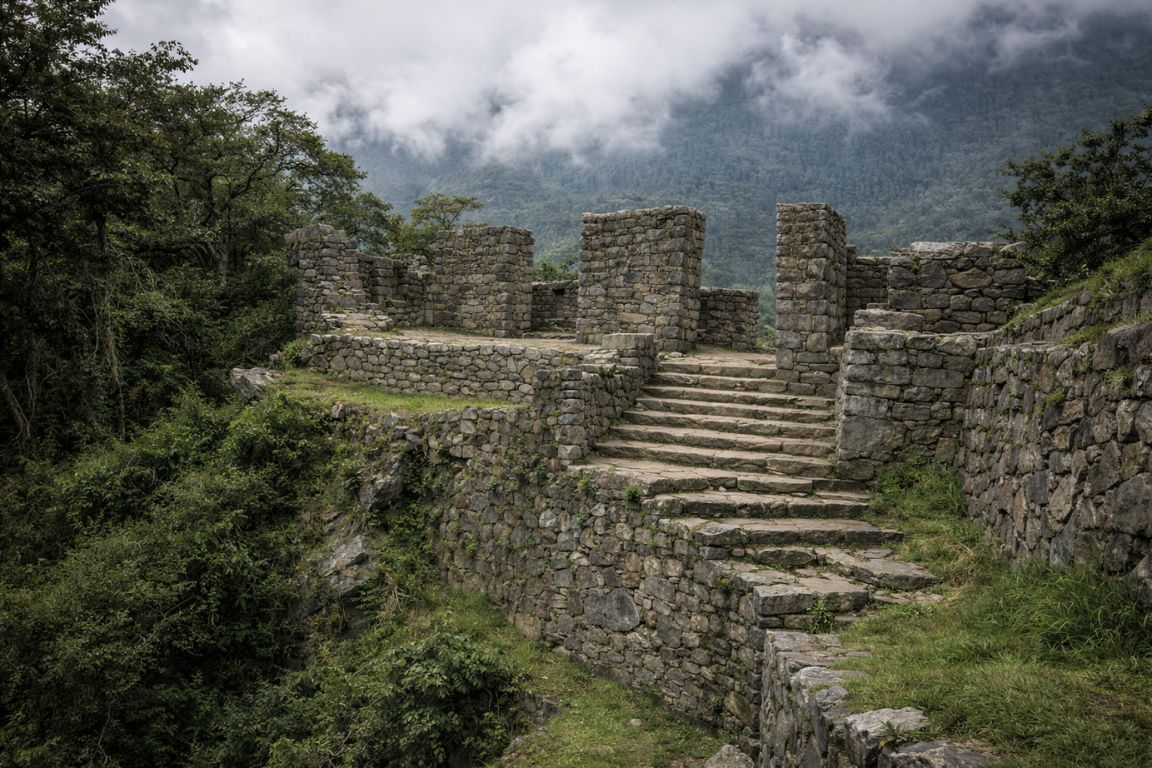
Yes, and there are several ways to do it. Most people do not realize how many options exist here.
The standard Inca Trail package already combines both. Trek in for four days, train out. Every licensed operator includes the return Vistadome train from Aguas Calientes to Ollantaytambo on Day 4 afternoon. This is the norm, not the exception: you are not choosing between them on the way home.
A second option: take the train in, spend a night or two in Aguas Calientes, then tackle the 2-day Short Inca Trail on your final day. You get the citadel visit on Day 1 rested and fresh, then arrive by foot through the Sun Gate on Day 2 for a second visit with the trail’s emotional context. This requires booking the separate Short Trail permit (easier to get) and a second Machu Picchu entry ticket, but the logistics are simple to manage with a good operator.
A third option, available to all entry ticket holders: hike from inside Machu Picchu to the Sun Gate and back. This is a 90-minute uphill walk on the same stone path trekkers descend on Day 4. It requires a Circuit 1C ticket (Portada Intipunku route) rather than the standard circuits. You reach the same viewpoint, see the same panorama of the citadel below you, and understand why arriving trekkers get emotional. You have not done the four-day trail, but you see what they see in that moment. It is a meaningful option for travelers who want a physical connection to the trail experience without the full commitment.
Planning to combine the trail and a second day at Machu Picchu? Different circuits and days have to be booked together. A package such as the 2-day Inca Trail with panoramic train already pairs the hike with rail and entry.
Frequently Asked Questions
Is the Inca Trail worth the extra cost compared to taking the train?
Worth it for whom is the right question. If you are a dedicated hiker with adequate time and want a multi-day Andean expedition with Machu Picchu as the destination, the trail is almost certainly worth it. If you primarily want to see Machu Picchu and have limited time or fitness constraints, the train delivers the same ruin with none of the overhead. The trail premium is real but it buys four days of a different journey entirely, not just a different way into the same place.
What if Inca Trail permits are sold out?
Several good alternatives exist. The 2-day Short Inca Trail from Km 104 has a separate permit quota and is easier to book. The Salkantay Trek (5 days) requires no permits and delivers comparable mountain scenery with a train connection to Aguas Calientes on the final day. The Lares Trek focuses more on cultural encounters with Quechua communities. All three end with a train to Machu Picchu. None require booking months in advance.
How much time do you need in Peru to do the Classic Inca Trail properly?
Minimum realistic: 8-9 days. That breaks down as 2-3 days in Cusco for acclimatization before the trek, 4 days on the trail, and at least 1 day post-trek in Aguas Calientes or Cusco before flying. Rushing the acclimatization period is the most common mistake: altitude sickness mid-trail can end a trek early regardless of fitness level.
Can families with children do the Inca Trail?
There is no official minimum age, but most reputable operators recommend 12 and up with good fitness. The day after Dead Woman’s Pass involves steep stone descents that are genuinely hard on young knees. For families, the Short Inca Trail or the train with a day at the site is a more reliable choice that lets everyone arrive fresh and enjoy the citadel fully.
Do you need a guide for the train route to Machu Picchu?
No guide is required for the train, and independent travelers book it all the time. A site guide at Machu Picchu itself is optional but adds a lot: the ruins are not well self-explained without interpretation. For the Inca Trail, a licensed guide is legally required and comes included in every operator package. You cannot hike the Classic Inca Trail independently by law.
What is the Sun Gate (Inti Punku) and who can visit it?
The Sun Gate is the traditional Inca entrance to Machu Picchu, positioned on the southeast ridge above the citadel at 2,730m. Classic Inca Trail and Short Inca Trail trekkers arrive here on their final hiking morning. Train visitors can access it as part of the Circuit 1C ticket (Portada Intipunku route) from inside Machu Picchu: a roughly 90-minute round-trip hike from the Guardian’s House area. As of 2026, confirm this access option when booking your entry ticket, as circuit assignments can shift seasonally.
If you want the full trek, start with the 4-day Classic Inca Trail. For a single-day visit, use the train day trip from Cusco.
Written by Diego Alejandro Ramirez
Peruvian tour guide since 2009 · Founder, Machu Picchu Guided Tours
Diego has guided over 1,600 travelers through Machu Picchu and the Sacred Valley since founding the agency.
Choose The Journey You Want To Make
Check your date before arranging the rest. We may earn commission through this booking link.