Machu Picchu Train Guide
PeruRail or Inca Rail? Start from Ollantaytambo, book entry tickets first, and choose the right train tier—here’s how to ride to Machu Picchu smartly.
Compare the whole package: station transfers, train class, entry, buses and meals. Published rail-only fares are not tour quotes.
Two companies run trains to Machu Picchu: PeruRail and Inca Rail. Both are good. The best departure point is almost always Ollantaytambo, not Cusco: shorter ride, same scenery, less wasted morning. Economy trains (Expedition or Voyager) are perfectly comfortable and give you the same views as the pricier tiers. The Vistadome Observatory and Inca Rail 360° are worth the upgrade for photographers and those wanting a cultural experience on board. The Hiram Bingham is genuinely exceptional if budget is no constraint. Book entry tickets first, then trains, and keep your luggage under 8 kg.
Quick Facts: Machu Picchu Trains 2026
| Detail | Info |
|---|---|
| Train operators | PeruRail (perurail.com) and Inca Rail (incarail.com) |
| Main departure stations | Ollantaytambo (best option), Poroy, San Pedro, Wanchaq (Cusco) |
| Journey time: Ollantaytambo to Aguas Calientes | ~1 hr 30 min – 1 hr 45 min |
| Journey time: Cusco (Poroy) to Aguas Calientes | ~3 hrs 30 min – 4 hrs |
| Economy fare (round-trip, Ollantaytambo) | ~$80–$95 USD (Expedition / Voyager) |
| Mid-range fare (round-trip) | ~$140–$180 USD (Vistadome / 360°) |
| Luxury fare (round-trip) | $500–$600+ USD (Hiram Bingham) |
| Baggage limit | 1 bag, max 8 kg, carry-on size only |
| Passport required? | Yes, original passport to board. No copies accepted. |
| Arrive at station by | 30 minutes before departure |
Prices verified February 20, 2026. Fares shift by season, date, and availability. Always confirm on the official operator websites before booking.
What Are Your Train Options for Getting to Machu Picchu?
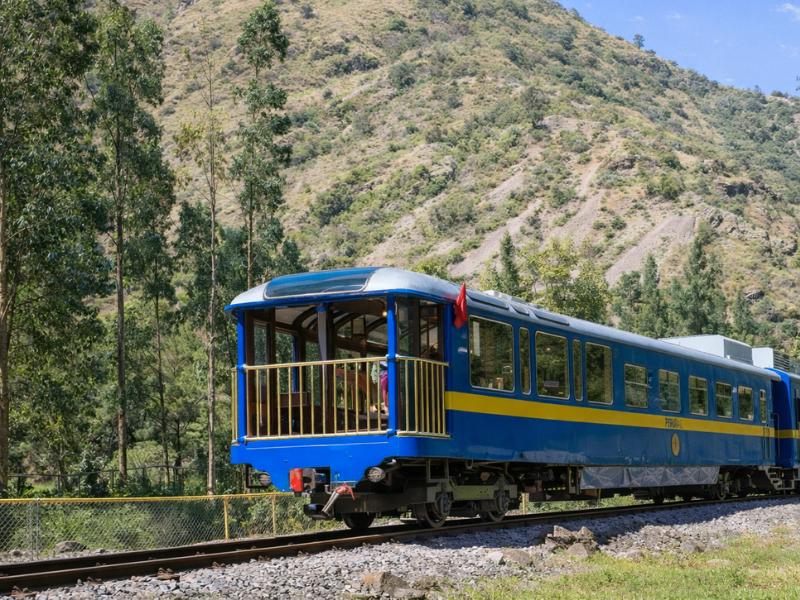
All trains to Machu Picchu terminate at Aguas Calientes (also called Machu Picchu Pueblo), the only way in by rail. Two companies run the service: PeruRail and Inca Rail. Between them they offer six distinct train experiences across three price tiers: economy, mid-range panoramic, and luxury. All of them follow the same route through the Sacred Valley and cloud forest. The difference is what happens on board, not where you end up.
The route itself deserves more credit than it usually gets. Most people think about the train as a transfer and forget that the scenery is genuinely worth watching. You leave Ollantaytambo at 3,800 meters and the track drops quickly, following the Urubamba River as the walls of the valley close in and the vegetation thickens. By the time you’re an hour in, the altitude has dropped to around 2,000 meters and you’re surrounded by cloud forest. Orchids grow from the cliff faces. The river runs alongside the track. The air through the windows is a different temperature entirely from Cusco. And then you round a bend and Aguas Calientes appears in a gorge below.
The full menu of options, before we go deeper into each one:
PeruRail services: Expedition (economy), Vistadome (panoramic windows, cultural show on return), Vistadome Observatory (observation car, open-air balcony, live music, snacks), Hiram Bingham by Belmond (full luxury, gourmet meals, bar car).
Inca Rail services: Voyager (economy), 360° (observation car, panoramic windows, snack), Prime (dining car, regional menu, live music, VIP transfer), First Class (fine dining, bar-lounge, open-air balcony, wine ceremony).
Both companies also offer a bimodal service from Cusco: a bus from the city to Ollantaytambo followed by the train. This is the standard setup if you’re starting from Cusco without sleeping in the Sacred Valley first.
Wondering if you should hike in or ride the rails? Check out our breakdown of Machu Picchu by train vs Inca Trail – they’re completely different experiences with different tradeoffs.
Which Station Should You Depart From: Cusco or Ollantaytambo?
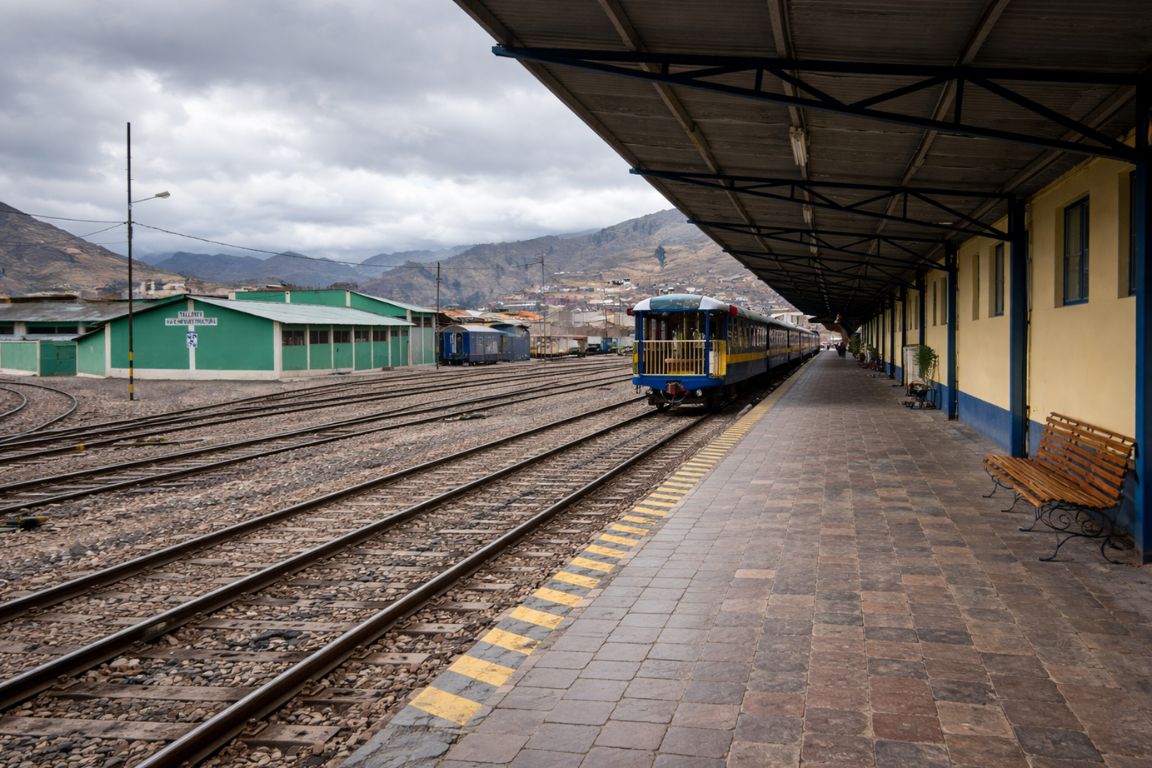
Ollantaytambo is the right answer for most travelers. The train ride is 1.5 hours instead of 3.5–4 hours, the scenery is actually better starting from lower altitude, and the town has excellent Inca ruins worth seeing the afternoon before you travel. Departing from Cusco only makes practical sense if you absolutely cannot get yourself to Ollantaytambo the night before, or if you want the longest possible train journey as part of the experience.
The Cusco stations deserve a plain explanation because they confuse a lot of people. Poroy is 14 km outside central Cusco, about 25 minutes by taxi. It operates May through December (dry season). San Pedro is in central Cusco and runs PeruRail services on select schedules. Wanchaq is another Cusco district station operating the bimodal service, primarily January through April and on some year-round departures. In practice, PeruRail‘s website will show you which station serves each departure when you search by date. You don’t need to guess..
One thing the station guides mostly skip: as of September 2025, PeruRail introduced Pachar station as an additional transfer point on certain bimodal schedules. If your booking confirmation shows Pachar, it means a bus will transfer you there to connect to the train. Confirm your transfer point the day before travel by checking the booking details on the PeruRail site. Showing up at the wrong station is one of the more stressful mistakes travelers make, and it’s entirely avoidable with a 60-second confirmation check the night before.
One more argument for Ollantaytambo: the town is worth a full afternoon. The fortress above the main square is one of the most impressive Inca sites in Peru, arguably better preserved than anything in Cusco city. You can eat well, sleep well, and walk five minutes to your train. Starting your Machu Picchu trip there rather than from Cusco changes the mood of the whole journey.
Not sure about the journey? I’ve broken down how to get to Machu Picchu from Cusco with all your transportation options – train, trek, or bus combinations.
What Is the Difference Between PeruRail and Inca Rail?
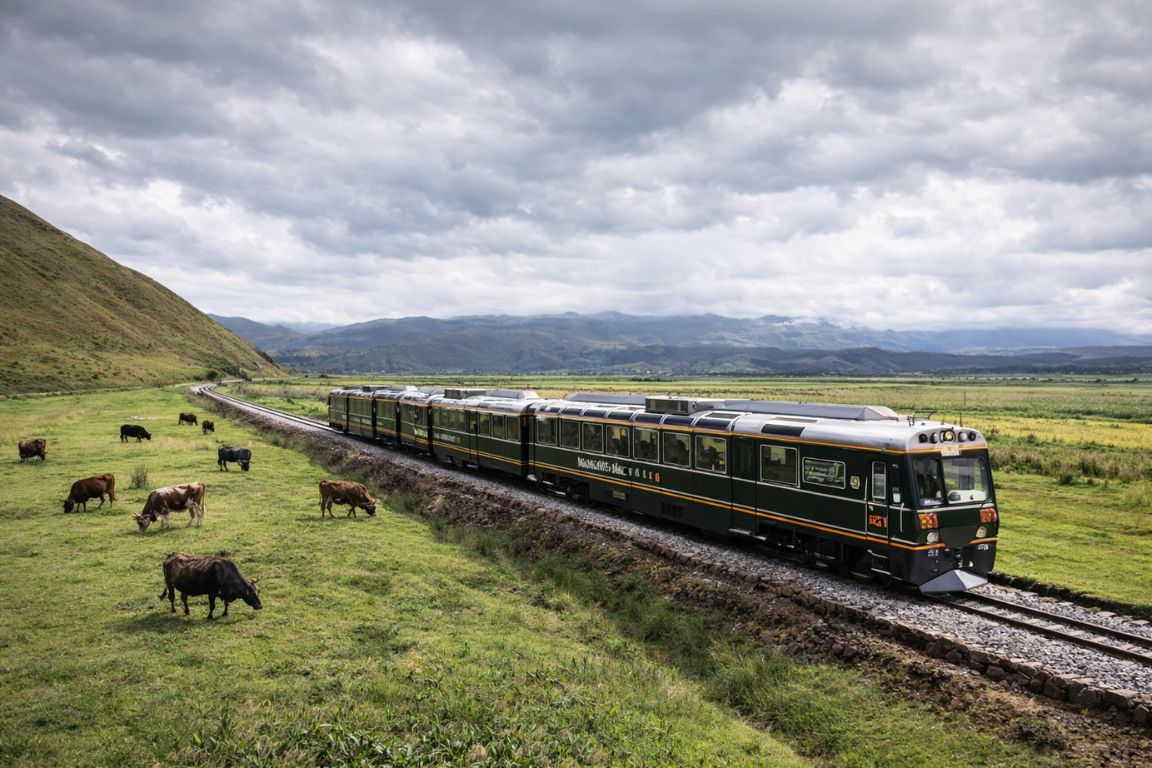
PeruRail has been running since 1999 and has significantly more departures, more station options, and the only true luxury train (Hiram Bingham by Belmond). Inca Rail is newer, operates a smaller fleet, and has a reputation for quieter carriages and slightly higher baggage limits. For economy and mid-range travel, the two companies are genuinely comparable. The Hiram Bingham is PeruRail‘s clear differentiator at the top end; Inca Rail’s First Class and Prime are strong contenders below that price point.
The practical differences that actually matter when choosing:
Departure frequency: PeruRail (book tour here) runs more trains per day, giving you more flexibility if your entry slot is in a narrow window. If you need a very specific departure time to make a 6 AM entry, PeruRail is more likely to have it. Inca Rail typically has 3–5 daily departures from Ollantaytambo versus PeruRail‘s 6–8.
Baggage: Inca Rail officially allows 8 kg within 118 linear cm. PeruRail allows 8 kg (backpack) or up to 12 kg for carry-on bags, within similar dimensional limits. In practice both companies are operating similar rules, but the slight Inca Rail flexibility is worth noting if you’re pushing the limit.
Onboard feel: Inca Rail’s trains tend to be newer stock. The 360° has a genuinely impressive open-air observatory section that PeruRail‘s Vistadome doesn’t fully match. PeruRail‘s Vistadome Observatory closes the gap with its own observatory car, but it’s a larger train and can feel busier. For a quieter, more boutique ride, Inca Rail has the edge in the mid-range tier.
Booking experience: Both have functional online booking systems. PeruRail‘s site occasionally runs discounts with coupon codes (worth checking before you pay). Inca Rail (book tour here) bundles some packages that include the entry ticket and bus, which can simplify logistics if you prefer a single booking.
One thing both companies agree on: you must present your original passport to board. Not a photocopy. Not a photo on your phone. The original document. This is checked at the platform before boarding, and if you’ve left your passport at the hotel it is not a fast problem to solve.
Not sure which train company to book? Check out our breakdown with PeruRail vs IncaRail compared in Machu Picchu guided tours – the differences are bigger than just price.
PeruRail vs Inca Rail: Full Comparison (2026)
| Feature | PeruRail | Inca Rail |
|---|---|---|
| Economy class | Expedition (~$80–$95 RT) Panoramic windows, audio tour, Inca-inspired decor, snack |
Voyager (~$80–$95 RT) Wide windows, reclining seats, ambient music, paid snacks |
| Mid-range class | Vistadome (~$100–$140 RT) Large windows on sides and ceiling, snack, cultural show on return Vistadome Observatory (~$140–$180 RT) Open-air balcony car, live Andean music and dance, snack |
360° (~$140–$180 RT) Open-air observatory deck, panoramic windows, snack, infotainment |
| Luxury class | Hiram Bingham by Belmond (~$500–$600+ RT) Gourmet brunch and dinner, bar car, live music, private bus to gate |
Prime (~$250–$350 RT) Dining car, 3-course menu, live music, VIP transferFirst Class (~$350–$500 RT) Bar-lounge, wine ceremony, open-air balcony, fine dining |
| Departure stations | Ollantaytambo, Poroy, San Pedro, Wanchaq, Urubamba | Ollantaytambo; bimodal from Av. El Sol 843, Cusco |
| Daily departures (Ollantaytambo) | 6–8 per day (varies by season) | 3–5 per day (varies by season) |
| Baggage limit | 8 kg / backpack: 100 cm; carry-on: up to 12 kg / 158 cm | 8 kg / 118 linear cm |
| Luggage storage | Free at Ollantaytambo, Poroy, Wanchaq, San Pedro, Aguas Calientes | Free at Ollantaytambo, Cusco office |
| Book at | perurail.com | incarail.com |
Prices verified February 20, 2026. Fares vary by date, season, and availability. Check official sites for current pricing before booking.
Which Train Class Should You Choose?
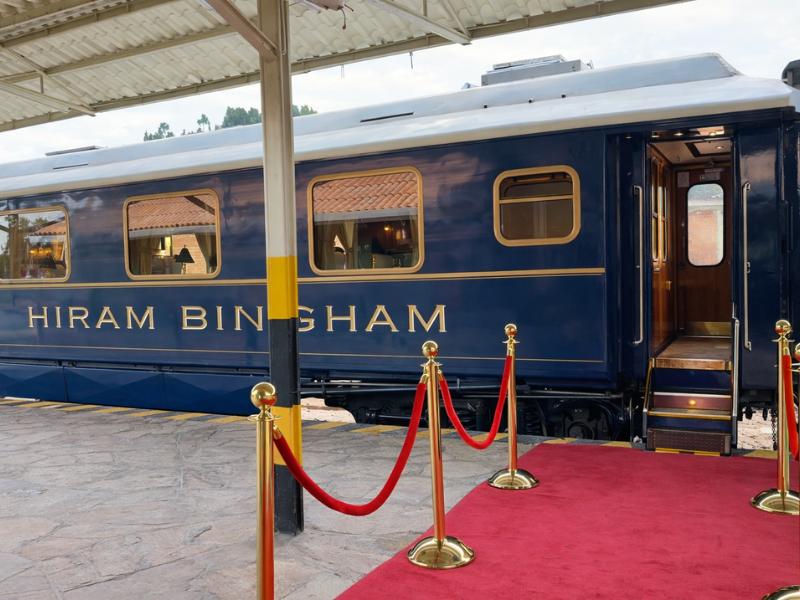
For most travelers on a standard budget, the Expedition or Voyager economy trains are the honest answer. The views through the panoramic windows are the same at any price. The upgrade to Vistadome or 360° is genuinely worth it for photographers, honeymooners, or anyone doing the journey as an experience in itself. The larger windows, live music, and open-air cars do add something real. The Hiram Bingham is exceptional but a major price jump. Choose it if you’re celebrating something or if price is simply not a factor.
Here’s how we actually advise our clients when they ask which train to take:
Choose the Expedition or Voyager if: you’re focused on Machu Picchu itself rather than the journey there, you’re traveling on a budget, or you’re making the trip multiple times. The seats are comfortable, the windows are large enough, and you’ll see everything there is to see. The return journey on the Expedition is also fine in the dark, when scenery doesn’t matter anyway.
Choose the Vistadome or 360° if: this is a once-in-a-lifetime trip, you care about photography, or you want the journey to feel like part of the event rather than a transfer. The observation cars and ceiling windows let you watch the mountain peaks pass overhead in a way that the standard windows don’t allow. The cultural show on the PeruRail return (traditional music and an alpaca fashion presentation) is genuinely charming, not a tourist gimmick.
Choose the Vistadome Observatory or Inca Rail First Class if: you want a premium experience without the full Hiram Bingham price, enjoy live Andean music and onboard dining, or you’re combining the Machu Picchu trip with a special occasion. The open-air balcony on the return journey, especially in late afternoon light with the cloud forest going by, is something most people don’t forget.
Choose the Hiram Bingham if: you want the most complete luxury version of this trip. Gourmet brunch on the way out, four-course dinner on the return, private bus directly to the Machu Picchu gate (skipping the standard Consettur queue), and afternoon tea at the Belmond Sanctuary Lodge. It is expensive and it earns it. The train carries very few passengers per departure, which means you’re not sitting next to someone else’s tour group for two hours.
One honest note about the return journey: most travelers are tired, possibly sunburned, and deeply satisfied by the time they board the train back. The difference between economy and mid-range matters more going out (when you want to see everything) than coming back (when you mostly want a seat and a snack). If budget is limited, consider booking Vistadome out and Expedition back.
How Do You Book Train Tickets and What Can Go Wrong?
Book directly on perurail.com or incarail.com using your actual passport details, the same passport you’ll present at the platform. Do not book through third-party aggregators unless you’ve confirmed they’re authorized resellers. The biggest booking mistake is reserving a train before checking your Machu Picchu entry slot time, which can leave you with a train that arrives too late to make your entry window. Or you’ll arrive so early that you’re standing outside the bus queue for two hours.
The booking sequence that prevents most problems: first, purchase your Machu Picchu entry ticket on tuboleto.cultura.pe and note the exact entry time on your confirmed ticket. That time determines which trains work. Then go to the train operator’s site and find a departure that arrives in Aguas Calientes at least 90 minutes before your entry slot, accounting for the Consettur bus queue (allow 30–45 minutes in peak season), the 25-minute bus ride, and the 10-minute walk to the gate. Do this in one sitting. When you close the laptop, both things should be confirmed.
Early morning slots (6 AM and 7 AM) are the most popular and the first to sell out. During peak season (June through early November), popular departure times from Ollantaytambo can sell out 6–8 weeks ahead. The Hiram Bingham sells out months ahead. Book as early as you have your dates confirmed. Both PeruRail and Inca Rail allow cancellations and changes for a fee (typically $10–$20 per ticket) when requested more than 48 hours before departure. Inside 48 hours, fees increase significantly and refund options narrow.
Missed trains carry no refund and require a new ticket purchase if a later departure has availability. Both companies enforce this strictly. Arriving at the station 30 minutes before departure is the stated requirement and the actual minimum. In practice, 45 minutes is safer for early-morning departures when the platform can be crowded.
Two things that catch people off guard. First: train tickets to Machu Picchu do not include the Machu Picchu entry ticket. Some packages sold by operators bundle both, but the default train booking is transport only. Second: some trains stop briefly at Km 104 on the way to Aguas Calientes, which is the start of the short Inca Trail. If you’re not doing that hike, do nothing. Stay on the train.. If you see other passengers disembarking at a jungle stop before Aguas Calientes, it’s not your stop.
Ready to book but not sure where to start? Here’s how to buy tickets in Machu Picchu guided tours so you navigate the system without headaches or booking the wrong date.
What Are the Luggage Rules and How Do You Handle Them?
One carry-on bag per person, maximum 8 kg, within dimensional limits roughly equivalent to a small airline carry-on or soft-sided daypack. There is no checked baggage or luggage car on any Machu Picchu train. Both PeruRail and Inca Rail offer free luggage storage at their main stations. The only correct approach is to pack a small bag for the Machu Picchu segment and leave your large suitcase at your Cusco or Ollantaytambo hotel.
This rule surprises more travelers than it should. People pack two weeks of international travel into a rolling suitcase and then find out the night before departure that it cannot board the train. Every hotel in Cusco and the Sacred Valley will store luggage for free or for a small fee while you’re at Machu Picchu. This is standard practice and extremely common. The station storage facilities are also free at Ollantaytambo (both operators), Poroy, and San Pedro.
What to pack in your Aguas Calientes daypack: passport (non-negotiable), your Machu Picchu entry ticket QR code (printed or digital), phone and charger, one change of clothes for the overnight, sunscreen, a light rain layer, water, and any medications. That genuinely fits into a 20–25 liter daypack. Nothing else needs to come with you.
The dimensional limits are roughly 100 cm total (height plus length plus width) for PeruRail backpacks, or 158 cm for carry-on bags. A standard 45-liter trekking backpack at full capacity will push these limits. A 25-liter daypack will not. In practice, enforcement varies by how packed the train is. We’ve seen lightly-packed 40-liter bags board without issue. We’ve also seen travelers turned away at the platform. Don’t count on leniency during peak season.
Sorting out trains, entry tickets, luggage storage, and hotel logistics takes real coordination. A two-day tour with Sacred Valley and train takes those pieces on so you are not coordinating them yourself. Use the two-day Sacred Valley and train itinerary if you want that sequence already assembled.
What Should You Expect on the Day of Travel?
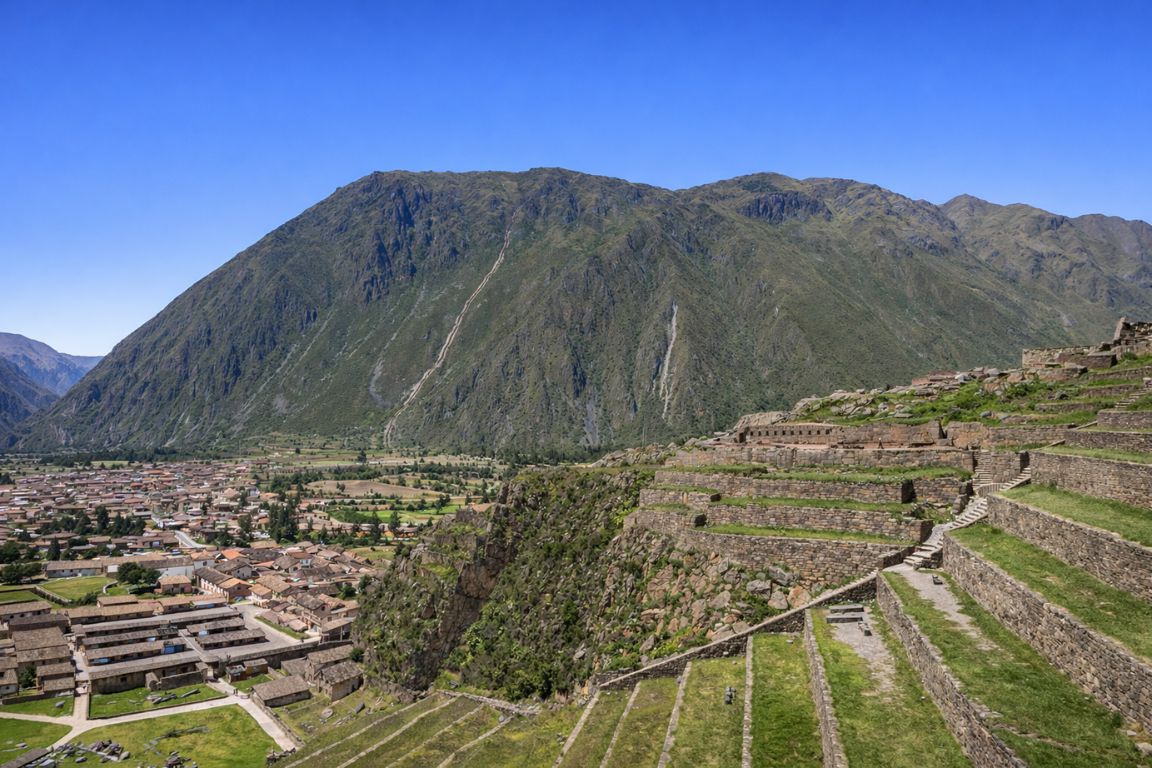
A Machu Picchu travel day starting from Ollantaytambo looks like this: taxi or walk to the station 45 minutes before departure, passport check and platform boarding, 1.5 hours on the train through the Sacred Valley and cloud forest, 10-minute walk through Aguas Calientes to the Consettur bus stop, 30-minute bus up the mountain, and arrival at the entrance gate. Total time from Ollantaytambo: about 3 hours. From Cusco: about 5 hours. The entry experience is the same regardless of where you started.
The train station at Ollantaytambo is straightforward. There’s a waiting area, a small cafe, and clearly marked platforms. Staff direct passengers to their carriages. Seats are assigned, so you’ll find your carriage and seat number on your ticket. On most services the view from the left side of the train going toward Aguas Calientes is marginally better, but honestly you can see the main features from either side.
Once the train is moving, the first 20 minutes are still at altitude in the Sacred Valley. The landscape is broad and dry at that elevation. Then the track begins its descent. The valley walls close in. The light changes as more vegetation blocks the direct sun. Around 45 minutes in, you cross the Urubamba River for the first time and you’re officially in cloud forest. The windows fog slightly if the temperature difference is large. The vegetation outside gets thicker and greener with every kilometer. It’s one of those journeys that makes you feel like you’ve crossed into a different world, because you have.
Aguas Calientes station sits in the center of town. When you step off you’ll immediately be in a short stretch of craft stalls and restaurants between the station and the bus stop. It takes about 10 minutes to walk to the Consettur queue at Avenida Hermanos Ayar. If your entry slot is early morning and you’re arriving the evening before, this is when you scope out the walk so you’re not doing it disoriented at 5 AM.
On the return, the train scenery is the same in reverse but the light is different. Late afternoon in the cloud forest section is particularly good. The journey back tends to feel faster because you’re tired and the day was full. The cultural show on the Vistadome return is 15–20 minutes and happens while the train is moving: traditional music and dance in the aisle between seats. It’s worth watching at least once.
We’ve broken down one-day vs two-day Machu Picchu guided tours so you can figure out which makes sense for your schedule without feeling rushed or wasting time.
What Our Travelers Actually Choose: Train Class Breakdown
Based on booking data from our 2024–2025 client groups (1,600+ travelers guided since founding):
| Train Class | % of Clients | Satisfaction (Post-Trip) | Most Common Comment |
|---|---|---|---|
| Expedition / Voyager (economy) | ~41% | 91% | “Comfortable and perfectly adequate; views were great” |
| Vistadome (standard panoramic) | ~28% | 94% | “Worth the small upgrade; cultural show on return was a nice surprise” |
| Vistadome Observatory / Inca Rail 360° | ~22% | 97% | “The open-air car on the return was one of the highlights of the trip” |
| Hiram Bingham / First Class / Prime | ~9% | 99% | “Exceptional; the private bus to the gate alone saved us an hour of queuing” |
Data from Machu Picchu Guided Tours client feedback surveys, 2024–2025 season.
Frequently Asked Questions
Do train tickets to Machu Picchu include the site entry?
No. Train tickets only cover the rail journey from your departure station to Aguas Calientes and back. Machu Picchu entry must be purchased separately on tuboleto.cultura.pe. Some operator packages bundle both, but a standard train booking from PeruRail or Inca Rail is transport only. Always confirm what’s included before you pay.
Which side of the train has the best views?
The left side going toward Aguas Calientes (and the right side on the return) tends to face the river for more of the journey. That said, the differences are minor. On trains with ceiling windows or observation cars, the side you’re sitting on matters less because the views come from multiple angles. Don’t stress about seat assignment if you have no choice.
Can I change or cancel my train ticket?
Yes, with fees. Both PeruRail and Inca Rail allow changes and cancellations more than 48 hours before departure for a fee of roughly $10–$20 per ticket. Inside 48 hours, fees increase and some fare classes become non-refundable. Check the cancellation policy for your specific fare class when booking. Economy fares tend to be the least flexible.
Is the Hiram Bingham worth the price?
For the right traveler, yes. You get a gourmet multi-course meal, a private bus to the Machu Picchu gate (bypassing the standard Consettur queue), afternoon tea at the Belmond Sanctuary Lodge on the return, and a very small train with few passengers. If you’re celebrating a major occasion or genuinely don’t need to think about price, it earns every dollar. For everyone else, the Vistadome Observatory or Inca Rail First Class gets you 80% of the experience at a fraction of the cost.
What happens if I miss my train?
No refund, and you’ll need to purchase a new ticket if another departure has availability. Trains to Machu Picchu in peak season often run close to full, so missing one can mean waiting several hours for the next. Arrive at the station 30–45 minutes before departure, have your passport and ticket ready, and don’t assume the train will wait.
Can children ride for free or at a discount?
Children under 3 travel free but share a parent’s seat unless you purchase a separate seat (at 25% discount). Children aged 3–11 qualify for a 25% discount on PeruRail and similar concessions on Inca Rail. Bring documents proving the child’s age. The discount applies at booking, so have this information ready when you purchase.
Need Help Building Your Train Itinerary?
Matching the right departure, the right class, and the right entry slot takes experience. Diego and the team have coordinated this for over 1,600 travelers; the day trip from Cusco with panoramic train and guided ruins is the version that includes the rail and the site visit. See the panoramic train day trip from Cusco if you want the pieces put together for you.
Written by Diego Alejandro Ramirez
Peruvian tour guide since 2009 · Founder, Machu Picchu Guided Tours
Diego has guided over 1,600 travelers through Machu Picchu and the Sacred Valley since founding the agency.
Choose A Rail Experience, Not Just A Seat Label
Check your date before arranging the rest. We may earn commission through this booking link.