How to Visit Machu Picchu
Planning Machu Picchu in 2026? Book official tickets 60–90 days early via tuboleto.cultura.pe, choose your circuit before purchase, acclimatize in Cusco or the Sacred Valley, and bring your original passport — here’s exactly how to plan it right from train to entrance gate.
Start with the circuit and date, then decide whether to organize transport yourself or include it in a tour.
Quick Facts: Visiting Machu Picchu 2026
| Official ticket platform | tuboleto.cultura.pe (Ministry of Culture) |
| Daily visitor limit | 4,500 (low season) / 5,600 (high season) |
| Entry ticket price (adult foreigner) | ~$40-56 USD depending on circuit (S/152-212) |
| Peak season | June 19 to November 2 (book 3-4 months out) |
| Best booking lead time | 60-90 days for peak; 30 days for shoulder season |
| Train to Aguas Calientes | PeruRail or Inca Rail from Ollantaytambo (1.5 hrs) or Cusco/Poroy (3.5 hrs) |
| Economy train (round trip) | ~$120-190 USD from Ollantaytambo |
| Bus Aguas Calientes to gate | $35 round trip, $23 one-way (Consettur, 25-30 min) |
| Site opens | 6:00 AM daily |
| Maximum visit time | 4 hours for most circuits; no re-entry |
| Cusco altitude | 3,400m / 11,150ft |
| Machu Picchu altitude | 2,430m / 7,970ft |
| Backpack size limit | 40 x 35 x 20 cm max inside the citadel |
Prices verified February 19, 2026. Source: Ministry of Culture of Peru (cultura.gob.pe), PeruRail, Consettur official rates.
How Far in Advance Should You Book Machu Picchu Tickets?
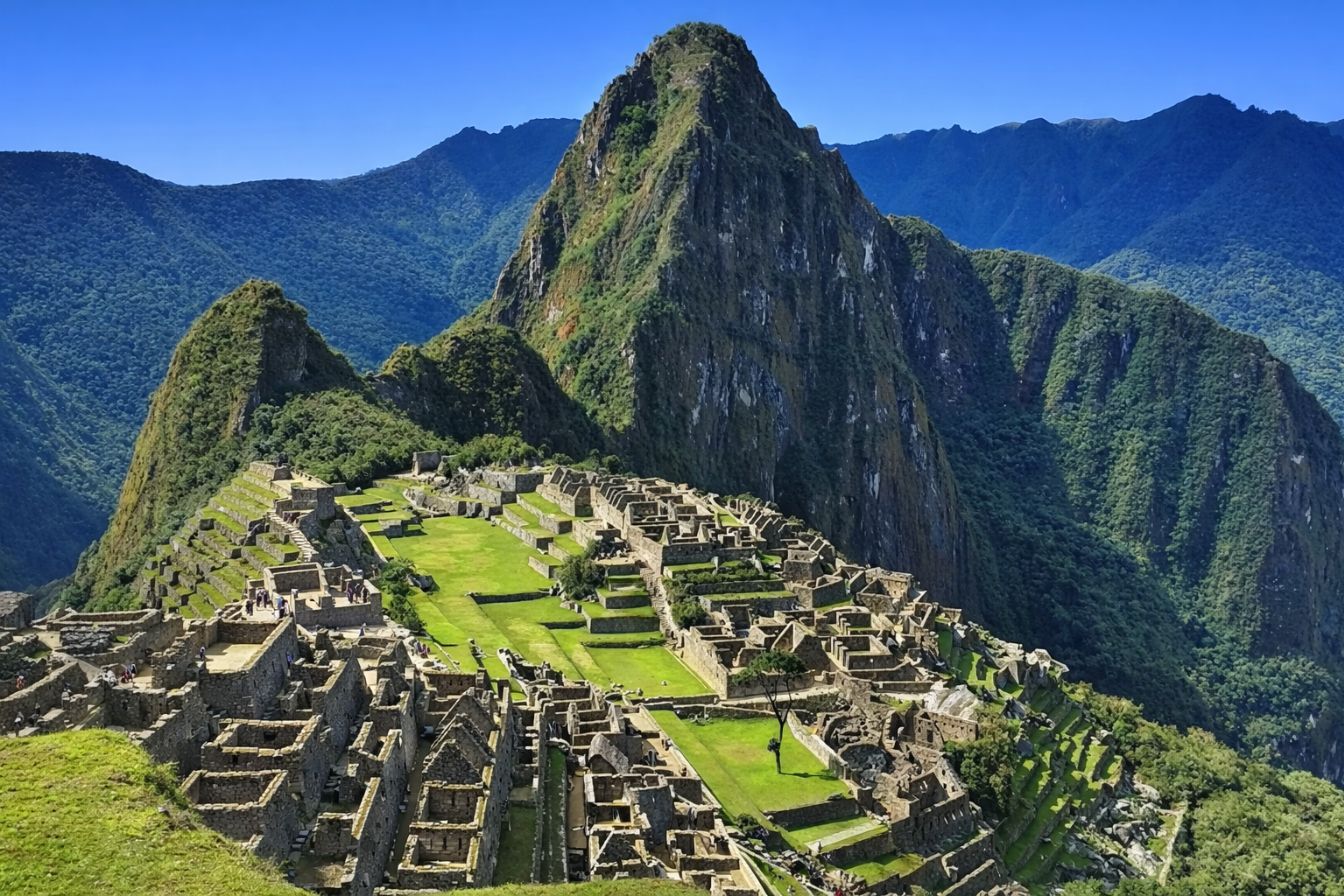
For peak season (June through early November), book entry tickets 60 to 90 days out, minimum. For shoulder months like April, May, September, and October, 30 to 45 days is generally enough. The last-minute option exists, but it is a gamble: 1,000 next-day tickets are sold in person each evening at the Machu Picchu Cultural Center in Aguas Calientes, and lines form early. Never plan to rely on this as your only strategy.
The 2026 ticketing system runs through tuboleto.cultura.pe, the Ministry of Culture’s official platform. You create an account, select your circuit, your entry date, and your time slot. Each registered account can purchase up to five tickets. The platform is functional but can be slow, and payment errors are common enough that seasoned travelers keep their passport information and card details ready before opening the booking page. Screenshots of every confirmation screen are worth taking.
A few things specific to 2026 that changed the game. The Ministry staggered the release of tickets month by month through January, which meant early months of the year opened for booking before later months. If you are planning a June trip, your booking window likely opened in mid-January. If you missed it, reputable Peruvian agencies often hold allocation blocks and can access tickets when the public pool shows sold out. This is legitimate and worth pursuing if you are stuck.
Book your Machu Picchu entry ticket first, before touching train tickets. The train schedule needs to reverse-engineer around your gate time, not the other way around. People who book the train first and then discover their entry slot doesn’t align with the only available trains have a serious logistical headache. Entry first, train second.
One detail that catches people: tickets are completely non-refundable and tied to your passport number. Date changes require contacting the Ministry of Culture directly via callcenter@cultura.gob.pe, and they are not always approved. Build flexibility into the days around your planned visit, particularly in the rainy season when trains occasionally face delays.
Managing the ticket system, train timing, and guide coordination from abroad is genuinely complicated. A day trip from Cusco with the panoramic train and a guided visit handles the ticket, the train timing, and the guide as one booking. You can also book a guided tour that includes ticket booking if you want those steps in one reservation.
If you’re about to book and want to avoid mistakes, here’s how to buy tickets in Machu Picchu guided tours step by step so you get exactly what you need.
How Do You Actually Get to Machu Picchu?
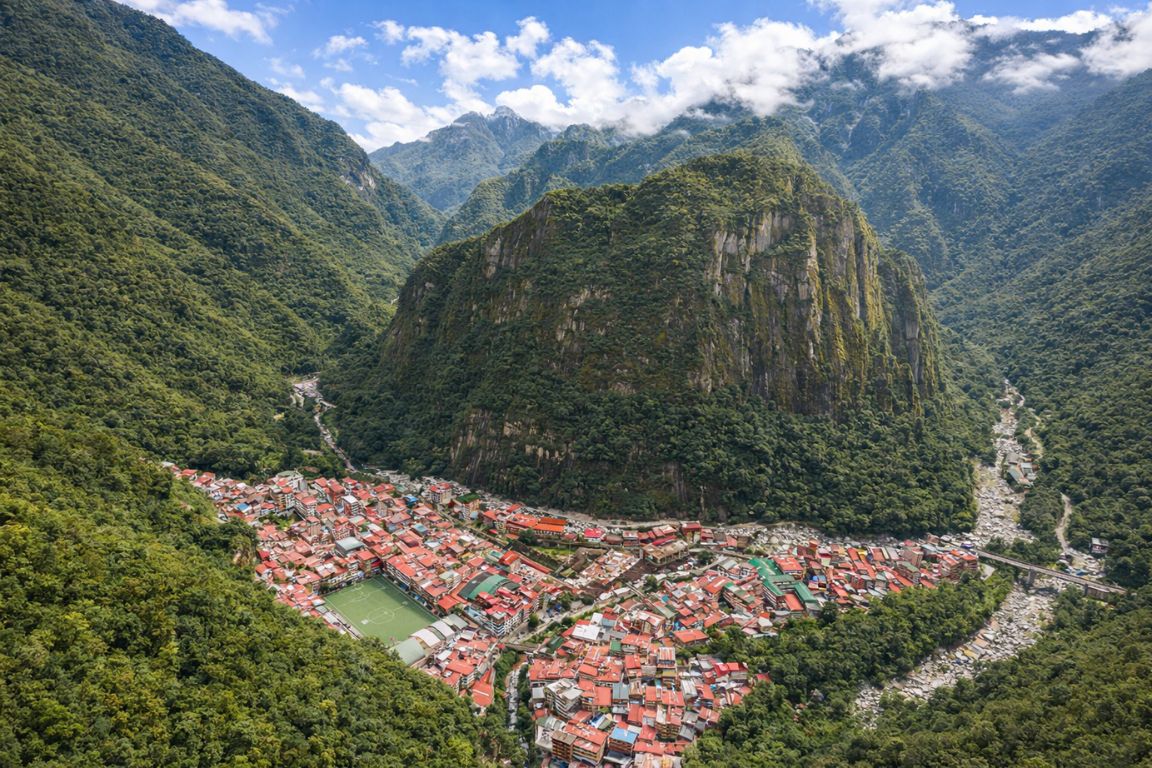
There is no road to Aguas Calientes. The valley is too narrow. You get there one of three ways: by train (most visitors), by hiking the Inca Trail or an alternative trek, or by a combination of public transport and walking in via the Hidroelectrica route. Most visitors take the train from Ollantaytambo to Aguas Calientes, roughly 90 minutes, then a Consettur bus from Aguas Calientes up to the citadel entrance, 25 to 30 minutes more.
| Train: Ollantaytambo to Aguas Calientes (Expedition/Voyager class) | 1.5 hrs | $120-190 round trip | Most travelers; best value departure point |
| Train: Cusco/Poroy to Aguas Calientes | 3.5-4 hrs | $150-240 round trip | Those skipping the Sacred Valley |
| Vistadome/360 panoramic train (Ollantaytambo) | 1.5 hrs | $180-240 round trip | Scenic experience, good views |
| Hiram Bingham luxury train | 1.5 hrs | $500-600+ round trip | Special occasions, honeymoons |
| Hidroelectrica route (public transport + walk) | 8-10 hrs total | ~$40-50 round trip | Budget travelers, adventurous types |
| Inca Trail (4-day) | 4 days hiking | $700-900 per person (agency package) | Trekkers; must book months ahead |
| Bus: Aguas Calientes to citadel gate (Consettur) | 25-30 min | $35 round trip / $23 one-way | All train arrivals |
Prices verified February 19, 2026. Train prices are approximate; check perurail.com and incarail.com for current fares.
The standard route for most travelers looks like this: Cusco city for two or three nights (acclimatization), then a private transfer or public van to Ollantaytambo (90 minutes), then the train to Aguas Calientes. Spend the night in Aguas Calientes. The following morning, queue for the bus well before your entry time and ride up to the gate. This overnight in Aguas Calientes is what makes an early entry slot achievable without a 3 AM start from Cusco.
One thing worth knowing about the train itself: your daypack must not exceed 8 kilograms or measure more than 62 linear inches combined. This is enforced. Your main luggage stays in Cusco at your hotel. You board with a daypack only, carrying what you need for Machu Picchu and your night in Aguas Calientes. Travelers who show up at Ollantaytambo station with a rolling suitcase learn about this rule the hard way.
The bus from Aguas Calientes deserves a word. During peak season, lines at the bus stop form before 4:30 AM for the first 5:30 AM departure. The ride takes 25 to 30 minutes on a winding mountain road. If you want a 6 AM entry, you need to be on one of those first buses. Buy bus tickets the afternoon before to skip the morning ticket line entirely. Both online (consettur.com) and in person at the Aguas Calientes ticket office work.
Wondering about the logistics? Check out our complete guide on how to get to Machu Picchu from Cusco so you know exactly what to book and how long each route takes.
That standard route starts once you’re in Cusco. Getting to Cusco in the first place is a separate decision, and not everyone flies. Some travelers arrive overland from Lima on Peru Hop (check prices here), a hop-on hop-off bus route through Paracas, Huacachina, Nazca, Arequipa and Puno with hotel pickup along the way, which has the side benefit of gaining altitude gradually instead of landing straight into 3,400 meters. See Lima to Cusco overland for how that route works.
Which Circuit Should You Choose for Your Visit?
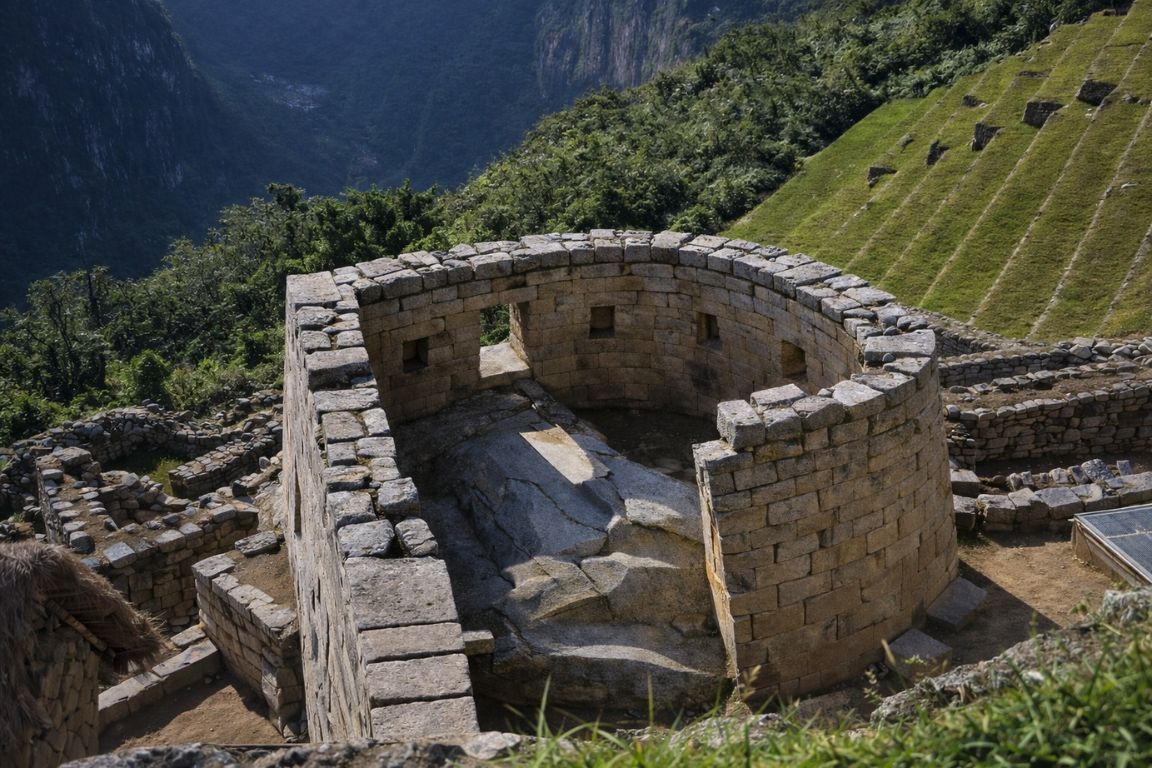
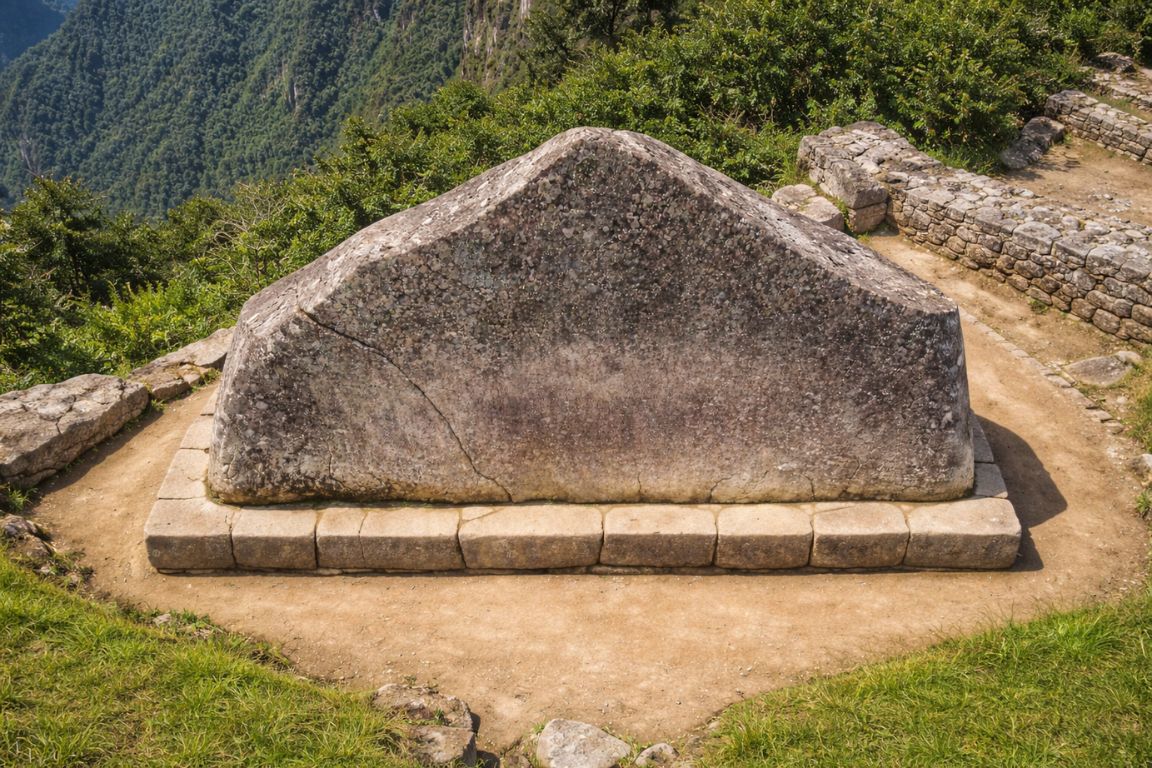
For most first-time visitors arriving by train, Circuit 2 is the right choice. It covers the main citadel, the classic postcard viewpoint at the Guardian’s House, the Temple of the Sun, the agricultural terraces, and the Sacred Rock, in about 2.5 to 3 hours. Circuit 1 focuses on panoramic views from the upper terraces only, without going into the main archaeological zone. Circuit 3 covers the lower sections and is paired with the mountain add-on hikes.
| Circuit 1 (Panoramic) | Upper terraces, Guardian’s House viewpoint, panoramic overlooks; no main temples | 1.5-2 hrs | Return visitors, photographers, limited mobility | Year-round (some routes high season only) |
| Circuit 2 (Classic) | Full citadel: temples, plazas, residential zones, Guardian’s House, postcard shot | 2.5-3 hrs | First-time visitors; best overall experience | Year-round |
| Circuit 3 (Lower City / Royal) | Lower agricultural sector, Temple of the Condor; no Guardian’s House viewpoint | 1.5-2 hrs | Combined with mountain hikes; older adults | Some routes high season only |
| Huayna Picchu add-on | Citadel circuit + steep mountain hike, spectacular aerial view | +2.5-3 hrs | Fit, adventurous visitors; only 300 daily tickets | Year-round, sells out fast |
| Machu Picchu Mountain add-on | Citadel circuit + longer mountain hike to 3,050m; less steep than Huayna | +3-4 hrs | Those who want altitude views without extreme steepness | Year-round |
| Sun Gate (Intipunku) | Circuit 1 + hike to original Inca Trail entrance at 2,745m | ~2 hrs total | Those arriving via train wanting Inca Trail feel | High season only |
Circuit availability and capacity per Ministry of Culture Ministerial Resolution 000285-2025-MC. Verified February 19, 2026.
A few things most blogs don’t mention clearly. Circuit 2 has two sub-routes: 2A includes the Guardian’s House viewpoint (the classic postcard shot, approaching from above), and 2B skips the Guardian’s House but still gets you to a panoramic overlook of the same scene from a slightly different angle. Both are excellent. If you care deeply about that specific photograph with the mountains behind Machu Picchu, make sure you are on 2A.
If you bought an Inca Trail permit and are arriving via the trail itself, read the 2026 rule change carefully. The trail permit now covers only the upper section (Circuit 1 panoramic zone). To enter the main archaeological area, you need a separate citadel entry ticket. This is new as of January 2026. Your trail permit alone gets you the view from above, nothing more. Plan accordingly and confirm your agency is handling both documents.
Not sure which ticket to buy? Check out our guide with Machu Picchu ticket types explained – Circuit 1, 2, and 3 all give you completely different routes through the ruins.
What Should You Do the Day Before (Acclimatization, Aguas Calientes, Timing)?
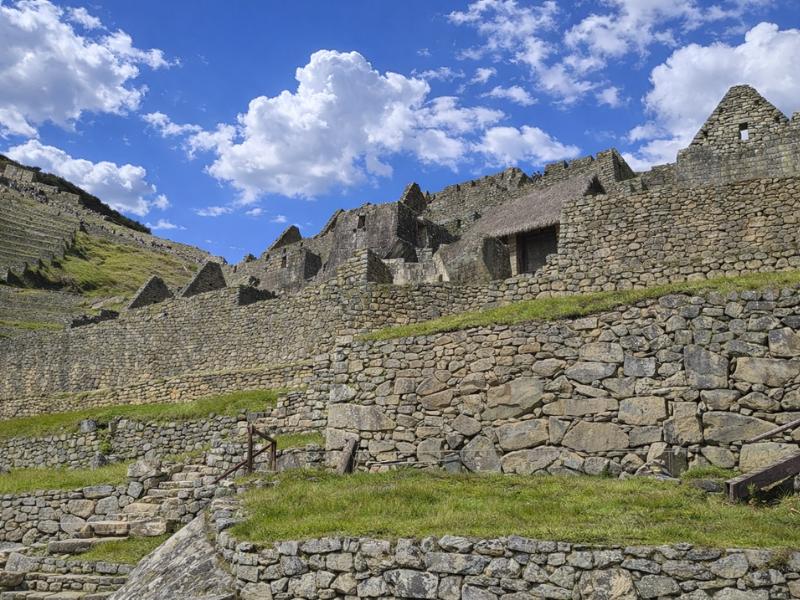
Spend at least two nights in Cusco or the Sacred Valley before going to Machu Picchu. Cusco sits at 3,400 meters (11,150 feet), nearly a kilometer higher than the citadel. If you fly into Cusco and take the train to Machu Picchu the next day, you are doing this backwards. Your body needs time at altitude. The Sacred Valley, at around 2,900 meters, is actually an excellent acclimatization base because it is lower than Cusco but still gives you the altitude adjustment your body needs before the journey.
The science of it is straightforward. Cusco is one of the highest cities in the world. When you fly in from sea level, your blood oxygen drops. Symptoms of soroche (altitude sickness in Quechua) include headache, nausea, fatigue, and disrupted sleep. They typically appear 6 to 24 hours after arrival and ease within 48 to 72 hours. Young, fit people are not immune. Age and fitness level have almost no correlation with altitude sensitivity. We have guided marathon runners who needed two full days before feeling right, and we have guided 65-year-olds who felt fine by day one.
What actually helps: drink 3 to 4 liters of water per day, eat light meals heavy in carbohydrates, take it very slow your first 24 hours, and avoid alcohol completely for at least 48 hours after arrival. Coca leaf tea, served at nearly every hotel in Cusco and the Sacred Valley, is genuinely effective at reducing mild symptoms and worth drinking. If you have a history of altitude issues, speak with your doctor before the trip about acetazolamide (Diamox).
On the night before Machu Picchu, the clear answer is to sleep in Aguas Calientes, not Cusco. Aguas Calientes sits at just over 2,000 meters, lower than the citadel itself. You sleep at lower altitude, catch the first buses without a 3 AM departure, and arrive at the gate fresh. Staying in Cusco means a very early train, a longer journey, and arriving mid-morning when crowds are already building. The hotel cost in Aguas Calientes is higher than Cusco, but the visit quality difference is real.
Use your afternoon in Aguas Calientes wisely. Buy your bus tickets for the following morning at the Consettur office on Av. Hermanos Ayar. Eat a light dinner. Find your guide if you have arranged a walk-up hire, or pre-book a private guide with ticket and bus. Set your alarm, charge your camera, and get to bed early. The alarm will come sooner than you expect.
We've been coordinating these logistics for travelers since 2009; the 2-day Sacred Valley and train itinerary is one way that sequence is already booked as a single trip. From Sacred Valley acclimatization itineraries to hotel selection in Aguas Calientes, the 2-day tour with Sacred Valley and train already lays out that plan. Over 1,600 travelers have arrived at that gate knowing exactly what to do next.
What Happens on the Day: Entry, Gates, Rules, and What to Expect Inside?
Buses start at 5:30 AM. In peak season, queue by 4:30 AM if you want the first departure. The ride is 25 to 30 minutes. At the gate, show your original passport and printed or digital ticket. Staff verify names, times, and circuits at entry. There are no toilets inside the archaeological area, so use the facilities at the entrance before scanning in. Once inside, follow your circuit exactly. Exiting the wrong gate or straying to a different circuit leads to expulsion without refund.
The morning at Machu Picchu has its own rhythm. Before 8 AM, the site is in a different state. The mist moves through the ruins in layers. Light comes in slow and angular, hitting the terraces at angles that photographs from midday cannot replicate. The groups are smaller. Sound carries differently. Then around 9 to 10 AM, the day tours from Cusco start arriving and the character of the place shifts. This is not a complaint about other travelers. It is just a description of what you gain by being there early.
Inside the gate, a few practical things to know. Circuits 1 and 2 enter through the main gate. Circuit 3 uses a separate lower gate on the right side of the only restroom building at the entrance. Staff direct you, but knowing in advance means you are not confused at the entry point. The one-way circuit system means you cannot double back. Once you are past a section, it is behind you. If you want extended time at a specific structure, take it early in your circuit, not when you are already downstream from the exit.
No food is allowed inside beyond light snacks, and those must stay in your bag. No plastic water bottles. Bring a reusable bottle filled before you enter, because there are no water sources inside the site. The sun at 2,430 meters burns faster than it does at sea level, even on cloudy days. Sunscreen, a hat, and sunglasses belong on every packing list, without exception.
After your circuit, the exit drops you back toward the bus stop. The walk down to Aguas Calientes from the gate takes about 45 to 60 minutes through stone-staircase trails and cloud forest, and is one of the better parts of the day if you are not exhausted. Buses run the return trip until 5:30 PM. Most travelers leave Aguas Calientes on afternoon trains back toward Ollantaytambo.
What Should You Pack for Machu Picchu?
Pack for three climates in one day: cold at 5 AM in Aguas Calientes, possibly wet on the bus up, warm by 10 AM inside the ruins, and potentially rainy by early afternoon. Layers that you can peel off and stuff into your pack are the strategy. Your bag must measure no more than 40 x 35 x 20 cm to pass through the citadel entrance. Everything else stays at the hotel.
| Original passport | Must match the one used to buy tickets. No passport, no entry. | Non-negotiable |
| Printed or digital ticket | QR code scanned at the gate. Have a backup screenshot. | Non-negotiable |
| Reusable water bottle (full) | No water inside the site. No plastic bottles allowed. Fill before entry. | Essential |
| Rain jacket with hood | Andean weather changes in minutes. A poncho works. Umbrella does not (banned). | Essential |
| Sunscreen (SPF 50+) | UV intensity at altitude is severe. Even overcast days burn. | Essential |
| Walking shoes or trail runners | Stone paths, uneven terrain, occasional mud. No flip-flops or heels. | Essential |
| Light warm layer | Morning at the gate is cold. Midday may be warm. Fleece or softshell. | Essential |
| Hat and sunglasses | Sun exposure at 2,430m is significant. Protect eyes and face. | Essential |
| Snack (light, sealed) | Energy bar or small sealed food for after the circuit. No loose food inside. | Recommended |
| Cash (Soles) | For tips, bathroom fees, and small purchases in Aguas Calientes. | Recommended |
| Insect repellent | Machu Picchu borders the Amazon watershed. Mosquitoes are real, especially in rainy season. | Recommended |
| Portable phone charger | Photography drains phones fast. No charging inside the site. | Recommended |
What you cannot bring: tripods, selfie sticks, or any camera stabilizer. Umbrellas are banned. Large backpacks over the size limit are confiscated at the entrance cloakroom (limited space, fee required, first-come basis). Drones are absolutely prohibited. Single-use plastic bottles are not allowed. Musical instruments are banned. Alcohol is not permitted inside.
The bag size rule catches people every year. Measure your daypack before you leave for the trip: 40 x 35 x 20 cm maximum. This is smaller than most standard daypacks. A 20-liter pack is typically right at the limit. Anything larger has to go in the cloakroom at the entrance, which is basic, limited in capacity, and costs a fee. Arrive with the right-sized bag and avoid the scramble.
Not sure what to pack for the ruins? I’ve put together a complete guide on what to wear to Machu Picchu guided tours so you’re comfortable at altitude and ready for weather changes.
What Are the Most Common Mistakes First-Time Visitors Make?
The biggest mistakes are timing-related: booking too late, underestimating acclimatization time, choosing the wrong circuit, and not accounting for the full logistical chain from ticket to train to bus to gate. The site punishes underprepared visitors in specific, predictable ways. None of these errors are difficult to avoid with the right information.
The single most damaging mistake is skipping acclimatization. Flying into Cusco and taking the train the next morning is something we see travelers attempt, and it rarely goes well. Altitude sickness at Machu Picchu does not feel like a mild headache. It feels like walking through wet concrete while your skull tries to expand. The site is physically demanding enough when you feel fine. Give your body two full nights at altitude before making the journey.
Worried about altitude sickness? I’ve got the altitude at Machu Picchu guided tours explained so you know exactly what elevation you’re dealing with and how to handle it.
The second is buying the train ticket before the entry ticket. They are not sold on the same platform. They have different availability windows. Travelers who lock in train times and then discover the only available entry slots are two hours before or after their train have to choose between changing their train (often expensive or impossible) or taking a non-ideal entry time. Buy entry first, always.
Third is the circuit mismatch. Visitors who book Circuit 1 thinking they will see the famous postcard view get to the Guardian’s House overlook but cannot enter the main citadel. The temples, the Intihuatana, the Sacred Rock, the residential sectors: none of those are on Circuit 1. If you have traveled this far and want to understand what Machu Picchu actually is, you want Circuit 2.
Fourth is arriving without a guide and then realizing there is no signage inside. Not a single interpretive panel, label, or explanatory marker anywhere in the entire citadel. You are walking through one of the greatest architectural achievements in human history without any indication of what you are looking at. Some travelers are fine with this; most wish they had planned differently. A guide does not need to be expensive. Even a shared group tour at the Aguas Calientes bus stop is far better than nothing; you can also pre-book a Circuit 2 guided tour with the entrance ticket.
Fifth is ignoring the one-entry rule. Tickets allow one entry per day. If you exit for any reason, you cannot re-enter. Use the bathroom at the entrance before going through the gate. There are no restrooms inside.
What Our Travelers Wish They Had Known Before Going
After 17 years and 1,600 guided visitors, we track what our clients say they would have done differently if they had known better. The patterns are consistent.
| Booked train before entry ticket | “Our train and gate time didn’t align” | Book citadel ticket first, train second |
| Flew into Cusco, went straight to Machu Picchu | “Altitude ruined the first day” | 2 nights Cusco / Sacred Valley minimum first |
| Chose Circuit 1 to save money | “Missed all the main temples” | Circuit 2 for all first-time visitors |
| Stayed in Cusco the night before | “Had to leave at 3 AM, exhausted by 9 AM” | Sleep in Aguas Calientes the night before |
| Skipped the guide to save money | “We saw it but didn’t understand it” | At minimum, book a shared walk-up group tour |
| Planned a day trip without an overnight buffer | “Train delays meant we arrived at noon” | Build one buffer day into your Machu Picchu window |
| Brought full-size backpack | “Turned away at entrance, lost 30 minutes at cloakroom” | Daypack 40 x 35 x 20 cm maximum |
Frequently Asked Questions
How far in advance should I book Machu Picchu tickets?
For June through early November (peak season), book 60 to 90 days out. For April, May, September, and October, 30 to 45 days is usually sufficient. January through March is the rainy season and has more availability, but also more weather uncertainty. If you are stuck, 1,000 same-day tickets are sold each evening at the Machu Picchu Cultural Center in Aguas Calientes for next-day entry.
What is the best circuit for a first-time visitor?
Circuit 2 (Classic Route). It covers the main citadel, the Guardian’s House viewpoint for the famous postcard shot, the temples, and the residential sectors in about 2.5 to 3 hours. Circuit 1 gives panoramic views only without the main archaeological zones. Circuit 3 covers the lower city and pairs with the mountain hike add-ons. For first visits, Circuit 2 is the right choice.
Do I need to stay overnight in Aguas Calientes?
Not required, but strongly recommended. Staying in Aguas Calientes means you sleep at lower altitude, catch the first 5:30 AM buses, and arrive at the gate on your schedule rather than rushing from Cusco at 3 AM. The difference in visit quality is significant. One night in Aguas Calientes before Machu Picchu is one of the better investments you can make in the trip.
How long does the bus from Aguas Calientes to the gate take?
25 to 30 minutes on the Consettur shuttle bus. Buses run every 10 to 15 minutes from 5:30 AM. In peak season, queue by 4:30 AM for the first buses. The round-trip bus ticket costs $35 USD; one-way is $23 USD. Buy tickets the afternoon before at the Consettur office on Av. Hermanos Ayar to avoid the morning ticket line.
What should I do about altitude sickness before visiting Machu Picchu?
Spend at least two nights in Cusco (3,400m / 11,150ft) or the Sacred Valley before going to Machu Picchu. Drink 3 to 4 liters of water daily, avoid alcohol for 48 hours after arrival, eat light and carbohydrate-rich meals, and take it slow. Coca tea, widely available at hotels, genuinely helps with mild symptoms. Machu Picchu itself is at a lower altitude (2,430m) than Cusco, so most visitors feel better once they descend from Cusco, not worse.
What is the backpack size limit at Machu Picchu?
40 x 35 x 20 cm, weighing no more than 8 kg (17.6 lbs). This same limit applies on the trains. Oversized bags are not permitted inside the citadel; they go to a cloakroom at the entrance, which has limited capacity and charges a fee. Measure your daypack before traveling to avoid this on the day of your visit.
Written by Diego Alejandro Ramirez
Peruvian tour guide since 2009 · Founder, Machu Picchu Guided Tours
Diego has guided over 1,600 travelers through Machu Picchu and the Sacred Valley since founding the agency.
Put The Entry And Journey In The Same Plan
Check your date before arranging the rest. We may earn commission through this booking link.