Altitude at Machu Picchu Explained
Machu Picchu is lower than Cusco—most altitude issues happen before you reach the ruins. Here’s what really matters for acclimatizing safely.
A tour can arrange transport and guiding; it cannot establish whether you are ready for altitude. Leave rest days outside the booked itinerary.
| Lima | 154 m | 505 ft | None | Sea level entry point; where most travelers land |
| Aguas Calientes (Machu Picchu Town) | 2,040 m | 6,693 ft | Very low | Base town; below AMS threshold for most travelers |
| Machu Picchu citadel | 2,430 m | 7,972 ft | Low–moderate | Just above AMS threshold; exertion amplifies effects |
| Huchuy Picchu | 2,497 m | 8,192 ft | Low–moderate | Shorter hike; similar altitude to citadel |
| Ollantaytambo | 2,792 m | 9,160 ft | Moderate | Popular acclimatization stop; lower than Cusco |
| Sacred Valley (average) | 2,800 m | 9,186 ft | Moderate | Range: 2,050–3,000 m depending on site |
| Huayna Picchu summit | 2,693 m | 8,835 ft | Moderate | Steep exertion multiplies altitude effect significantly |
| Cusco | 3,399 m | 11,152 ft | High | Where most travelers first feel serious altitude effects |
| Machu Picchu Mountain summit | 3,082 m | 10,111 ft | High | Significant AMS risk; comparable to upper Cusco range |
| Dead Woman’s Pass (Inca Trail) | 4,215 m | 13,828 ft | Very high | Highest point most trekkers reach on classic Inca Trail |
What Is the Actual Altitude at Machu Picchu, and Why Does It Matter Less Than You Think?
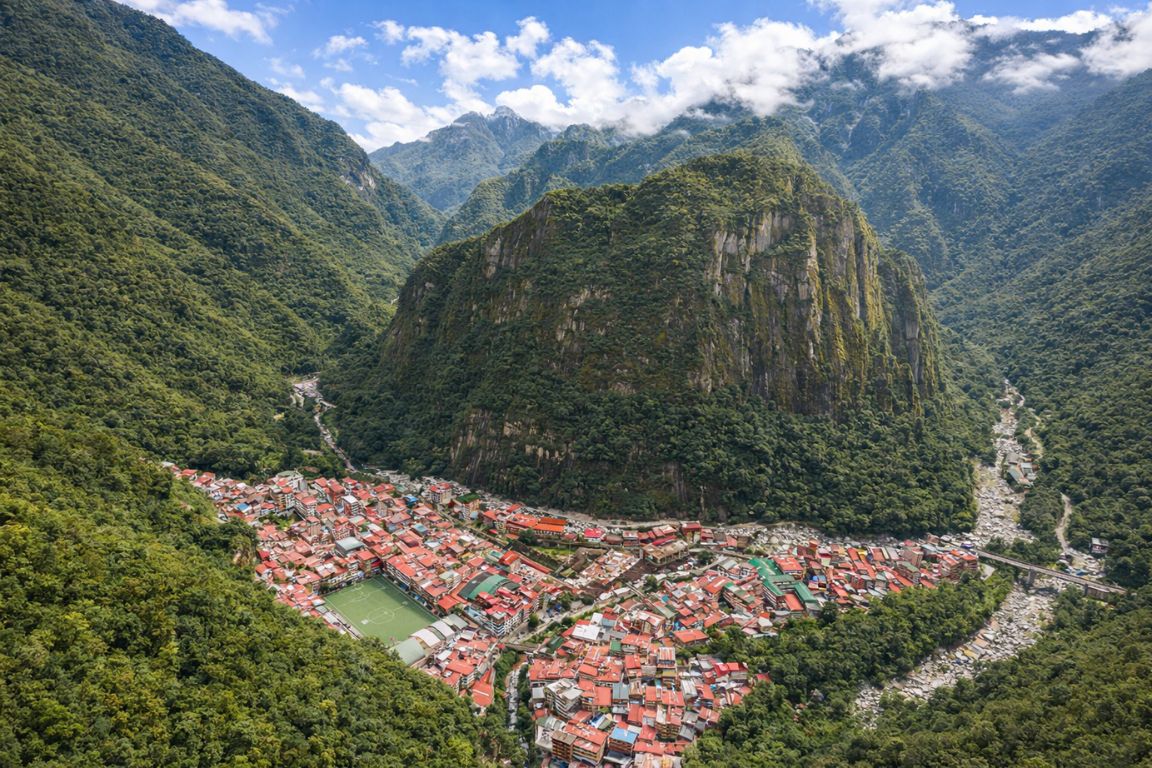
Machu Picchu sits at 2,430 meters (7,972 feet) above sea level, which places it just above the threshold where altitude sickness becomes possible for some travelers. But here is the detail most articles bury: this is nearly 1,000 meters lower than Cusco, the city most visitors fly into first. By the time you reach the citadel, your body has usually already done the hard acclimatization work.
The number that catches people is 2,500 meters. That is the general elevation above which acute mountain sickness (AMS) becomes clinically significant, according to the CDC and standard wilderness medicine guidelines. Machu Picchu hovers right at that line. The citadel is not a high-altitude destination by Andean standards. But it is high enough that a visitor who flew in from sea level 24 hours earlier and did not acclimatize in Cusco will feel it.
What actually catches most visitors off guard is not Machu Picchu itself. It is Cusco. You land at 3,399 meters, walk out of the airport, and the air immediately feels thinner. Your legs feel heavier on stairs. Some people feel a dull headache before they reach the hotel. That is normal. It is also useful information: if you feel that way in Cusco and then improve over a day or two, you are acclimatizing on schedule. Descending to Machu Picchu at 2,430 meters often produces the opposite sensation, a subtle but real relief, that travelers sometimes describe as suddenly feeling like themselves again.
One more number worth understanding: Aguas Calientes, the town you sleep in before visiting the ruins, sits at just 2,040 meters. That is well below the threshold for most travelers. The 390-meter climb from town to citadel happens in 20 minutes by bus or about 90 minutes on foot. It is a transition, not a shock, and your body has typically spent a night already at the lower elevation.
How Does Machu Picchu Compare to Cusco and Every Other Stop on Your Trip?
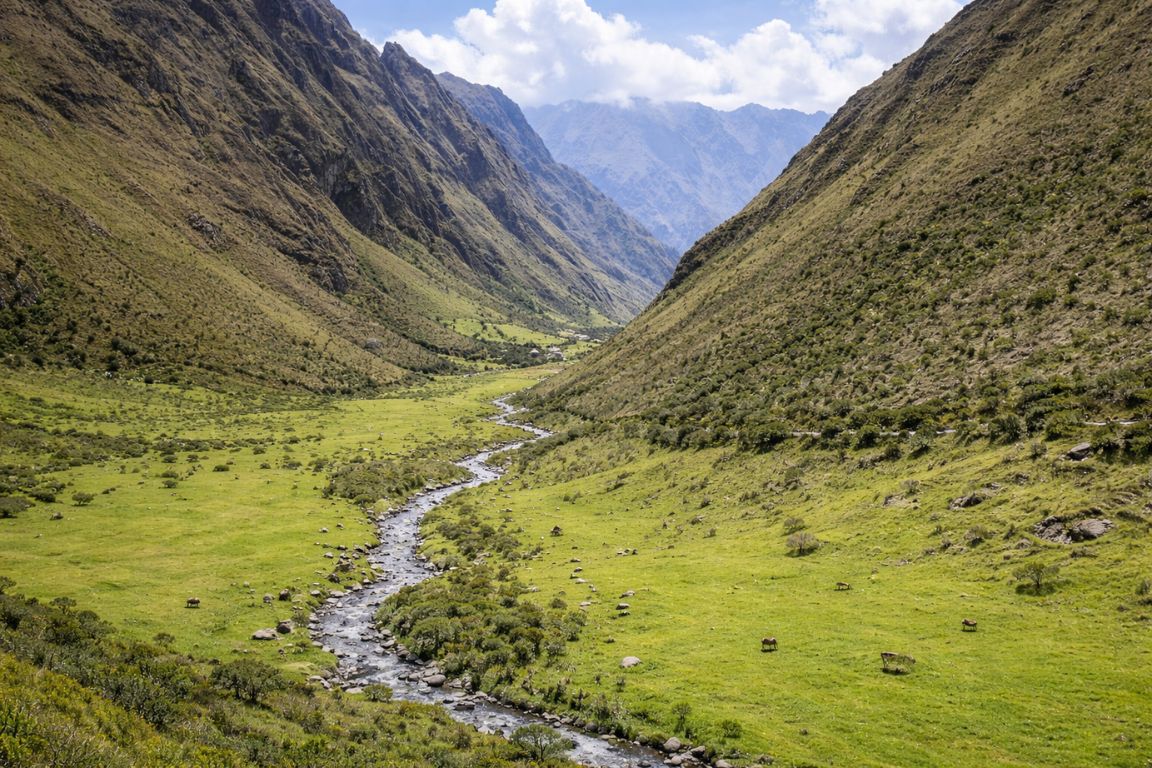
The typical Machu Picchu itinerary follows a gradual descent in elevation: Lima at sea level, then Cusco at 3,399 m, then the Sacred Valley averaging around 2,800 m, then Aguas Calientes at 2,040 m, then the citadel at 2,430 m. This pattern is actually well-designed for acclimatization if you follow the standard route. You do the hardest altitude work in Cusco and arrive at Machu Picchu already adapted.
The table above shows the full elevation picture. A few things stand out when you look at it together.
First, Cusco is higher than anywhere you actually tour at Machu Picchu. The citadel, Huayna Picchu, even the Guardian’s House viewpoint, all sit well below where you were sleeping the night before you took the train. Many travelers who struggled in Cusco report feeling noticeably better the moment they arrive at the ruins. That is not imagination. That is a real and measurable reduction in altitude stress.
Second, Machu Picchu Mountain is the exception. At 3,082 meters, it climbs back up to nearly Cusco-level altitude. Visitors who felt fine in Cusco often underestimate this hike precisely because the citadel itself felt manageable. The summit at 3,082 meters is a different animal than the flat plaza at 2,430 meters, and the physical exertion of the climb amplifies altitude effects considerably.
Third, the Inca Trail inverts this pattern entirely. Dead Woman’s Pass at 4,215 meters on day two of the classic four-day trek is the highest point most visitors reach anywhere in their Peru itinerary. Trekkers doing the full Inca Trail (book tour here) should plan their acclimatization accordingly, with additional days in Cusco or the Sacred Valley before the first day of hiking.
Want the full details on every route? I’ve got a complete Machu Picchu circuits breakdown with all the subroutes mapped out so you know exactly what each path covers.
What Are the Real Symptoms of Altitude Sickness and When Do They Appear?
Altitude sickness comes in three forms. Acute mountain sickness (AMS) is mild and common, feeling much like a bad hangover, with headache as the primary symptom. High-altitude pulmonary edema (HAPE) and high-altitude cerebral edema (HACE) are rare but genuinely dangerous and require immediate descent. At Machu Picchu’s elevation, serious cases are uncommon but not impossible, especially in travelers who rushed the ascent.
AMS symptoms typically arrive 2 to 12 hours after reaching altitude, often during or after the first night of sleep. You will know it by the combination: a persistent headache that ibuprofen only partially blunts, fatigue out of proportion to your activity level, some nausea, and occasionally dizziness. The CDC describes it as feeling like an alcohol hangover, which is apt enough that locals sometimes joke about confused tourists who blame the pisco. The symptoms are the body’s protest against thinner air, and for most travelers at Machu Picchu’s elevation, they are temporary and manageable.
The two severe forms are a different matter entirely.
HAPE, high-altitude pulmonary edema, is excess fluid in the lungs. It develops 24 to 96 hours after rapid ascent, most commonly above 2,400 meters, and it can become dangerous within 12 hours. Early signs are unusual shortness of breath during exertion, a dry cough, and chest tightness. These are easy to dismiss as “just the altitude.” Do not dismiss them. Worsening cough, pink or frothy sputum, and difficulty breathing at rest are emergency signs.
HACE, high-altitude cerebral edema, is brain swelling. It is considered end-stage AMS and is fortunately rare below 4,300 meters. Key warning signs are ataxia (loss of coordination, difficulty walking a straight line) and altered mental status, confusion, drowsiness, or irrational behavior. At Machu Picchu’s elevation these are uncommon, but the Inca Trail‘s higher passes bring the risk up meaningfully.
One important clarification: fitness does not protect you from altitude sickness. This surprises a lot of athletic travelers. Whether you run marathons or rarely exercise has essentially no bearing on AMS susceptibility. What matters is the rate of ascent, your sleeping elevation, and individual physiology, some of which is simply genetic. Travelers in excellent physical condition have been evacuated from Cusco. Older travelers who take the acclimatization seriously often feel fine.
Who Is Actually at Risk and What Factors Matter Most?
The biggest risk factor for altitude sickness in Machu Picchu visitors is not age, fitness level, or prior travel experience. It is speed of ascent combined with sleeping elevation. Travelers who fly directly from sea level to Cusco (3,399 m) without acclimatizing are at significantly higher risk than those who spend a night or two in the Sacred Valley first. About 25% of visitors sleeping above 2,450 meters experience some AMS symptoms, per CDC data.
Some factors do raise individual risk. A personal or family history of AMS is the strongest predictor: if you had it before at similar elevations, the odds of having it again are roughly double. People with migraines have a higher susceptibility to AMS, likely because of shared mechanisms in the trigeminovascular system. Obstructive sleep apnea raises risk as well, because hypobaric hypoxia at altitude compounds what sleep apnea already does to overnight oxygen saturation.
Pregnancy warrants a conversation with your doctor before any Andes itinerary. There are no documented cases of fetal harm from brief exposure to Machu Picchu’s specific elevation, but the combination of altitude, remote location, and limited medical facilities in the area creates a risk profile worth discussing with an obstetric provider who knows your specific situation.
A few popular beliefs turn out not to hold up. Being young does not protect you. In some studies, younger travelers actually showed higher AMS rates than older ones, possibly because they push harder physically and descend less readily at first symptoms. Being from a high-altitude city helps somewhat but does not eliminate risk. Prior trips to Cusco with no problems predict future success reasonably well, but not perfectly.
What the research consistently shows is that the single most protective factor is the same thing that seems annoyingly obvious: ascend gradually, give your body time to adapt at each elevation before going higher, and take symptoms seriously rather than pushing through them.
Not sure if your kids are ready for the elevation and walking? Our guide on visiting Machu Picchu guided tours with kids covers age recommendations, physical demands, and how to make it genuinely enjoyable.
| Prior AMS history | Significantly increases risk | Discuss acetazolamide prophylaxis with your doctor |
| Flying directly from sea level to Cusco | High risk increase | Add 1–2 nights in Sacred Valley (2,800 m) before sleeping in Cusco |
| Migraine history | Moderate increase | More gradual ascent; carry ibuprofen; consider medication |
| Obstructive sleep apnea | Moderate increase | Consult doctor; acetazolamide helps with nocturnal oxygen dips |
| Physical fitness level | No significant effect | Do not use fitness as a reason to skip acclimatization |
| Age | Minimal effect | Younger travelers are not meaningfully protected; take it seriously |
| Living at sea level normally | Moderate increase vs. high-altitude residents | Extra acclimatization days at moderate elevation before Cusco |
| 2+ nights above 2,500 m in past 30 days | Moderate protection | Recent high-altitude exposure is helpful if close to trip date |
| Gradual ascent (Sacred Valley first) | Strong protection | The single most reliable thing you can do |
| Acetazolamide (prescription) | Strong protection when used correctly | Begin 24 hours before ascent; requires doctor consultation |
How Should You Acclimatize Before and During Your Visit?
The most effective acclimatization strategy for a standard Cusco – Sacred Valley – Machu Picchu itinerary is to arrive in Cusco, rest for the first day without heavy activity, spend at least two nights there before doing anything strenuous, and add a night in the Sacred Valley (2,800 m) if possible before the train to Aguas Calientes. The classic mistake is arriving in Cusco and immediately going on a full-day tour.
What you do in the first 48 hours in Cusco matters more than almost any other part of preparation. The Wilderness Medical Society recommends not ascending to a sleeping elevation above 2,750 meters in a single day when coming from low altitude, and limiting sleeping elevation gain to 500 meters per night once above 3,000 meters. Cusco at 3,399 meters violates these guidelines if you fly directly from Lima at sea level, which is why the Sacred Valley approach exists. Sleeping a night or two in Ollantaytambo (2,792 m) or Urubamba (2,863 m) before your Cusco nights gives the body a meaningful step-up rather than a jump.
There is a less obvious way to avoid the Lima-to-3,399-meters jump altogether: don’t fly straight into Cusco. Travelers arriving overland from Lima on Peru Hop (check prices here)’s bus route gain elevation in stages through stops in Paracas, Huacachina, Nazca, Arequipa (2,335 m) and Puno (3,827 m) before reaching Cusco, rather than landing directly at altitude with no transition. This is not a medical claim and it does not replace the rest days above; it just means the ascent happens over days instead of hours. Details of that route are in Lima to Cusco overland.
The behaviors that help during acclimatization are mostly unglamorous. Drink more water than you think you need. Avoid alcohol for the first 48 hours at altitude; alcohol suppresses the ventilatory response and worsens nocturnal oxygen saturation. Avoid sleeping pills for the same reason. Eat lighter meals, since digestion competes for the oxygen your body is trying to redirect. Move slowly and rest when you feel tired rather than pushing through fatigue.
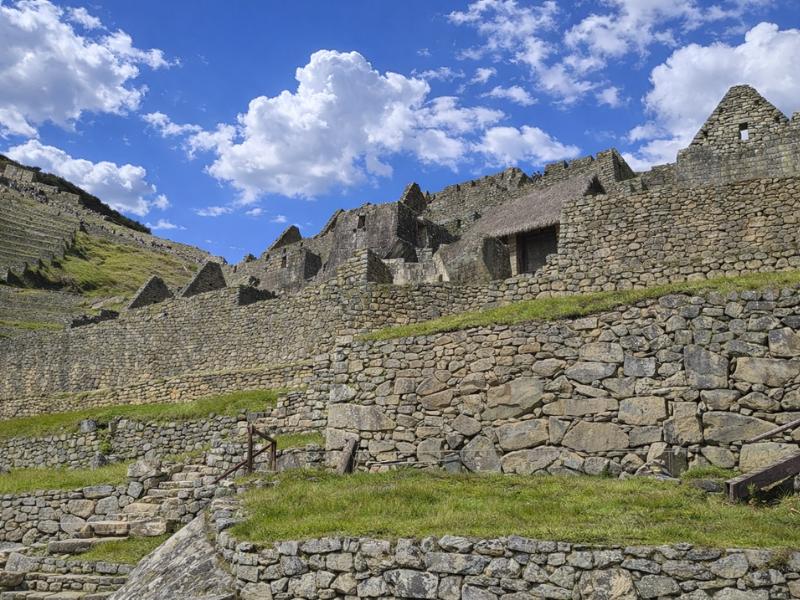
At Machu Picchu itself, the acclimatization is less demanding because you are descending to a lower elevation than Cusco. But the physical exertion of walking the site, climbing steep staircases, and potentially doing a mountain hike all increase oxygen demand. The approach that works best for our groups is arriving at the site at a reasonable hour rather than rushing the earliest entry slot, and taking genuine rest breaks rather than racing through circuits.
One thing the guides know from experience: altitude effects at Machu Picchu tend to peak during the first hour at the site. The uphill walk from the bus drop-off to the main gate, and then the initial climb through the terraces, is when you will feel the thin air most acutely. Slow down here. Once you are moving on flat ground through the interior of the citadel, most people feel considerably better.
Trying to figure out your itinerary? Check out how many days you need for Machu Picchu guided tours – most people either rush it or waste a day sitting around Aguas Calientes.
What About Acetazolamide, Coca Leaves, and Other Remedies?
Acetazolamide (sold as Diamox) is the only pharmacological treatment with solid clinical evidence for AMS prevention. It requires a prescription, needs to be started 24 hours before ascent, and has real side effects including increased urination and tingling in the hands and feet. Coca leaves and coca tea are culturally significant and widely available in Cusco but have no clinical evidence supporting their effectiveness against AMS, despite being nearly universally offered to arriving travelers.
On acetazolamide: the CDC’s Yellow Book recommends it as prophylaxis for travelers in the medium-to-high-risk category, which includes anyone flying directly to Cusco from low altitude. The standard prevention dose is 125 mg twice daily, started 24 hours before ascending to high altitude and continued for 48 hours at that elevation. The 250 mg dose is reserved for treatment of established AMS symptoms. Higher doses mean more side effects without meaningfully better outcomes.
The side effects are worth knowing about before you start. The increased urination is real and noticeable. The tingling in fingers, toes, and around the mouth (paresthesia) affects most people who take it and is benign but startling if you are not expecting it. Carbonated drinks taste flat. None of these are reasons to stop. The medication should not be taken by anyone with sulfa drug allergies, kidney disease, or liver disease, and it requires a prescription specifically because the right patient selection involves more than a quick internet search. See your doctor two to four weeks before departure.
On coca leaves: the honest summary is that they have been used in the Andes for thousands of years, they are an important part of Peruvian culture, and the clinical evidence for their effectiveness against AMS is essentially nonexistent. A peer-reviewed study of travelers to Cusco found that coca tea consumption was not associated with decreased AMS risk, while acetazolamide use was associated with an 87% reduction in odds. The 2022 PubMed study on language students in Cusco found the same pattern. This does not mean coca tea has no value. The mild stimulant effect helps with energy and the social ritual of drinking it is part of experiencing Cusco properly. It just means you should not substitute it for acclimatization or medication if either is warranted.
On ibuprofen: there is decent evidence, including two 2012 studies, that ibuprofen 600 mg three times daily reduces both incidence and severity of AMS. It is over-the-counter, accessible, and well-tolerated by most travelers. It is not as effective as acetazolamide but is a reasonable option for travelers with mild risk profiles who cannot or prefer not to use acetazolamide.
On oxygen: hotels in Cusco commonly offer supplemental oxygen for guests experiencing symptoms. It provides fast relief for AMS headache, about 30 minutes at 1 to 2 liters per minute. The portable canisters sold at tourist shops contain too little oxygen for sustained improvement but can help briefly. Oxygen does not replace acclimatization or, in serious cases, descent.
| Experienced noticeable AMS symptoms in Cusco (first 24 hrs) | ~45–50% | Consistent with published rates; headache most common complaint |
| Reported feeling better at Machu Picchu than in Cusco | ~60% | Direct result of descending nearly 1,000 meters from Cusco |
| Had significant symptoms at the citadel itself (acclimatized travelers) | ~8–12% | Most resolved within 1–2 hours with rest; few needed early departure |
| Reported significant exertion symptoms on Machu Picchu Mountain hike | ~35% | Elevation to 3,082 m plus steep terrain is a meaningful step up |
| Used Sacred Valley acclimatization night before Cusco | ~30% | This group consistently reports lower Cusco AMS rates |
| Used acetazolamide with doctor guidance | ~18% | Significant improvement in AMS rates among those who used it correctly |
We’ve been securing tickets and managing altitude logistics for travelers since 2009. A full-day private tour by train covers ticket, guide, and transport so you can keep the pace slow on site.
When Should You Be Genuinely Worried? Red Flags That Require Immediate Action
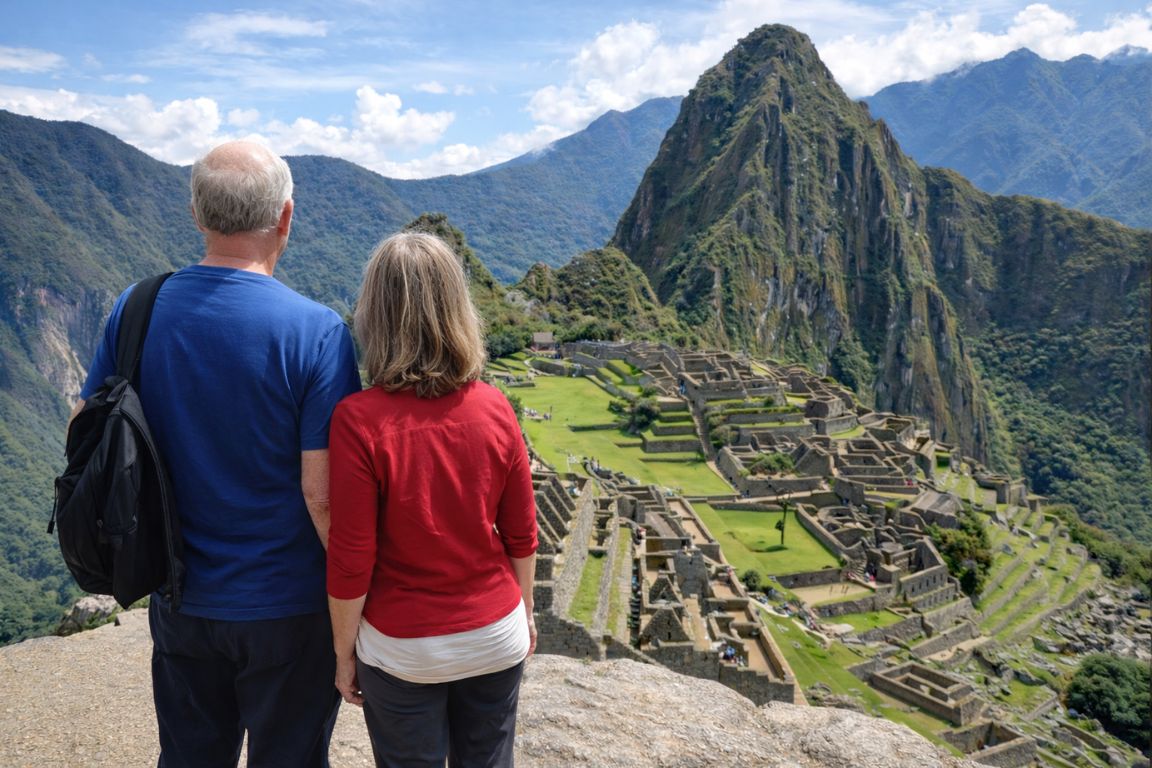
AMS with typical symptoms (headache, fatigue, mild nausea) at Machu Picchu’s elevation is common and manageable: rest, hydrate, and descend slightly if needed. The situations that require urgent action are: symptoms that worsen despite resting at the same elevation, any loss of coordination or balance, confusion or altered mental status, and breathlessness at rest or a persistent cough with frothy sputum. These are HACE and HAPE warning signs, and they require immediate descent.
The golden rule taught by every wilderness medicine curriculum is simple: never ascend with AMS symptoms, and descend when symptoms worsen at the same elevation. Both rules apply to the Machu Picchu context, though the relevant direction is down the bus road to Aguas Calientes rather than to some remote base camp. Aguas Calientes at 2,040 meters provides meaningful relief very quickly. Most AMS symptoms improve noticeably within an hour of descending 300 to 400 meters.
The specific symptoms that require treating as an emergency rather than a discomfort:
Ataxia is the most important single warning sign. If a person cannot walk a straight line or seems to have lost basic coordination, this is a neurological red flag that suggests HACE progression. Do not wait to see if it resolves. Descend and get to medical care.
Confusion or irrational behavior, especially in someone who was previously clear-headed. This is distinct from being tired or headachy. An actual change in mental state, saying strange things, being unable to answer simple questions, acting out of character, warrants immediate evacuation to lower elevation.
Severe breathlessness at rest or breathlessness that is disproportionate to any exertion. Some increased awareness of breathing is normal at altitude. Struggling to breathe while sitting quietly is not. Combined with cough and especially pink or frothy sputum, this indicates HAPE, which the Merck Manual notes can worsen and cause death within hours.
For the vast majority of visitors, none of these signs will appear. The citadel’s elevation, combined with most travelers arriving from Cusco where they have already acclimatized, keeps the serious case rate low. But knowing the difference between “I feel a bit rough” and “I need help now” is information worth having before you arrive rather than after.
If you’re concerned about physical demands at altitude, here’s the honest take on Machu Picchu guided tours for seniors based on what’s realistic and what operators won’t tell you upfront.
Frequently Asked Questions
Is Machu Picchu high altitude?
Machu Picchu sits at 2,430 meters (7,972 feet), which is just above the threshold where altitude sickness becomes possible for some travelers (2,500 meters). By Andean standards it is moderate altitude, and notably lower than Cusco at 3,399 meters where most visitors first arrive.
Can altitude sickness be fatal at Machu Picchu?
Death from altitude illness at Machu Picchu’s specific elevation is extremely rare. The dangerous forms of altitude sickness (HAPE and HACE) are uncommon below 3,000 meters. Machu Picchu Mountain’s summit at 3,082 meters carries marginally higher risk, especially combined with heavy exertion. Travelers who take acclimatization seriously and recognize warning signs early are at very low risk.
Do I need to acclimatize before Machu Picchu?
You need to acclimatize before Cusco, not specifically before Machu Picchu. The citadel is about 1,000 meters lower than Cusco. Standard guidance is to spend two or more nights in Cusco or the Sacred Valley before attempting strenuous activity. Most travelers who follow a standard Sacred Valley itinerary arrive at Machu Picchu already well-adapted.
Does coca tea help with altitude sickness?
There is no clinical evidence that coca tea prevents or treats altitude sickness. Multiple studies of travelers in Cusco found that coca tea consumption was not associated with reduced AMS rates, while acetazolamide use was strongly protective. Coca tea has real cultural significance and mild stimulant effects that can help with energy, but it should not substitute for acclimatization or prescription medication where warranted.
Is Diamox (acetazolamide) necessary for Machu Picchu?
Not for most travelers following a standard itinerary with proper acclimatization. The CDC classifies Cusco as a medium-to-high-risk destination for travelers flying directly from low altitude, and acetazolamide is recommended for that scenario. If your itinerary includes gradual acclimatization days in the Sacred Valley before sleeping in Cusco, your risk drops considerably. Discuss your specific itinerary with a travel medicine doctor 2 to 4 weeks before departure.
What is the difference in altitude between Cusco and Machu Picchu?
Cusco sits at 3,399 meters (11,152 feet); Machu Picchu citadel sits at 2,430 meters (7,972 feet). The difference is 969 meters, or roughly 3,180 feet. This is why many visitors who struggled in Cusco feel noticeably better at the ruins. The descent is physiologically significant.
Written by Diego Alejandro Ramirez
Peruvian tour guide since 2009 · Founder, Machu Picchu Guided Tours
Diego has guided over 1,600 travelers through Machu Picchu and the Sacred Valley since founding the agency.
Keep The Travel Plan Separate From Acclimatization
Check your date before arranging the rest. We may earn commission through this booking link.