Visiting Machu Picchu with Kids
Machu Picchu is genuinely good for children, but it is good for different reasons depending on their age. Young children respond to the drama of the place:
Check every child’s age against the option before paying. Guiding and transport do not remove the stairs, food rules or restroom constraints.
| Children under 3 | Free entry. Still requires a ticket reservation counting toward daily capacity. Bring passport for verification. |
| Children ages 3 to 17 | Discounted ticket: 70 to 77 soles (approximately $20 USD). Passport required at entry. |
| Strollers / prams | Prohibited inside the citadel. Backpack-style baby carriers (non-metal frame) are permitted. Store stroller at entrance cloakroom. |
| Restrooms | Located only outside the main entrance gate. Use before entering. No re-entry on the same ticket once you exit. |
| Food inside the site | Prohibited. Water is allowed. Pack snacks in your bag and eat outside before entry. No vendors inside the citadel. |
| Huayna Picchu mountain hike | Minimum age 12. Very steep exposed terrain. Not suitable for younger children. |
| Machu Picchu Mountain hike | No minimum age restriction. Wider trail, 3 to 4 hours round-trip, 650 m elevation gain. Suitable for fit children 10 and up with parental judgment. |
| Huchuy Picchu hike | No minimum age restriction. Approximately 1 hour round-trip, moderate trail. Best family-friendly mountain option. |
| Site altitude | 2,430 m (7,972 ft). Just below standard AMS threshold of 2,500 m, but Cusco acclimatization (3,400 m) should precede the visit for all travelers including children. |
| Best circuit for families | Circuit 2A or 2B. Covers main temples and viewpoints in 2.5 to 3 hours. Manageable for most children 6 and up. |
Is Machu Picchu Actually Good for Kids? The Honest Answer
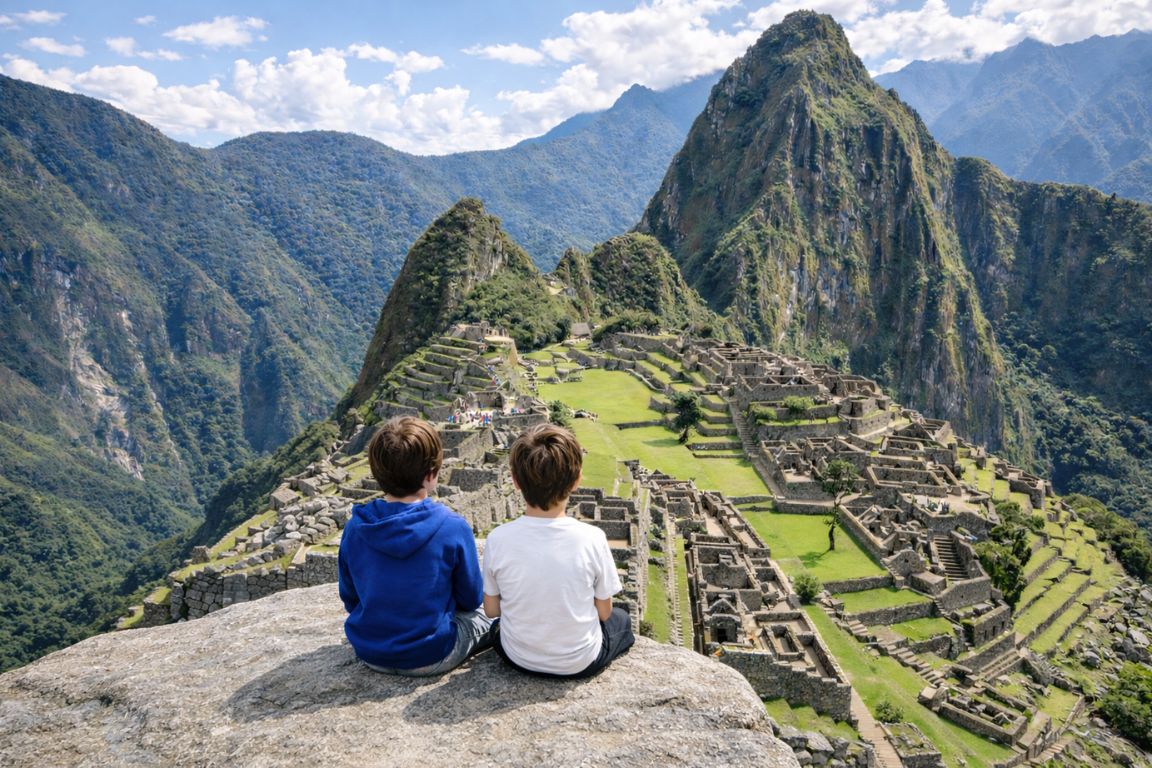
Machu Picchu is genuinely good for children, but it is good for different reasons depending on their age. Young children respond to the drama of the place: the mountains, the mist, the llamas that wander through the terraces like they own the site. Older children and teenagers respond to the scale and the mystery of it. A 9-year-old who has been primed with basic context about the Inca will walk through those gates and feel like they are inside something important. A 4-year-old will remember the alpaca who tried to eat their hat.
The honest caveat is this: the site was built by people without small children in mind. The stone steps are enormous, cut for Inca adults moving quickly through a working city. For a 5-year-old, some of these stairs are knee-height obstacles. After an hour of that terrain, small legs tire in ways that cannot be managed by encouragement alone. And unlike most tourist sites where a tired child can sit at a cafe while you collect yourself, there are no cafes inside Machu Picchu. No vendors, no food, no place to sit and regroup except the ground along the circuit path.
We have guided families with children from ages 2 through 17. The visits that go smoothly share a few things: an early entry time before heat and crowds build, realistic pacing with built-in rest points, a guide who knows how to frame the Inca story at a child’s level, and parents who handled the practical logistics (restroom stop before entry, water in the bag, snacks eaten outside before walking through the gate) without exception. The visits that struggle are almost always logistical failures, not age problems.
So the answer is yes, Machu Picchu is good for kids. The conditions under which it is good are specific. This guide covers all of them.
What Age Is Machu Picchu Appropriate For?
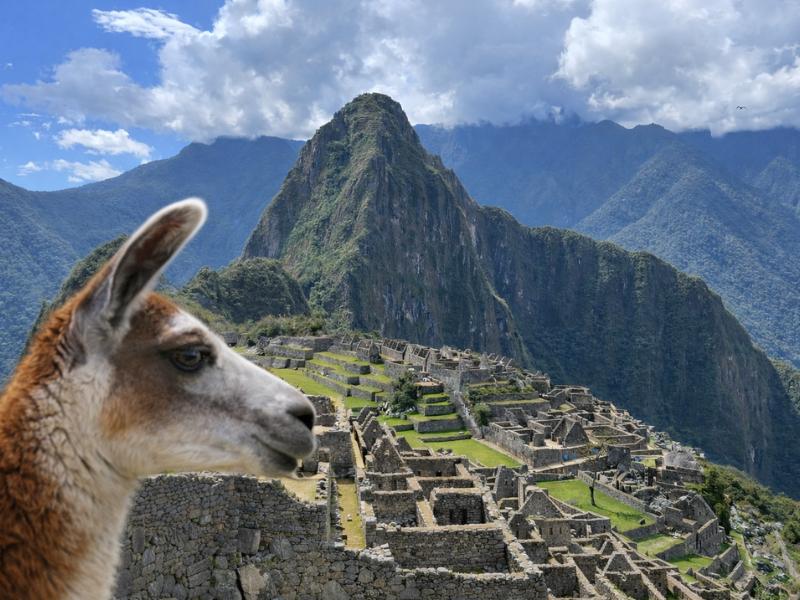
There is no minimum age, but the experience changes substantially by age group. Children under 5 will not understand the archaeology but can still have a meaningful experience if paced correctly. Ages 6 to 11 represent the sweet spot for a citadel visit: old enough to process the history with a guide, young enough to find the llamas and terraces genuinely exciting. Teenagers respond to Machu Picchu much as adults do, and the mountain hikes (Huchuy Picchu from any age, Huayna Picchu from 12) add a dimension that makes the trip feel genuinely theirs rather than something parents organized.
Under 5: Babies and toddlers can come, and many families do bring them. The site entry is free for children under 3, and the altitude at 2,430 m is manageable for healthy infants who have properly acclimatized. The practical challenge is that strollers are banned, so infants must be carried in backpack-style carriers throughout a 2.5 to 3 hour walk over uneven stone terrain. That places real physical demand on the carrying parent. Factor that into planning honestly before you book.
Ages 5 to 7: These children can walk the circuit, but the large Inca stone steps will slow them down and exhaust them faster than you expect. Piggyback carrying capacity helps. So does setting expectations: not every child this age will find the ruins interesting on their own terms. The llamas are almost universally captivating. A guide who tells the story of the Inca through the lens of children their age (how did they carry these stones? how did they live here? where did the children sleep?) makes a significant difference.
Ages 8 to 12: This is when the visit really clicks. Children this age can follow a full guided circuit, engage with questions about Inca engineering and astronomy, and retain meaningful memories of the experience. A 10-year-old who walks through the Temple of the Three Windows and understands that those stone blocks were fitted without mortar and have survived earthquakes for 600 years will carry that fact for decades.
Teenagers: Machu Picchu tends to impress teenagers more than they expect it to. The scale of the site, the physical challenge of a mountain hike, and the context of standing at something genuinely ancient and mysterious tend to land differently than most tourist landmarks. Give teenagers the option to lead sections of the hike or choose which direction to explore within their circuit. It changes the dynamic considerably.
Planning a family visit with children across different ages is something we structure every week. If you want a guide who knows how to keep a 7-year-old engaged while still giving the adults a real archaeological experience, book a private Machu Picchu visit with ticket, guide, and bus and set the circuit and pace for your group.
Which Circuit Is Best for Families with Children?
Circuit 2A or 2B is the right choice for most families with children. It covers the Guardian’s House viewpoint, the main temples and plazas, the Intihuatana stone, and the residential quarters in a manageable 2.5 to 3 hour flow. Circuit 1 is panoramic only and shorter, but does not include the lower archaeological areas that tend to engage children most. Circuit 3 options require either a mountain hike or access to specific lower areas not available to families with the standard circuit ticket.
The terraces near the Guardian’s House are the first major stopping point and the classic photo location. For children, this is often where the experience becomes real: the entire citadel spreads out below you, Huayna Picchu rises behind it, and the clouds move across the mountains in a way that makes the scale register. Do not rush past this viewpoint. Let children look. Let them ask questions. The guide can anchor the experience here before moving into the ruins themselves.
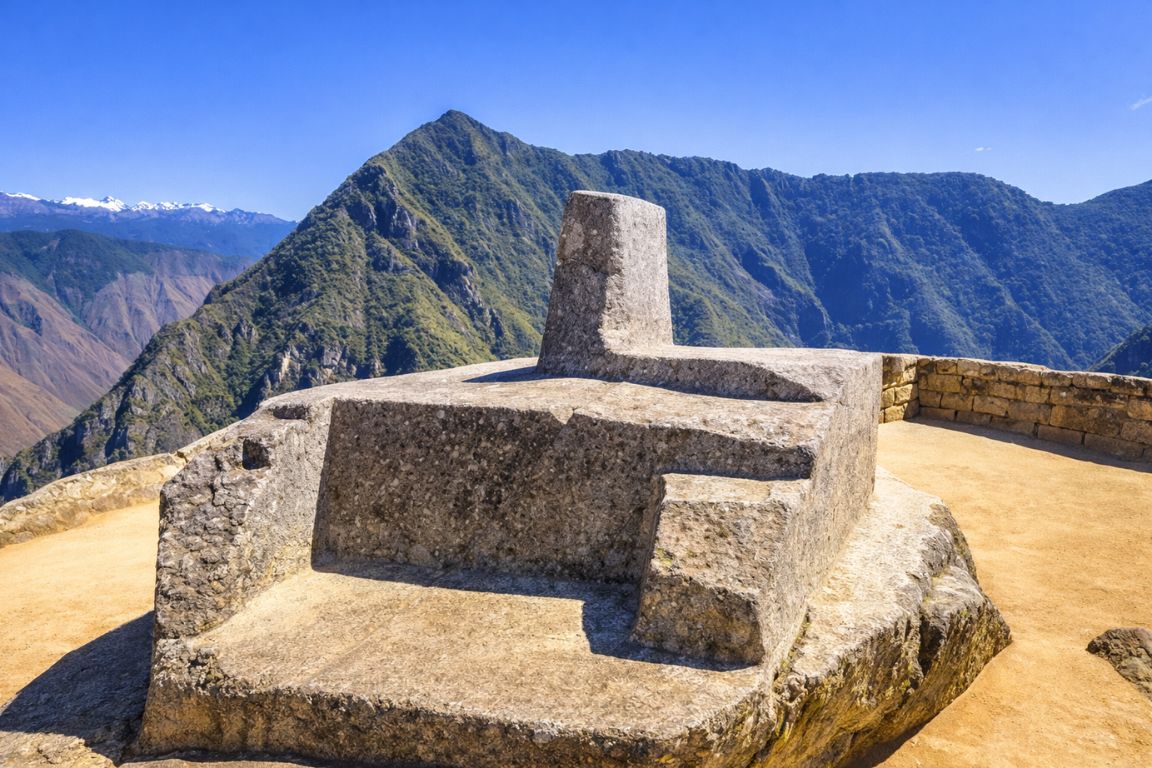
The Intihuatana stone, which the Inca used as an astronomical calendar, is one of the most effective engagement points for children. The story of how this single carved stone tracked the seasons, predicted solstices, and guided planting schedules tends to land well with kids who have any science interest. The guide’s framing matters here: children do not need to memorize the word Intihuatana to grasp the concept of a civilization sophisticated enough to track the sky through stone.
The agricultural terraces are another natural rest point. The Inca built 700 terraces at Machu Picchu, each one engineered with drainage layers below the soil to prevent flooding. For younger children, simply walking down a terrace step and looking at the scale of what was built by hand gives a physical sense of the place that photographs cannot convey.
For families with children 7 and up who want a mountain experience: Huchuy Picchu is the overlooked option. It has no minimum age restriction, takes about one hour round-trip, and sits at a height that gives a genuine aerial perspective of the citadel without the exposed vertical terrain of Huayna Picchu. A 9-year-old who hikes Huchuy Picchu will have a physically memorable experience that reinforces the scale of everything they saw at ground level.
We’ve got Machu Picchu ticket types explained in detail because choosing between Circuit 1, 2, and 3 is confusing as hell and picking wrong ruins your photos.
What Are the Rules and Restrictions Kids and Parents Need to Know?
The rules that specifically affect families are: strollers prohibited (backpack carriers with non-metal frames permitted), no food inside the site, restrooms only outside the entrance gate with no re-entry allowed, and bag dimensions capped at 40 x 35 x 20 cm regardless of what you need to carry for children. Huayna Picchu has a minimum age of 12. These are not flexible rules.
The restroom situation is the most operationally significant issue for families with young children. There are public restrooms just outside the main entrance gate, accessible before you enter. Once you pass through the gate and begin your circuit, there are no toilet facilities anywhere inside the citadel. The no-re-entry policy means that if a child needs to use the bathroom after you have entered, you exit, use the restroom outside, and your visit is over. You cannot return on the same ticket. Make the bathroom stop before entry non-negotiable for every family member old enough to go, regardless of whether they feel they need it. For toddlers and younger children, come prepared.
The food prohibition catches families off-guard more than any other rule. There are no vendors, no snack stations, and no restaurants inside the ruins. Water is permitted. Everything else is not. The practical solution: eat a real breakfast in Aguas Calientes before the bus, put water bottles and a light snack in your bag (to be eaten outside before entry), and time your exit from the citadel so that lunch in Aguas Calientes follows naturally. The restaurant area just outside the entrance gate serves food and is a reasonable place to decompress after the circuit.
The bag size limit (40 x 35 x 20 cm) applies regardless of how much you need to carry for children. Oversized bags, including large family-style backpacks with child carrier frames, must be checked at the entrance cloakroom before entry. A standard 20-liter daypack sized within the limit is sufficient for water, layers, camera, and essential child items. Pack efficiently before you leave the hotel. Anything that does not fit in the bag does not come in.
One logistical issue specific to families with infants: baby carriers with metal frames may be flagged at the entrance inspection since metal-framed items can scratch stone surfaces. Soft-structured carriers (Ergobaby, Tula, LilyBird style) are the correct choice. Test the fit at your hotel with the weight of your child before the day of the visit. Adjusting a carrier at altitude on steep stone steps while managing other children is not where you want to discover a fit problem.
Not sure about the rules? Check out our guide on do you need a guide for Machu Picchu guided tours – the answer changed a few years ago and catches a lot of people off guard.
How Do You Handle Altitude with Children?
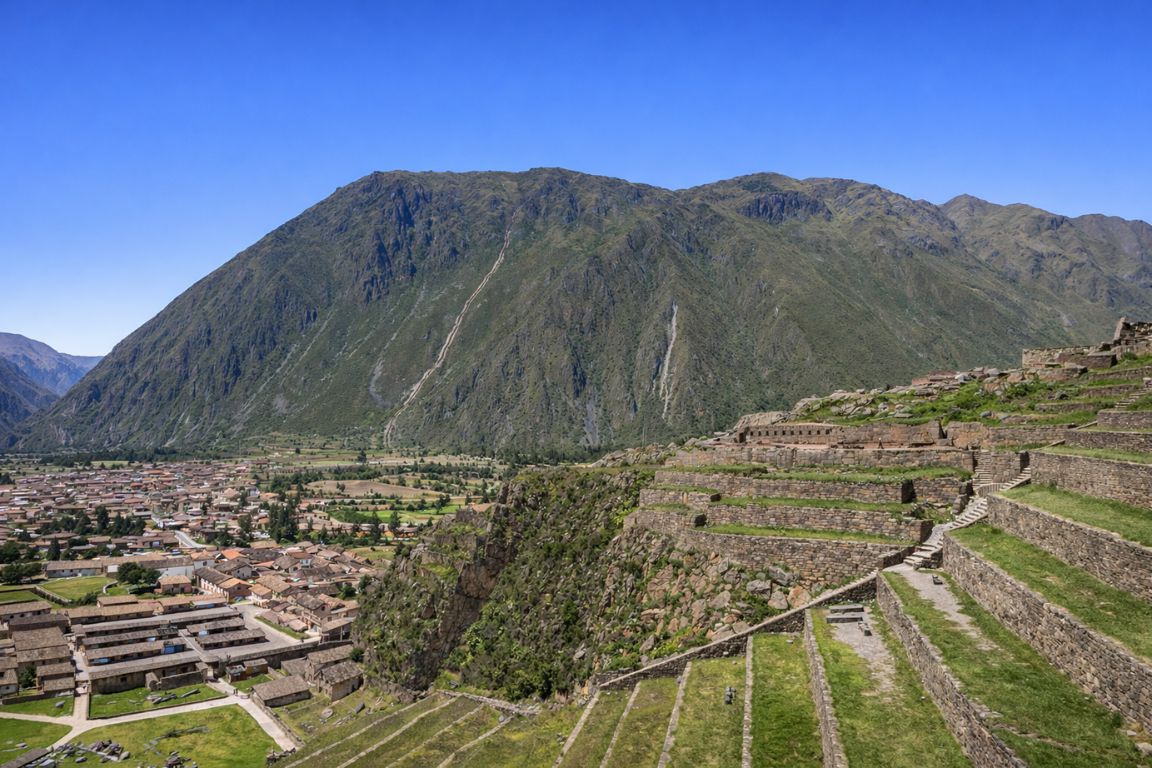
Machu Picchu itself, at 2,430 m, sits just below the standard altitude sickness threshold of 2,500 m. The real altitude challenge for families is Cusco, at 3,400 m, which most visitors pass through before reaching Machu Picchu. Children are not more resilient to altitude than adults. A 2022 peer-reviewed study in Wilderness and Environmental Medicine found that children at altitude showed higher rates of acute mountain sickness than adults at the same elevation, with greater symptom severity and faster body water loss. Do not skip Cusco acclimatization for your children because they seem energetic. The effects can arrive quietly and escalate quickly.
The specific challenge with young children and altitude is that they cannot reliably articulate symptoms. A 4-year-old with a headache from altitude may present as simply fussy, refusing food, or quieter than normal. These are the pediatric AMS presentation signals to watch for in children too young to say “my head hurts”: increased irritability, loss of appetite, unusual fatigue or lethargy, disrupted sleep the first night at altitude, and decreased interest in activities they normally enjoy. These are not signs of tiredness from travel. They warrant rest, hydration, and altitude awareness.
The acclimatization strategy for families traveling from sea level to Cusco is the same as for adults, but the stakes of skipping it are higher when children are involved. Spend at least two full nights in Cusco or the Sacred Valley before the Machu Picchu visit. The Sacred Valley at 2,800 m is a gentler first altitude step than Cusco at 3,400 m, and many families with young children do better starting in Ollantaytambo or Urubamba before moving up to Cusco. Machu Picchu’s lower elevation then actually feels like relief: most families notice their children are more energetic and comfortable at 2,430 m after nights at Cusco altitude.
Acetazolamide (Diamox), the medication recommended by the CDC for adult altitude sickness prevention, has a documented pediatric dose: 2.5 to 5 mg per kilogram per day in divided doses, up to 125 mg twice daily. This is a prescription medication. Consult your pediatrician or a travel medicine specialist before the trip, particularly if your children are under 10, have any respiratory conditions, or if you are flying directly to Cusco from sea level. Do not make this decision in Aguas Calientes pharmacy on the morning of the visit.
Ibuprofen is effective for altitude-related headaches in children at standard pediatric doses. Keep it in your kit. Hydration matters more at altitude than at sea level because the dry mountain air increases respiratory water loss, and children dehydrate faster than adults. The previously mentioned 2022 study found children lost body mass from dehydration significantly faster than adults at altitude, compounding AMS risk. Offer water regularly throughout the day at altitude, not just when children say they are thirsty.
If you’re concerned about breathing at elevation, here’s the altitude at Machu Picchu guided tours explained so you can prepare properly and know what symptoms to watch for.
What Should You Pack for a Family Day at Machu Picchu?
The packing challenge for families is fitting everything necessary for a 2.5 to 3 hour high-altitude walk into a single bag not exceeding 40 x 35 x 20 cm. For infants and toddlers, the soft-structured carrier must fit within this limit or be worn on your body rather than stored. Key additions for families beyond the standard adult packing list: extra water per child, ibuprofen at child doses, a change of top layer per young child, and any necessary toddler comfort items that fit within the weight limit.
Water is the most important single item. The general rule for altitude hydration is more than you think you need. For a family of four with two children under 10, bring at minimum 3 liters total: a liter per adult and half a liter per child as a baseline, plus buffer. There are no water sources inside the ruins. The bus down and the walk to a restaurant take time after exit. Running a child low on water at altitude on steep terrain is avoidable with planning and genuinely uncomfortable when it happens.
Layers work differently with children than with adults. Small children generate body heat quickly when active and cool down fast when they stop moving. The Machu Picchu morning entry temperature of 7 to 13°C feels cold initially. After 45 minutes of walking stone stairs, a 7-year-old will want their jacket off. When you stop at a viewpoint or the guide explains a temple for several minutes, the chill returns. A light zip fleece or packable vest that can go on and off easily is better than a single heavier layer that becomes a negotiation each time conditions change.
Sun protection is not optional. UV radiation at 2,430 m is meaningfully elevated compared to sea level. Children’s skin, particularly on the nose, ears, and neck, burns faster than it would at lower elevation. Apply SPF 50 before the visit, bring wide-brimmed hats, and remember that the reflected UV from stone surfaces adds to total exposure. On overcast days, UV reaches through cloud cover at altitude. The hat stays on regardless of whether the sun feels strong.
Need a packing list for the ruins? Our guide on what to wear to Machu Picchu guided tours covers everything from layers to footwear that won’t slip on those stone steps.
How Do You Make the Visit Engaging for Kids Who Are Not Into Ruins?
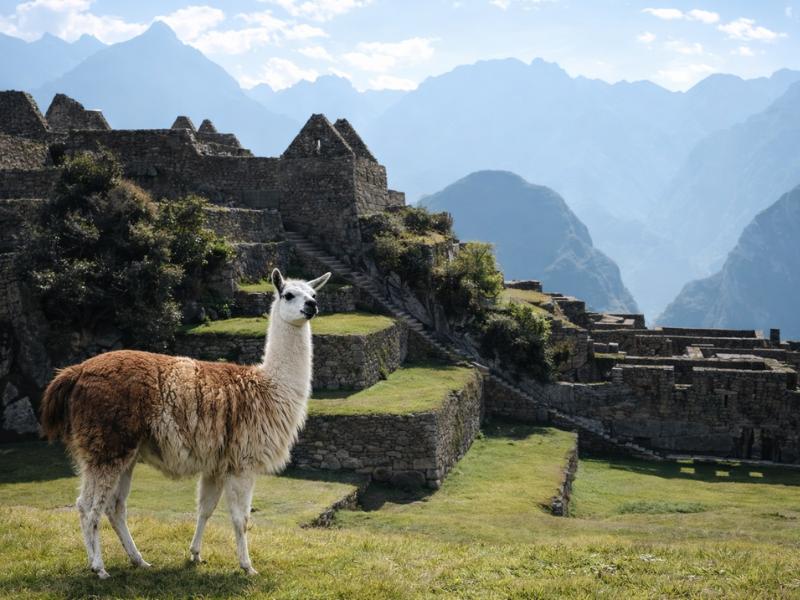
Three things engage children at Machu Picchu regardless of their interest in archaeology: the llamas and alpacas that live on the terraces and will approach tourists without provocation, the physical scale of the stone construction which becomes visceral when you stand next to a wall and realize the blocks are taller than you are, and the story of how the Inca built this city without wheels, without iron tools, and without mortar between the stones. A guide who leads with these entry points rather than dates and kings changes the experience completely.
The llamas deserve special mention. Machu Picchu maintains a resident herd of llamas and alpacas that roam the terraces freely and are accustomed to visitors. Children who are otherwise struggling to engage with the archaeological narrative will stop for a llama encounter every time. These animals are calm and docile, and guides can weave the Inca relationship with these animals (transport, wool, ceremonial significance) into the encounter naturally. It gives younger children something concrete to anchor the visit to when the stone temples blur together.
For children who respond to engineering challenges: the Inca construction story is genuinely remarkable when framed correctly. No wheeled vehicles. No iron tools. Stones weighing up to 50 tons moved from quarries across the mountain, fitted so precisely that a sheet of paper cannot pass between the blocks, and assembled without mortar in a seismic zone where that precision has kept the walls standing for 600 years through multiple earthquakes that damaged colonial Spanish buildings built over the same period. A 10-year-old with any engineering curiosity will find this information genuinely surprising.
The mountain mist is an unexpected engagement tool. Morning cloud cover moves through Machu Picchu from the Amazon basin direction, appearing and clearing in visible motion around the peaks. Children who might otherwise be looking at their feet will stop and watch the mist curl around Huayna Picchu (book tour here). It gives the site an atmosphere that no photograph fully captures, and children often respond to it more directly than adults who are focused on the photography.
Bring a children’s book about Machu Picchu or the Inca in the weeks before the trip. Reading “Where is Machu Picchu?” or a basic Inca history at a child’s reading level primes the experience in a way that a guide alone cannot replicate. Children who arrive with context, even simple context, are more present and more engaged at the site than those encountering it cold.
Family Visit Patterns: What We See From 1,600+ Travelers
| Family Scenario | Most Common Issue | What Resolved It | Outcome |
|---|---|---|---|
| Family with children ages 4 to 10, 7 AM entry | Younger child fatigued by step height around hour 2 | Rest at agricultural terrace, guide adjusted pace and story for child’s level | Strong finish; child remembered llama encounter most |
| Family with infant in carrier, toddler walking | Toddler reached limit at stair descent sections | Parent traded carrier duty; guide led group at toddler pace with story breaks | Completed circuit; carrier parent significantly fatigued but satisfied |
| Two teenagers, parents wanted full circuit | Teenagers disengaged during historical explanation sections | Guide shifted to Inca construction puzzles and let teenagers lead terrace descents | Strong engagement by final third of circuit |
| Family skipped Sacred Valley acclimatization | 8-year-old showed AMS symptoms (headache, reduced appetite) in Cusco night 1 | Rest day in Cusco, ibuprofen, hydration. Machu Picchu visit delayed 24 hours. | Visit completed successfully on day 3; no further symptoms at citadel altitude |
| Family with children ages 9 and 12, added Huchuy Picchu | None significant. Both children managed trail without difficulty. | N/A | Children described Huchuy Picchu as trip highlight; aerial view of citadel was the turning point |
Based on post-trip feedback from family groups guided since 2009. Scenarios reflect recurring patterns across 1,600+ travelers. Details are representative composites, not verbatim accounts.
Family visits require more coordination than solo trips: the right circuit, the right guide, the right pacing, and logistics handled before the day so you can actually be present with your kids at one of the most extraordinary places on earth. A Circuit 2 tour with the entrance ticket included covers the booking and the guide in one step.
Frequently Asked Questions
Can you bring a stroller to Machu Picchu?
No. Strollers and prams are prohibited inside the citadel under the official Ministry of Culture code of conduct. You can leave the stroller at the entrance cloakroom before entering. For infants and toddlers, only soft-structured backpack-style carriers with non-metal frames are permitted inside the site. Test your carrier fit before the visit day, as adjusting it on steep stone terrain with a restless toddler is genuinely difficult.
Is Machu Picchu safe for young children?
Machu Picchu is safe for children of all ages on the standard citadel circuits. The circuit paths are well-maintained and guided, and the directed flow means children move with the group rather than wandering near edges. The main physical risks are falls on steep uneven stone steps, which are real but manageable with attention. Huayna Picchu Mountain has a minimum age of 12 due to exposed vertical terrain. Huchuy Picchu (no minimum age) and Machu Picchu Mountain are accessible to younger children with good trail fitness and parental judgment.
What age is Machu Picchu best for kids?
Ages 8 to 12 are generally the most rewarding age range for children at Machu Picchu. Children this age can follow a full guided tour, engage with the Inca construction and astronomy stories, and retain meaningful memories of the experience. Younger children can still have a positive visit, particularly with the llamas and the physical drama of the site, but the archaeological content is more accessible as children approach school age.
How do you prevent altitude sickness in children at Machu Picchu?
The same principles that apply to adults apply to children: gradual ascent, at least two nights acclimatizing at altitude before the Machu Picchu visit, consistent hydration, and rest when needed. Machu Picchu at 2,430 m is below the standard AMS threshold of 2,500 m, but Cusco at 3,400 m (where most visitors spend time before Machu Picchu) is well above it. Watch for pediatric AMS signals in children who cannot describe symptoms: unusual fussiness, appetite loss, fatigue, and disrupted sleep. Consult a pediatrician or travel medicine specialist about acetazolamide if your children have respiratory conditions or you are flying directly to high altitude.
Is there food available for children inside Machu Picchu?
No. Food and beverages other than water are prohibited inside the citadel. There are no vendors, cafes, or snack stations at any point inside the ruins. Eat a solid breakfast in Aguas Calientes before the bus ride up, bring water in your bag, and plan your circuit exit timing so that lunch at the restaurant area near the entrance follows the visit. Do not rely on being able to find food inside for a hungry child.
Where are the bathrooms at Machu Picchu?
The only restrooms at Machu Picchu are located just outside the main entrance gate, before you enter the citadel. There are no toilet facilities anywhere inside the ruins. Given the no-re-entry policy on tickets, a bathroom visit after you have entered the site means exiting and ending your visit. Use the restrooms immediately before entering, and do this for every family member old enough to go regardless of whether they feel they need to at that moment.
Written by Diego Alejandro Ramirez
Peruvian tour guide since 2009 · Founder, Machu Picchu Guided Tours
Diego has guided over 1,600 travelers through Machu Picchu and the Sacred Valley since founding the agency.
A family trip to Machu Picchu is genuinely one of the more complex logistics puzzles in South American travel, and it is also one of the most rewarding when it comes together well. Questions about circuits, altitude precautions, what age makes sense, or how to keep a 7-year-old engaged for three hours? Diego and the team have answered all of them. Compare the private citadel visit with the 2-day Sacred Valley and train itinerary and choose the plan that fits your family.
Match The Booking To Your Family’s Actual Needs
Check your date before arranging the rest. We may earn commission through this booking link.