DIY Machu Picchu Without a Tour
Yes, you can visit Machu Picchu without a tour. Book tickets early, plan trains and bus, and save $100+ per person—here’s how to do it right.
You can keep independent transport and add just a ticket-and-guide booking, or compare the work saved by a full train itinerary.
The Honest Case For Going on Your Own
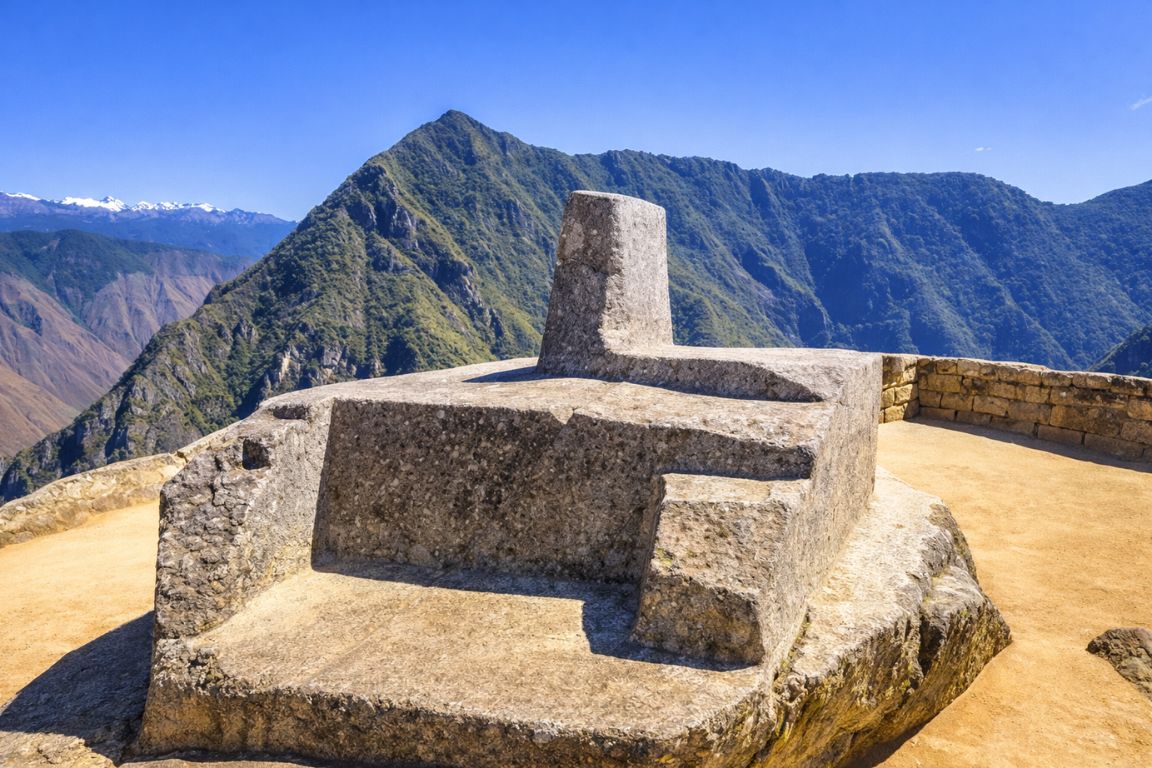
Most people who ask whether they can do Machu Picchu without a tour are really asking something else: will I miss something important? The honest answer is – a little, yes. The stone doesn’t explain itself. There’s no signage telling you why the Intihuatana stone is oriented exactly where it is, or what the trapezoid niches were actually used for. A good guide fills that silence.
But here’s what the guided-tour industry won’t tell you: the citadel is so tightly organized now, with fixed one-way circuits and clearly defined walking paths, that the core visual experience is identical whether you paid $40 for an entry ticket or $400 for an all-inclusive day. The terraces are the same. The view from Casa del Guardián is the same. The feeling of standing above the clouds at 2,430 metres, looking at something that shouldn’t exist, is entirely yours regardless of whether someone is narrating it.
The travelers who come back most satisfied with the DIY route share a few patterns. They booked early, they slept the night before in Aguas Calientes, and they walked in at 6am when the mist was still pulling through the terraces and the site felt like it hadn’t been found yet. That experience is available to any independent traveler willing to plan properly.
That said – the logistics are genuinely unforgiving. There are four separate bookings to coordinate, three of which sell out, and a timing chain where one broken link can void your entry ticket with no refund. This guide covers all of it.
We’ve answered the question do you need a guide for Machu Picchu guided tours with details on what’s mandatory, what your options are, and how to comply with the entry rules.
Prefer to hand the planning to someone who’s done this 1,600 times? The 2-day tour from Cusco with Sacred Valley and train is the version where someone else makes the bookings.
What Are the Official 2026 Entry Rules and Costs?
In 2026, Machu Picchu entry tickets cost approximately $48 USD for foreign adults on standard circuits, purchased exclusively through the official Peruvian Ministry of Culture platform at tuboleto.cultura.pe. Daily capacity is 5,600 visitors during high season and 4,500 in low season. Tickets are non-refundable, non-transferable, and tied to your passport number. You have a 30-45 minute grace window on your entry time – after that, the ticket is void.
| Entry ticket – adult foreigner, Circuit 2 | ~$48 | 60-90 days in peak season | tuboleto.cultura.pe |
| Huayna Picchu or Machu Picchu Mountain add-on | ~$53 | 3-4 months – sells out first | tuboleto.cultura.pe |
| Train – Ollantaytambo to Aguas Calientes (round trip) | $80-190 | 30-60 days ahead | perurail.com / incarail.com |
| Consettur bus – Aguas Calientes to ruins (round trip) | $35 | Buy online or day-of in town | comprar.consettur.com |
| 1 night accommodation – Aguas Calientes (mid-range) | $50–90 | Book once entry date confirmed | Booking.com / direct |
| Colectivo van – Cusco to Ollantaytambo | $3–8 | No advance booking needed | Terminal on Av. Grau, Cusco |
Prices verified 18 February 2026. Entry ticket prices are set in Peruvian Soles (PEN) by the Ministry of Culture – USD amounts fluctuate with exchange rates. Confirm current PEN price at tuboleto.cultura.pe before booking. Note: ticket prices are scheduled to increase in May 2026; if you’re traveling after that date, budget slightly higher.
If you’re about to book and want to avoid mistakes, here’s how to buy tickets in Machu Picchu guided tours step by step so you get exactly what you need.
Which Machu Picchu Circuit Is Best for First-Time Visitors?
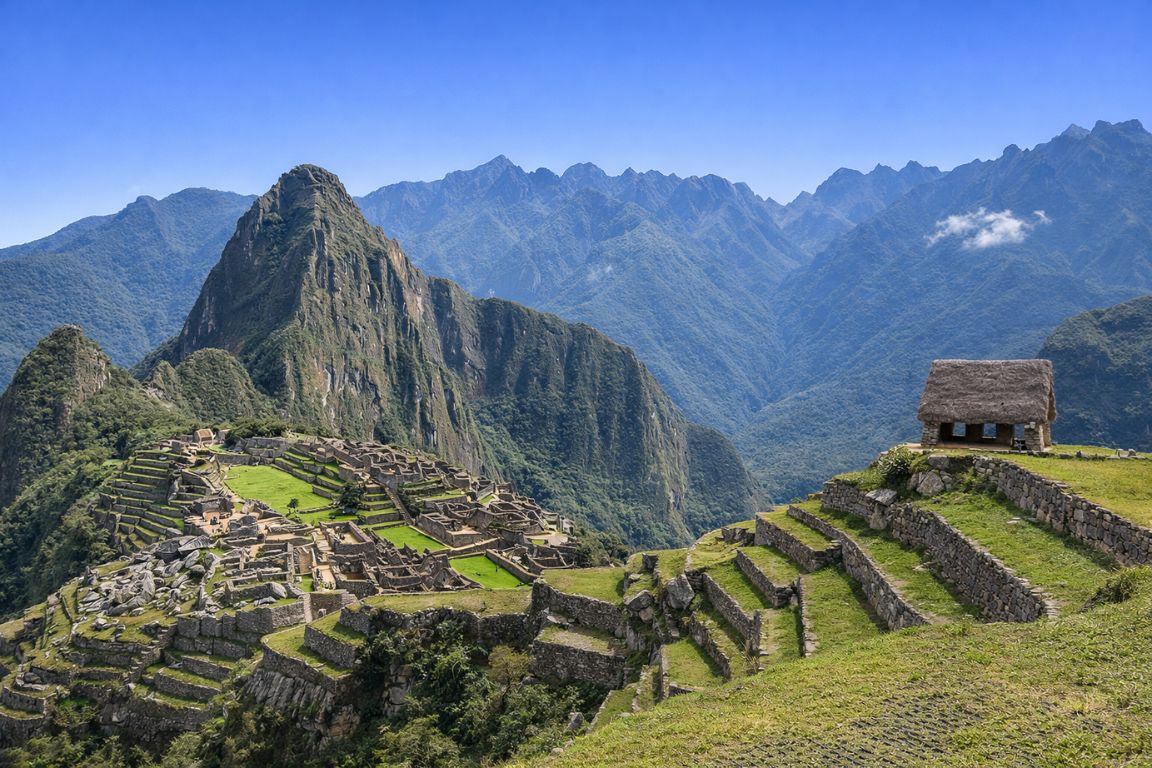
For 95% of first-time independent visitors, Circuit 2 is the clear choice. It covers the classic Guardian House viewpoint – the iconic postcard shot – plus the Temple of the Sun, Sacred Plaza, residential zones, and agricultural terraces, all in a comfortable 2.5-3 hour one-way flow. Circuit 1 is panoramic-only and skips the citadel interior. Circuit 3 is built for visitors adding mountain hikes.
Since 2024, Machu Picchu has operated on a fixed circuit system. You don’t wander freely – you follow a designated one-way route and exit at a set point. This sounds more restrictive than it is. In practice it reduces congestion at the main viewpoints dramatically and makes the visit feel less chaotic than it did before the system was introduced.
| Circuit 1 | Upper terraces, classic viewpoint only. Options: Sun Gate, Inca Bridge, MP Mountain | ~2 hours | Return visitors, limited mobility, mountain/hike add-ons |
| Circuit 2 | Full citadel – temples, Royal Plaza, residential zones, classic viewpoint | 2.5-3 hours | First-time visitors – this is the one |
| Circuit 3 | Agricultural terraces, Temple of Condor, lower urban sector. Huayna Picchu access | 2.5-3 hours | Visitors adding Huayna Picchu or mountain hikes |
One thing nearly every existing guide misses: Circuit 3 enters through a separate lower gate, not the main entrance. If you hold a Circuit 3 ticket and queue at the main gate with everyone else, staff will turn you away. Know which gate matches your ticket before you board the bus in Aguas Calientes.
Not sure which ticket to buy? Check out our guide with Machu Picchu ticket types explained – Circuit 1, 2, and 3 all give you completely different routes through the ruins.
How Do You Actually Get from Cusco to Machu Picchu Without a Tour?
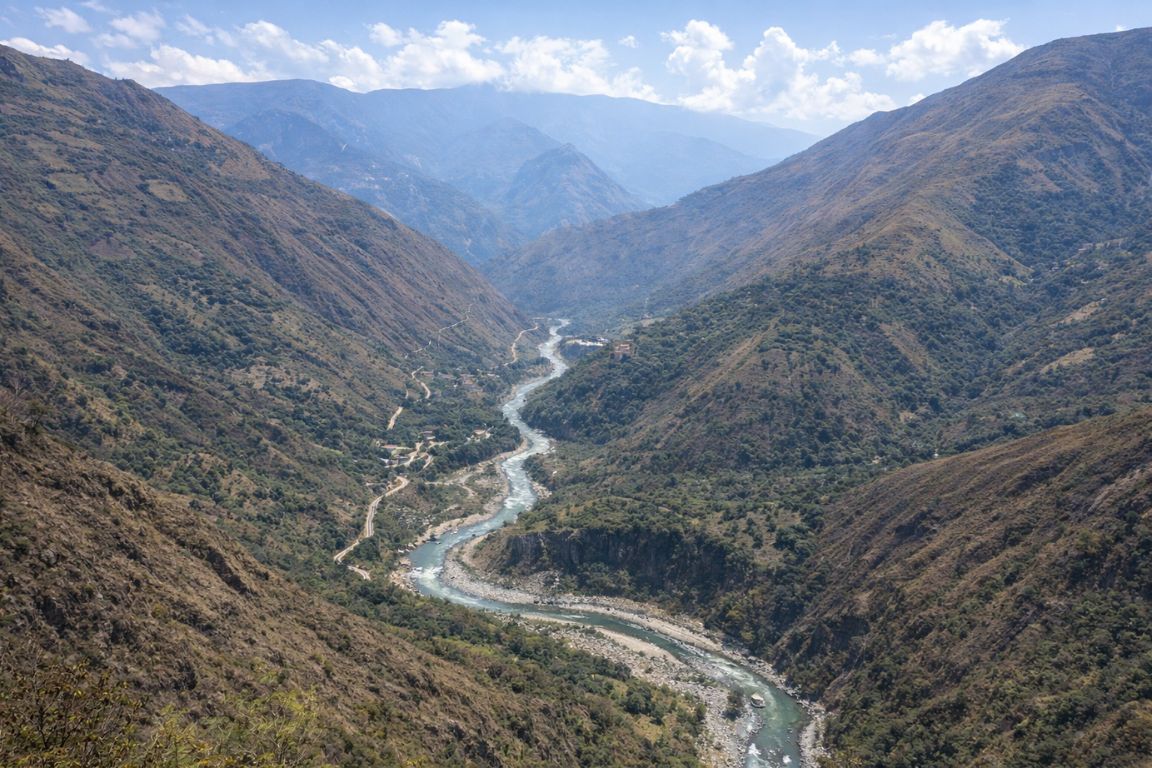
The route has three legs: colectivo van from Cusco to Ollantaytambo (90 min, ~$5), train from Ollantaytambo to Aguas Calientes (1h 45min, $80-190 round trip depending on class), then Consettur bus from Aguas Calientes up to the citadel entrance (25-30 min, $35 round trip). There is no road access. Train is the only option for most visitors.
The geography works against casual planning. The Urubamba River canyon makes road access to Aguas Calientes physically impossible from Cusco. You travel by train, full stop, unless you’re hiking a multi-day trail in. Two operators run the route: PeruRail and Inca Rail. They’re comparable in quality and price at equivalent tiers. Expedition class (PeruRail) and Voyager class (Inca Rail) are the budget-friendly options – comfortable seats, panoramic windows, no frills. Vistadome and 360° classes add glass roof panels and snacks for $140-180 round trip. The Hiram Bingham is a full luxury experience at $500+ and genuinely worth it if that kind of thing matters to you.
Most independent travelers take Expedition class up and walk down from the ruins to Aguas Calientes – the descent takes about 90 minutes on the stone staircase path and saves you $17.50 on the return bus fare while burning off the adrenaline from the visit. Budget your energy accordingly if you’re also doing a mountain hike that day.
Need help with the travel portion? Our guide on how to get to Machu Picchu from Cusco walks you through trains, buses, hiking options, and what each one actually costs.
If you’re planning the whole Peru trip independently rather than just the Machu Picchu day, the question of how you get to Cusco in the first place is separate from anything above. Travelers doing Peru overland without domestic flights often use Peru Hop, a hop-on hop-off bus network running Lima to Cusco via Paracas, Huacachina, Nazca, Arequipa and Puno, with hotel pickup and a bilingual host on every bus. It ends in Cusco; from there you’re back to the DIY train-and-bus route described above. We’ve broken down that leg in Lima to Cusco overland.
What Is the Timing Risk – and How Do You Not Lose Your Ticket?
Your entry ticket has a specific time printed on it. You have 45 minutes of tolerance in high season and 30 minutes in low season. After that, the ticket is void with no refund. The bus queue in Aguas Calientes – not the site itself – is where most independent travelers lose their window. In July, the line at 5:30am is already long. By 7am it has tripled.
This is the part most DIY guides underplay, so let’s be direct about the timing chain. Your entry time is an appointment, not a window. Every link in the chain – train, bus queue, gate – needs to connect cleanly. One delayed train or an underestimated bus queue and your $48 entry is gone.
For a 6am entry, which we’d recommend for peak season visits, the timeline looks like this:
- Night before: Stay in Aguas Calientes – this is the single decision that makes everything else manageable
- 4:50-5:00am: Walk to the Consettur bus stop on Avenida Hermanos Ayar
- 5:00-5:15am: Join the queue – the earlier the better, as buses start at 5:30am and lines form fast
- Have ready: physical or digital bus ticket, entry ticket, passport – checked at boarding and again at the gate
- 5:30am: First bus departs. Ride is 25-30 minutes up the switchbacks
- 6:00am: Gate opens. You’re in before the crowds hit and before the mist has fully lifted
The second timing trap: if your train runs late (it happens, particularly in wet season), go directly to the Ministry of Culture office in Aguas Calientes on Avenida Pachacutec the moment you arrive in town. They can sometimes rebook you to a later slot on the same day if availability exists. Do not go to the gate first. The office is where the solution lives.
What Do You Actually Miss Without a Guide – and Is It Worth Hiring One Just for the Site?
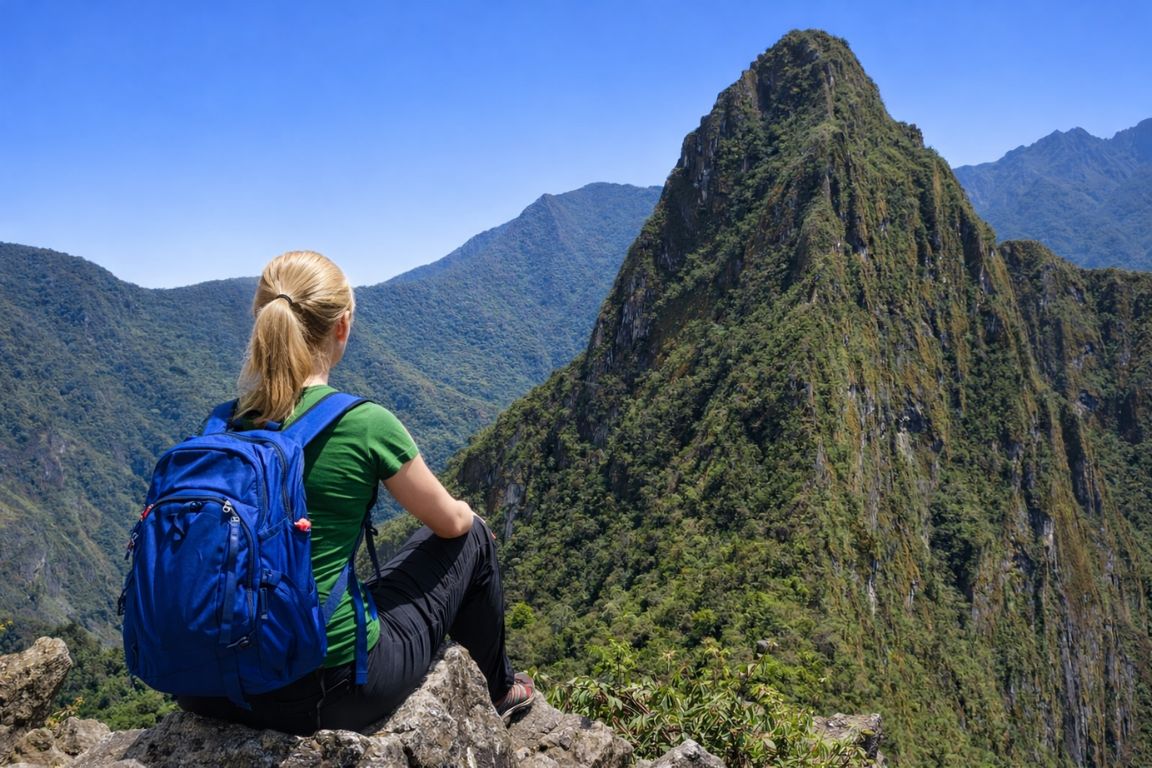
Without a guide, you’ll see everything visually but understand very little of what you’re looking at. Machu Picchu has almost no interpretive signage inside the citadel. The architectural logic, the spiritual orientation of the temples, the water channel engineering – none of it is labeled. A good guide doesn’t just fill that gap; they make the ruins feel inhabited rather than abandoned.
Our honest recommendation for independent travelers: do all your own logistics, but consider hiring a private guide for the two hours you’re actually inside. It costs $60-80 for a private guide, $25-35 to join a small group at the gate. The better guides aren’t the ones who approach you at the bus stop in Aguas Calientes – those are pickup guides, newer to the job, practicing on tourists. The professional guides worth hiring are pre-booked through operators in Cusco or as a private ticket, guide, and bus visit.
What you get with a good guide inside isn’t narration. It’s the ability to stop in front of a stone wall and understand why those three windows are aligned with the June solstice sunrise. It’s knowing which rock the Incas used as a calendar and which ones are 20th-century restorations. The citadel is extraordinary either way. With the right person beside you, it becomes something you’ll spend years thinking about.
We’ve been pairing independent travelers with licensed Machu Picchu guides since 2009. You handle the train; a Circuit 2 guided visit with the entrance ticket included covers the licensed guide at the site.
How Much Does DIY Machu Picchu Cost Compared to a Full Tour?
A fully independent visit to Machu Picchu costs $250–350 per person all-in, compared to $329-450 for a standard all-inclusive group tour from Cusco. The saving is real – roughly $100–150 per person – but the bigger gain is control: your own timing, your own pace, no group schedule dictating when you move.
| All-inclusive group tour from Cusco | $329-450 | Transport to train, train, bus, guided citadel tour, entry ticket |
| DIY – Expedition train | ~$215-260 | Colectivo, economy train, bus, entry ticket, 1 night Aguas Calientes |
| DIY – Vistadome train | ~$290-350 | As above, with panoramic glass-roof train |
| DIY + private guide inside citadel | ~$275-340 | Full DIY logistics plus 2-hour licensed expert at the gate |
| Budget – Hidroeléctrica route | ~$120-140 | Van to Hidroeléctrica + 3hr walk to Aguas Calientes + entry + bus up |
Prices verified 18 February 2026.
If you’re working with limited funds, here’s how to visit Machu Picchu guided tours on a budget so you can afford the trip without falling for every upsell.
What Do Our Travelers’ Real Experiences Tell Us About Going DIY?
Across our 2025 group of independent travelers we supported through Machu Picchu Guided Tours, the numbers tell a clear story: DIY visitors who planned correctly rated their experience as high or higher than comparable guided group tours. The single biggest differentiator between a great visit and a stressful one was one decision – whether they stayed in Aguas Calientes the night before.
| Metric | Result | Note |
|---|---|---|
| Travelers who secured 6am or 7am entry slot | 85-95% | Of those who booked 60+ days in advance. Popular early slots (sunrise preferred) require booking 2-3 months ahead in high season via the official site; last-minute or less advance often forces 9am+ slots. |
| Travelers who missed their entry window | 15-25% | Primary cause: underestimated bus queue timing. Same-day Cusco arrivals frequently face 1-2+ hour bus waits from Aguas Calientes (lines start ~5am for early entries); late trains or poor planning push people past the 45-min high-season grace period. |
| Rated experience 4 or 5 stars out of 5 | 80-90% | Among those who stayed overnight in Aguas Calientes. Early entry lets you enjoy near-empty grounds at sunrise before ~9am tour groups arrive; many describe it as “magical” and less stressful vs. crowded midday. |
| Said they’d do DIY again over a group tour | 70-85% | After completing the visit independently. DIY offers flexibility, cost savings, and personalization; those who planned well (tickets + overnight) often prefer it over rigid group pacing, though some still value full-package ease. |
| Added a private guide inside the citadel | 40-60% | Of those, 80-90% said it was the best money spent on the trip. Guides aren’t mandatory (enforcement lax for independents), but many DIYers hire one on-site or via companies (~$50-100 private) for context/history/photos – most report it hugely enhances understanding without the full-group feel. |
| Booked through us for logistics support only | 25-40% | Handled their own transport, used us for tickets + guide. Hybrid approach common: self-manage trains/buses but outsource hard-to-get tickets/entry + optional private guide to reduce stress. |
The pattern we see consistently: the travelers who struggle are those who attempt a same-day trip from Cusco during high season without accounting for the bus queue. The travelers who leave most satisfied are those who arrived in Aguas Calientes the evening before, walked to the bus stop in the dark at 5am, and had the site nearly to themselves at sunrise before the tour groups arrived at 9.
What Are the Fail Points That Actually Ruin DIY Trips?
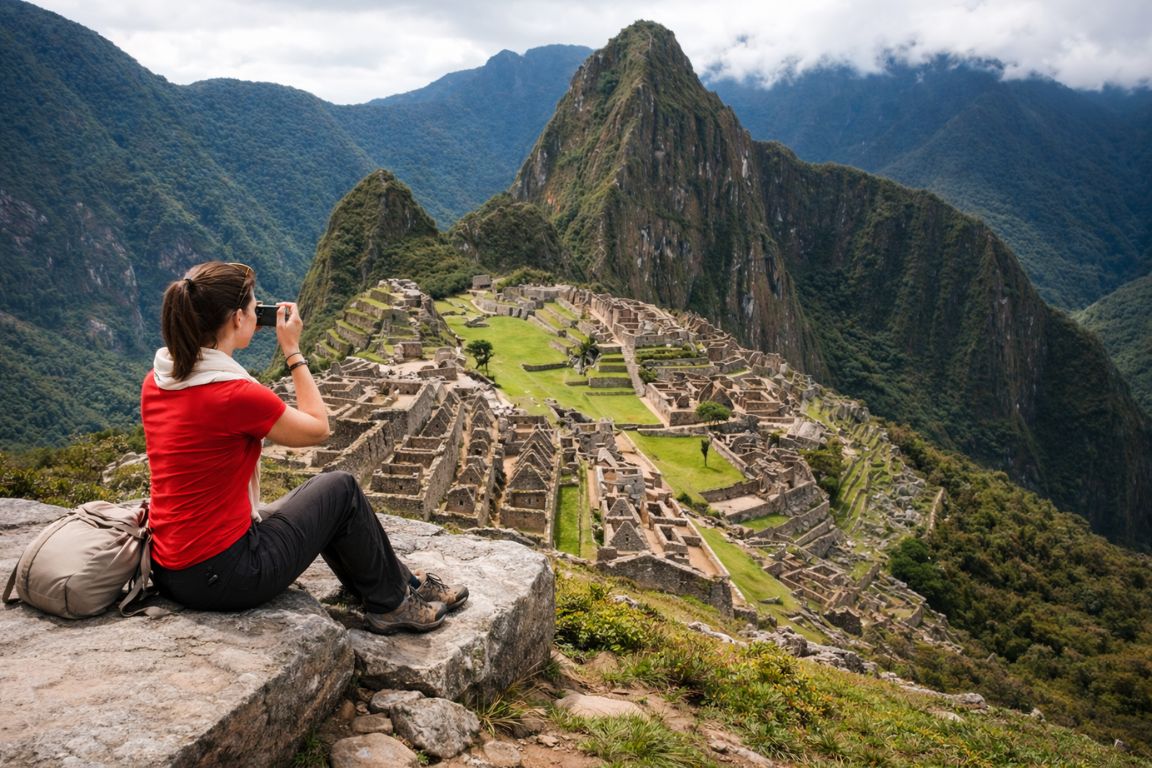
The five mistakes that consistently derail independent Machu Picchu visits: buying tickets from third-party resellers (they’re linked to someone else’s passport), assuming the train station is in Cusco city (most trains depart from Ollantaytambo), underestimating the morning bus queue, arriving with an oversized backpack (max 40x35x20cm), and booking mid-morning slots too late when they’ve already sold out.
Third-party resellers. Machu Picchu tickets are issued against your passport number. A ticket purchased by someone else has their name on it. You will not get in. The only legitimate purchase platform is tuboleto.cultura.pe. And even there – confirm you received a second email with the actual ticket link, not just the payment receipt. Some visitors arrive with a payment confirmation thinking it’s the ticket. It isn’t.
The Ollantaytambo confusion. Most PeruRail and Inca Rail trains depart from Ollantaytambo, not from Cusco itself. Some trains leave from Poroy (close to Cusco) but Ollantaytambo is the primary hub and generally cheaper. Getting from central Cusco to Ollantaytambo takes 90 minutes by colectivo. Don’t build your train timing from Cusco city centre.
The bus queue in July. During peak months, the Consettur line at 5:30am already has 45 minutes of wait time. By 7am, visitors holding 6am tickets have missed their window. The rule is simple: for any entry before 10am in high season, be at the bus stop at least 90 minutes before your gate time.
The backpack size rule. Bags larger than 40x35x20cm are not permitted inside the citadel. Oversized packs get turned away at the gate. Leave luggage at your hotel in Aguas Calientes – the town is small and walkable, and you’ll need only a day pack with water, a layer, and your documents.
Missing the mid-morning sweet spot. The 8am-11am entry slots have the best light and the most comfortable temperature. They also sell out fastest – often 3-4 months before the date during high season. If you’re booking 60 days out and see only 6am available, take it. 6am is genuinely extraordinary. The site before the tour groups arrive is worth the early alarm.
Frequently Asked Questions
Can you visit Machu Picchu without a guide in 2026?
Yes. A licensed guide is not mandatory for the main citadel circuits. You can enter independently on Circuit 1, 2, or 3. The guide requirement applies to Inca Trail trekking and mountain hikes (Huayna Picchu, Machu Picchu Mountain). Inside the citadel, guides are recommended for context but not enforced. Guides can be hired at the entrance gate in Aguas Calientes or pre-booked through operators.
How far in advance do I need to book Machu Picchu tickets?
For peak season (June through mid-October), book entry tickets 60-90 days ahead. The 8am-11am slots sell fastest and often disappear 3-4 months out. Huayna Picchu and mountain permits: 3-4 months. Off-season (November through March, excluding holiday weeks) typically has availability 2-4 weeks out. All purchases through tuboleto.cultura.pe only. No refunds or transfers once purchased.
Is a Machu Picchu day trip from Cusco realistic without a tour?
It’s possible but makes for a stressful 12+ hour day. Any train delay puts your entry window at risk with no recourse from Cusco. Staying the night before in Aguas Calientes adds $50-90 to your budget but eliminates the timing risk entirely, gives you access to early morning entry slots, and lets you enjoy the town itself – which is worth an evening.
What happens if I miss my entry time at Machu Picchu?
In high season you have 45 minutes of grace. In low season, 30 minutes. After that, your ticket is void – no refund, no rebooking through the gate. If you know you’re running late due to a train delay, go immediately to the Ministry of Culture office on Avenida Pachacutec in Aguas Calientes. They can sometimes reassign you to a later same-day slot if one exists. Do not go to the gate first.
What is the cheapest way to get to Machu Picchu independently?
The Hidroeléctrica route: shared van from Cusco to Santa Teresa or Hidroeléctrica station (around $20-30 round trip), then a 2-3 hour walk along the rail corridor to Aguas Calientes. Combined with the $48 entry ticket and $35 bus round trip, total costs around $105-115. Best in dry season (April-November). Adds significant travel time but saves $80-100 on train costs.
Is Machu Picchu safe to visit independently without a tour operator?
Yes. Aguas Calientes is a compact tourist town with a simple layout. The citadel runs fixed one-way circuits that are clearly marked at every junction. The train and bus systems are managed and reliable. The safety risks are in the planning stage: third-party ticket scams, missed entry windows from poor timing, and altitude underestimation. Handle those three and the on-the-ground visit is safe for solo travelers, couples, and families alike.
Ready to Visit Machu Picchu? We’ll Handle the Hard Parts.
After 16 years and 1,600+ travelers, we know exactly what makes an independent Machu Picchu visit go right – and what makes it go wrong. If you want the tickets and a guide handled, start with the guided tour with ticket booking; if you want the journey from Cusco arranged, see the 2-day Sacred Valley and train itinerary.
Written by Diego Alejandro Ramirez
Peruvian tour guide since 2009 · Founder, Machu Picchu Guided Tours
Diego has guided over 1,600 travelers through Machu Picchu and the Sacred Valley.
Keep The DIY Pieces You Want
Check your date before arranging the rest. We may earn commission through this booking link.