Do You Need a Guide for Machu Picchu?
Officially, Machu Picchu requires a licensed guide—and enforcement can be strict. More importantly, a guide transforms ruins into real stories.
A guide adds explanation and a shared visit structure. A ticket-inclusive product may be unnecessary if you already hold entry.
Quick Facts: Machu Picchu Guide Requirements 2026
| Official guide rule | Required for all visitors per Ministry of Culture |
| Enforcement (main citadel) | Inconsistent – stricter for groups of 5+ |
| Inca Trail enforcement | Strictly mandatory, no exceptions |
| Group tour cost (per person) | $20–$40 USD (S/70–100) |
| Private guide cost (whole group) | $80–$150 USD (S/259–550) |
| Max group size per guide | 16 people |
| Guide credential to check | Blue DIRECETUR/GERCETUR ID card |
| Where to hire on arrival | Aguas Calientes bus stop (not the citadel gate) |
| Typical guided tour duration | 2–3 hours for main circuits |
| Audio guide alternative | $5–$10 USD at entrance (limited depth) |
Prices verified February 19, 2026. Official source: Ministry of Culture of Peru (cultura.gob.pe). Exchange rate approx. S/3.75 to $1 USD.
Can You Visit Machu Picchu Without a Guide?
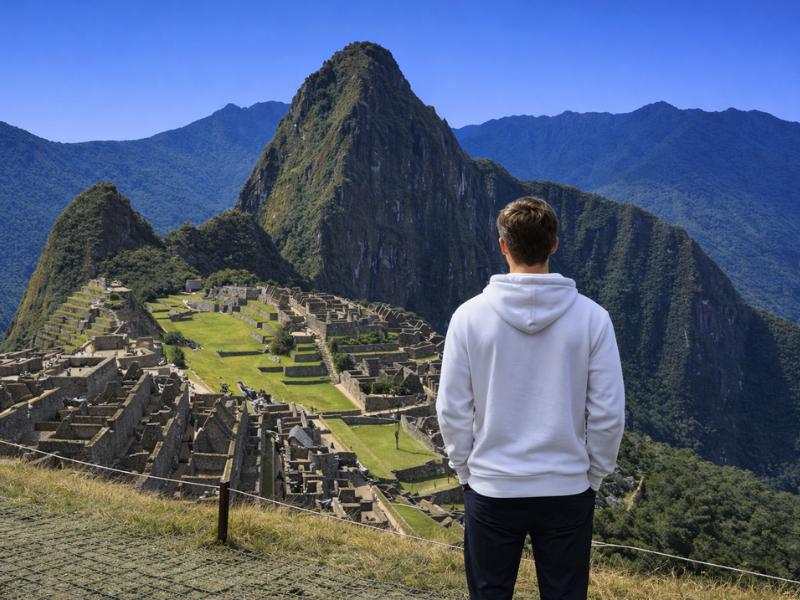
Technically, no. Officially, Peru’s Ministry of Culture requires every visitor to be accompanied by a licensed guide. In practice, enforcement at the main citadel gates has been inconsistent – many independent travelers walk in without being stopped. But “hasn’t been enforced recently” is different from “allowed,” and the rule can be applied strictly at any time, without warning and without refund.
This is the question that generates more confused forum threads than almost any other Machu Picchu topic. The confusion comes from a real gap between the written rule and what people experience on the ground. The official regulation, established under Peru’s Ministry of Culture and reinforced in updated 2024-2025 guidelines, is clear: you must enter with a licensed guide. The gate staff can – and do – ask. Whether they ask on a given day depends on how busy it is, how large your group is, and frankly, what mood the checkpoint is in.
What we have observed over 17 years of operations: solo travelers and couples are rarely turned away. Groups of five or more are far more likely to be questioned. And this is not something to gamble with. You’ve spent thousands of dollars and flown to Peru. Your ticket is non-refundable. Entry is one-time only – there is no re-entry on the same ticket. If you’re stopped at the gate without a guide, you wait, scramble to find one, and potentially miss your entry window entirely.
One nuance worth knowing: the mountain hikes inside the site (Huayna Picchu and Machu Picchu Mountain) do not strictly require a guide. Visitors can ascend independently. The guide requirement applies specifically to the main citadel circuits. The Inca Trail is a different matter entirely – guides there are absolutely mandatory, fully enforced, and have been since 2001.
If sorting out guide logistics from abroad sounds like one more thing to manage, a guided tour with the entry ticket included covers the licensed-guide requirement before you travel.
Prefer to organize it independently? Check out our guide on DIY Machu Picchu without a tour – it’s more doable than most people think but requires some advance planning.
What Can a Guide Actually Show You That You’d Miss on Your Own?
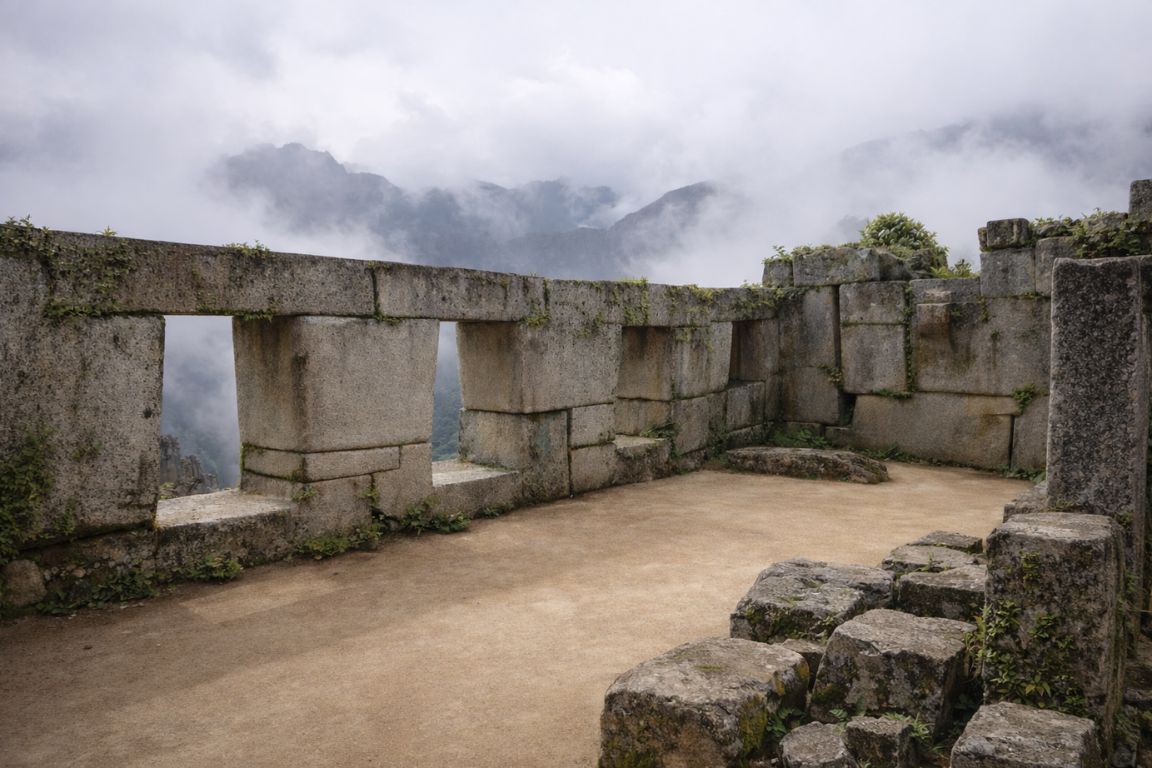
A great deal, and it’s not just historical facts you could have read beforehand. The site has zero interpretive signage inside. None. What you see without a guide is extraordinary stonework with no explanation of what you’re standing in, who built it, or why it matters. A licensed guide turns 34 acres of unmarked ruins into a coherent, human story – and points out things most people walk right past.
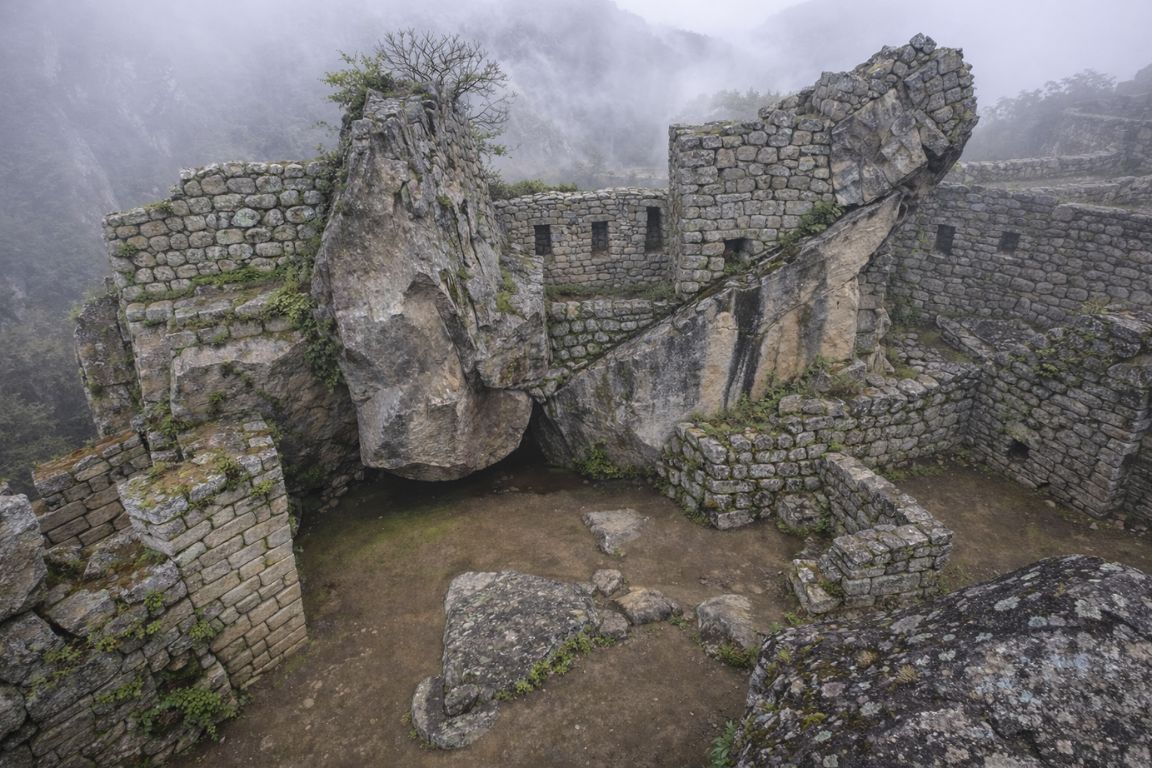
There is no signage anywhere inside the citadel. This is one of the most consistent things travelers report being surprised by. You can read every guidebook and download every app you want – when you’re standing in front of the Temple of the Three Windows and the mist is coming in and someone next to you in a group is hearing about the astronomical alignments and the sacred geometry and you’re just… standing there looking at rocks you’re not sure you’re identifying correctly… that’s the gap a guide fills.
The things a good guide shows you that you would miss on your own include some specifics. There’s the trapezoidal doorway proportions used specifically in ceremonial structures, distinct from storage or residential ones – a detail that completely changes how you read the site’s layout. There’s the Intihuatana stone, which most visitors photograph without understanding its function as a solar calendar. There’s the water channel system that supplied the entire city, still partially functional after six centuries. Most visitors walk past it without a second glance.
What our guides consistently report: travelers who come alone and later return with us describe the second visit as a completely different experience. Not because the stones moved. Because now they can read them.
A guide also solves a specific 2026 problem: the circuit system. Since 2024, the site runs on strict one-way circuits, each corresponding to different ticket types. Getting off your assigned circuit results in expulsion with no refund. Guides know exactly where the boundaries are and navigate them without you ever having to think about it.
We’ve created a detailed Machu Picchu circuits breakdown that maps out all the subroutes because the official site makes this way more confusing than it needs to be.
How Much Does a Machu Picchu Guide Cost in 2026?
A shared group tour at the gate runs $20–$40 per person (up to 16 people per guide). A private guide for your group runs $80–$150 total. Pre-arranged professional guides booked through agencies cost more – typically $150–$300 for a private tour – but bring a different level of expertise, preparation, and reliability than a walk-up hire.
| Walk-up group tour (Aguas Calientes) | $20–$40 per person | Up to 16 people | Budget travelers, solo visitors |
| Walk-up private hire (Aguas Calientes) | $80–$150 total | 2–8 people | Couples, small families |
| Pre-booked agency guide | $150–$300 total | Private | First-timers, families, peak season |
| Full package tour (includes transport, guide, tickets) | $470–$650+ per person | Private or small group | Those who want everything handled |
| Audio guide (entrance rental) | $5–$10 | Individual device | Return visitors, very tight budgets |
Prices verified February 19, 2026. Soles amounts: group tour S/70–100 per person; private S/259–550. Tip your guide: $5–$20 per person depending on service quality.
One thing worth understanding about walk-up guides at the Aguas Calientes bus stop: they are licensed, but many are newer to the profession and developing their craft. As one local operator put it plainly, they are practicing their English and public speaking skills on visitors who show up without prior arrangements. That’s not a judgment – it’s just accurate. A newly certified guide will walk you through the circuits correctly. Whether they bring the site to life is a different question.
Pre-booking a guide through a reputable agency costs more. What you get for that premium is a guide who has done this hundreds of times, who has prepared specifically for your interests, who speaks your language fluently, and who won’t rush you through to get to their next group. During peak season (June to August), pre-booking is also the only way to guarantee availability. At popular entry times in high season, the good guides are spoken for weeks in advance.
Always tip. A good guide at Machu Picchu is working hard – altitude, early starts, crowds, and the expectation to be both historically accurate and genuinely engaging for 2-3 hours. The standard tip is $5–$20 per person, more for exceptional service.
Looking for ways to cut costs? Here’s how to visit Machu Picchu guided tours on a budget without compromising on the things that actually matter for your visit.
Which Areas of Machu Picchu Require a Licensed Guide?
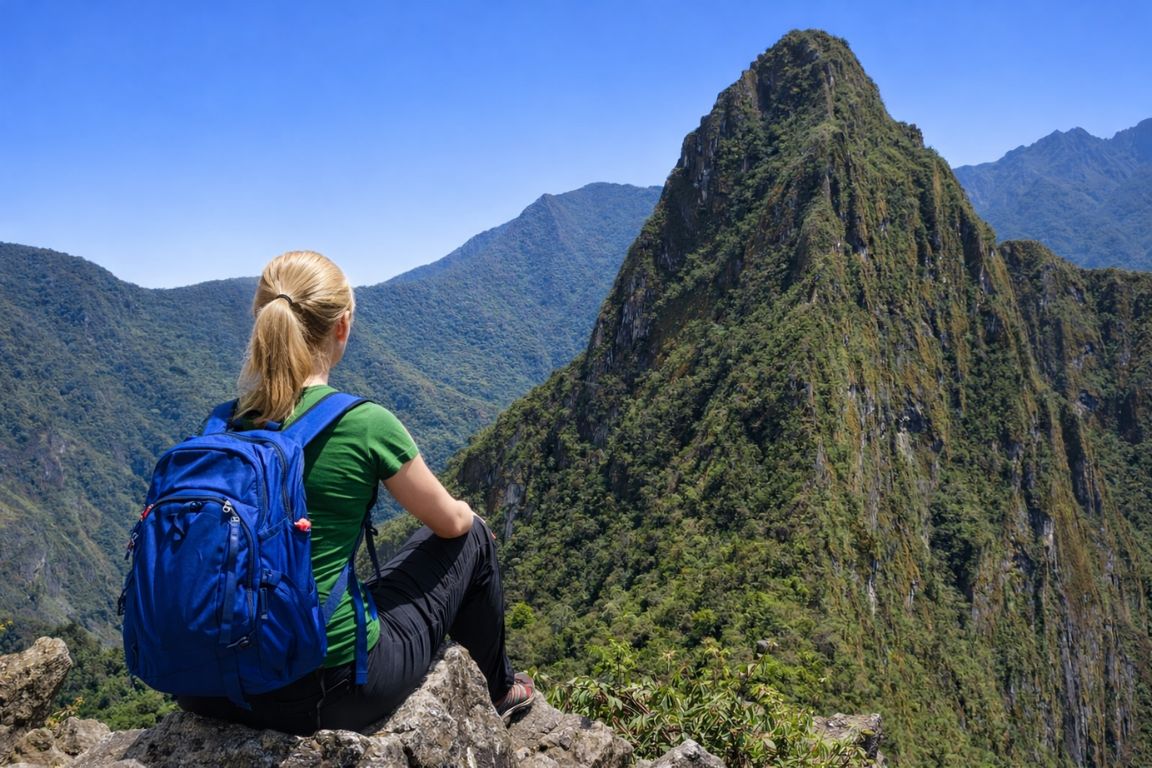
Under official Ministry of Culture regulations, the entire main citadel requires a licensed guide for entry. In practice, the mountain hikes (Huayna Picchu and Machu Picchu Mountain) can be done independently once you’re inside. The Inca Trail is fully guide-mandatory with zero exceptions. Understanding where the rule applies – and where it doesn’t – helps you plan the right service for the right part of your visit.
| Main Citadel (Circuits 1, 2, 3) | Officially yes | Inconsistent – risk increases with group size |
| Huayna Picchu Mountain | No | Independent access permitted |
| Machu Picchu Mountain | No | Independent access permitted |
| Sun Gate (Intipunku) | Officially yes (ticket includes citadel entry) | Moderate |
| Inca Bridge Route | Officially yes | Moderate |
| Classic Inca Trail (4-day) | Yes, mandatory | Fully enforced, no exceptions |
| 2-Day Inca Trail | Yes, mandatory | Fully enforced, no exceptions |
| Salkantay Trek | No (for the trek itself) | Guide still required upon citadel entry |
Regulations per Ministerial Resolution No. 000285-2025-MC. Verified February 19, 2026.
A few important notes on the 2026 Inca Trail (book tour here) changes specifically. Starting January 1, 2026, the Inca Trail permit no longer automatically includes full citadel access. Trekkers completing the 4-day or 2-day trail now need to purchase a separate citadel ticket to enter the main archaeological zones – the trail permit alone covers only the upper viewpoint (Circuit 1 panoramic area). This has caught people off guard. If you’re planning the trail, confirm that both the permit and the citadel ticket are included – compare the 2-day Inca Trail and the 4-day guided Inca Trail.
What’s the Difference Between a Private Guide and a Group Tour?
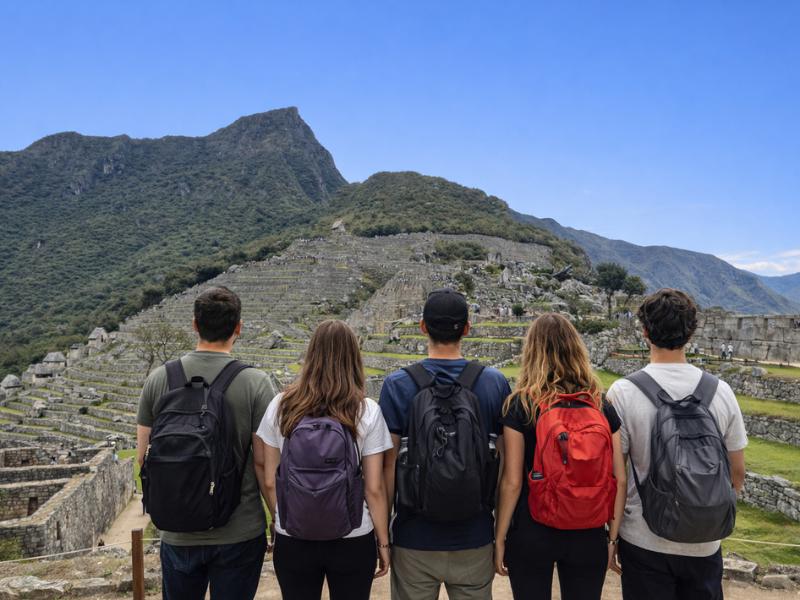
A group tour puts you with up to 16 people and costs $20–$40 per person – economical, social, still professionally guided. A private guide means the entire tour is built around you: your pace, your questions, your particular interests, with full flexibility to spend more time at structures that captivate you. For families with children, travelers with mobility considerations, or anyone visiting once in their lifetime, private is worth the extra cost.
The practical difference becomes most obvious around the 45-minute mark. In a group tour, the guide has to move the whole group along. If you’re fascinated by the water channel engineering and want to hear more, you can ask – but 14 other people are waiting. In a private tour, that conversation happens. It goes deeper. The guide can adjust the whole arc of the visit based on what you’re responding to.
Group tours also vary significantly in quality. The best group guides have the energy and skill to keep 16 people engaged simultaneously for 2.5 hours at altitude. Many do. Some don’t. A private guide has more incentive to show up fully – there are no other clients to fall back on.
For families with children, private is almost always the right call. Children ask different questions. They need different pacing. A guide who has led 400 family tours knows to make Inca history tangible for an 8-year-old without losing the parents. Group tours move at a pace designed for adults walking steadily; that doesn’t always align with how kids experience a place.
One arrangement that works well for budget travelers: find one or two other visitors and negotiate a shared private hire at the bus stop in Aguas Calientes. Three or four people splitting a $120 private guide each pay $30–$40 – same as a group tour, but with personalized attention. It requires a bit of social flexibility at the bus stop, but it’s a legitimate strategy and one we’ve seen work many times.
We’ve been securing guides and tickets for travelers since 2009 – over 1,600 of them. Start with a full-day private tour by train or an Inca Trail package, depending on how you want to arrive.
Bringing the family along? I’ve broken down visiting Machu Picchu guided tours with kids so you know which circuits work for different ages and how to handle altitude with children.
When Does Going Without a Guide Make Sense?
If it’s your second visit, you’ve thoroughly researched the site beforehand, you’re traveling as a solo individual or couple, and you’re comfortable finding your way without signage, going without a live guide is a reasonable choice. For return visitors who simply want to walk the site at their own pace without a schedule, an audio guide ($5–$10) can fill some of the interpretive gap. First-timers who skip the guide almost universally wish they hadn’t.
We say that last sentence not to sell tours, but because it’s what our clients tell us. We have heard “I went solo the first time, couldn’t find a guide at the gate, and spent most of it trying to figure out where I was” more times than we can count. What they remember is the confusion. What they don’t have is the story behind what they were looking at.
The site covers 34 acres across multiple levels with no internal signage. None. There are no plaques, no labels, no arrows to anything except the exit routes. Someone who has spent 40 hours reading about Machu Picchu before arriving will still miss things a guide points to in the first 20 minutes – the hidden trapezoidal niches in the residential sectors, the slight downhill incline on every street designed to channel rainfall, the sight lines that only make sense when someone explains what you’re supposed to be looking toward.
When solo or guideless genuinely works: return visitors with specific intentions (photographers who want particular light conditions, historians who want to study one structure in depth), travelers arriving during shoulder season with no time pressure, or people who treat Machu Picchu primarily as a landscape experience rather than a historical deep-dive. For all of these, an audio guide provides enough orientation without the cost of a live guide.
What Our 1,600+ Travelers Tell Us: Guide vs. No Guide
After 17 years of guided tours and post-trip conversations with clients, here’s what the patterns look like from inside our operations:
| First-time visitors (all) | ~78% choose guided tour | 22% who went solo: “I didn’t understand what I was looking at” |
| Families with children under 14 | ~91% choose private guide | Very few regrets; pacing flexibility cited most |
| Return visitors | ~55% explore independently | Rarely any – they know what they’re looking at |
| Budget solo travelers | ~60% skip guide or join walk-up group | “No signage – I was guessing what things were” |
| Inca Trail completers | 100% guided (mandatory) | Almost universally positive on guide quality |
How Do You Find a Licensed Guide vs. a Freelancer (and Why It Matters)?
Licensed guides carry a blue DIRECETUR or GERCETUR identification card. This is your single most important check. The card shows the guide’s name, photo, license number, and issue date. Any guide who hesitates to show it or shows you something laminated and handwritten should be passed on. Unlicensed guides do operate at Machu Picchu – they cost less, but they have no legal right to access all areas and their historical accuracy is entirely unverified.
Here’s the practical reality of finding a guide on arrival. The days of guides clustering at the citadel gate are largely over. Most licensed guides working the walk-up market now wait near the bus stop in Aguas Calientes. You’ll see them before you board the bus up to the ruins. Look for the official ID badge, introduce yourself briefly, ask about their experience with your circuit and language, and negotiate the price before committing. Prices are fairly standardized – if someone is offering dramatically below market, that’s a signal worth noting.
What separates a good licensed guide from a great one comes down to preparation and storytelling. The license means they passed a tourism degree and a government certification exam. It doesn’t guarantee they can make the Intihuatana stone feel alive. Ask a few questions before you hire: How many times have they guided Circuit 2 this month? What’s one thing most visitors miss at the Temple of the Condor? The answers reveal a lot about whether you’re hiring someone running through a memorized script or someone who genuinely loves the place.
One detail worth knowing for 2026: official guides must be certified in first aid in addition to holding the DIRECETUR credential. At altitude, in an outdoor archaeological site, that’s not a bureaucratic footnote. It’s relevant.
For travelers who want certainty rather than a negotiation at the bus stop, booking through a licensed agency locks in the guide assignment, the language match, and an established accountability structure. If something goes wrong with a walk-up hire, your recourse is limited. With an agency, there’s a paper trail.
What Trips People Up: The Most Common Guide-Related Mistakes at Machu Picchu
After 1,600 guided groups and many conversations with visitors who arrived without our help and ran into problems, certain failure patterns repeat consistently.
The first is assuming the guide requirement doesn’t apply to them because they read that it isn’t enforced. It is applied – selectively, unpredictably, and without compensation if you’re turned away. The risk isn’t high for solo travelers on a quiet day. It becomes real for a group of six who traveled together from London and is told at the gate that they need a guide before they can enter, while their entry window ticks away.
The second is waiting until they’re at the citadel gate to find a guide. The guides who work walk-up clients are mostly in Aguas Calientes at the bus stop. The few who appear at the gate itself are often newer to the work. If you’re going the walk-up route, find your guide before you get on the bus.
The third is the Inca Trail permit assumption in 2026 specifically. Starting this year, the trail permit does not include full citadel access. Trekkers who hike four days, reach the Sun Gate, and discover they can only enter the upper panoramic viewpoint – not the main archaeological zone – because they didn’t buy a separate citadel ticket have a bad day. This is now a two-ticket situation and not all agencies communicating this clearly. Confirm it explicitly before you book.
If you’re torn between the two routes, here’s our honest comparison of Machu Picchu by train vs Inca Trail based on what each one demands and delivers.
The fourth, and maybe the most avoidable: undervaluing the guide. People who try to economize at Machu Picchu by skipping the guide often spend more than a guided tour would have cost on a return trip because they feel they missed it the first time. The site doesn’t give refunds on experiences.
Frequently Asked Questions
Is a guide legally required to enter Machu Picchu in 2026?
Yes, under official Ministry of Culture regulations. The rule has existed since 2017 and was reinforced in updated 2024-2025 guidelines. Enforcement at the main citadel entry has been inconsistent for independent travelers, but the regulation is real and can be applied at any time. The Inca Trail has zero flexibility – guides there are non-negotiable.
Can I hire a guide at the entrance on the day of my visit?
You can, though the best walk-up guides are now mostly positioned at the bus stop in Aguas Calientes, not at the citadel gate itself. During peak season (June to August), finding a quality licensed guide on arrival is harder. Booking in advance through an agency eliminates this uncertainty entirely.
How much should I expect to pay for a guide at Machu Picchu in 2026?
Group tours run $20–$40 per person. Private guide hire for your group runs $80–$150 depending on group size and negotiation. Pre-arranged agency guides with professional preparation cost $150–$300 for a private tour. Plan to tip $5–$20 per person based on service quality. All prices verified February 2026.
How do I know if a guide is officially licensed?
Ask to see their DIRECETUR or GERCETUR identification card – it’s blue, issued by the regional tourism authority, and shows their name, photo, license number, and issue date. Licensed guides are also required to hold a current first aid certification. Any hesitation to show credentials is a signal to walk away.
Does the Inca Trail permit include a guide for Machu Picchu entry?
Your Inca Trail tour operator includes a guide for the trek itself. However, starting January 1, 2026, the trail permit no longer automatically covers full citadel access – trekkers must purchase a separate Machu Picchu citadel ticket. Make sure your operator is coordinating both documents, not just the trail permit.
Can I visit Machu Picchu with just an audio guide instead of a live guide?
Audio guides are available for $5–$10 at the entrance and provide multi-language commentary. They work reasonably well for return visitors or travelers with strong prior knowledge of the site. For first-time visitors, a live guide fills a fundamentally different role – they respond to what you’re actually standing in front of and go where your questions take you. Audio guides follow a fixed script regardless of what you’re seeing.
Written by Diego Alejandro Ramirez
Peruvian tour guide since 2009 · Founder, Machu Picchu Guided Tours
Diego has guided over 1,600 travelers through Machu Picchu and the Sacred Valley since founding the agency.
Pay For Interpretation And The Right Booking Scope
Check your date before arranging the rest. We may earn commission through this booking link.