What to Wear to Machu Picchu
Packing for Machu Picchu? Shoes with real grip and a light rain layer matter more than anything—plus strict bag limits and no umbrellas. Here’s what to bring.
A citadel walk, overnight train itinerary and two-day trail have different luggage needs. Rain protection remains your responsibility.
| Bag size limit | Max 40 x 35 x 20 cm (approx. 20 liters). Oversized bags must be checked at the entrance cloakroom before entry. |
| Umbrellas | Prohibited inside the citadel. Use a poncho instead. |
| Dress code | No costumes, no revealing clothing. Modest dress is expected. No specific rules on colors or styles beyond this. |
| Morning temperature | 7 to 13°C (45 to 55°F) at 6 AM entry. Layers are not optional. |
| Midday temperature | 18 to 25°C (65 to 77°F). You will strip layers within the first hour. |
| Rain season | November to March. Rain can arrive in minutes with no warning. Waterproof outer layer is mandatory. |
| Dry season | May to September. Still bring a light rain layer. Afternoon showers happen even in “dry” months. |
| Footwear rules | No high heels or dress shoes. Grip matters more than ankle height. Trail runners or hiking shoes are the correct call for most visitors. |
| Huayna Picchu / MP Mountain hike | Waterproof boots with aggressive tread. Non-negotiable on these hikes. |
| Sun protection | UV index is significantly elevated at 2,430 m. SPF 50 plus a brimmed hat, even on overcast days. |
What Are the Most Important Clothing Decisions for Machu Picchu?
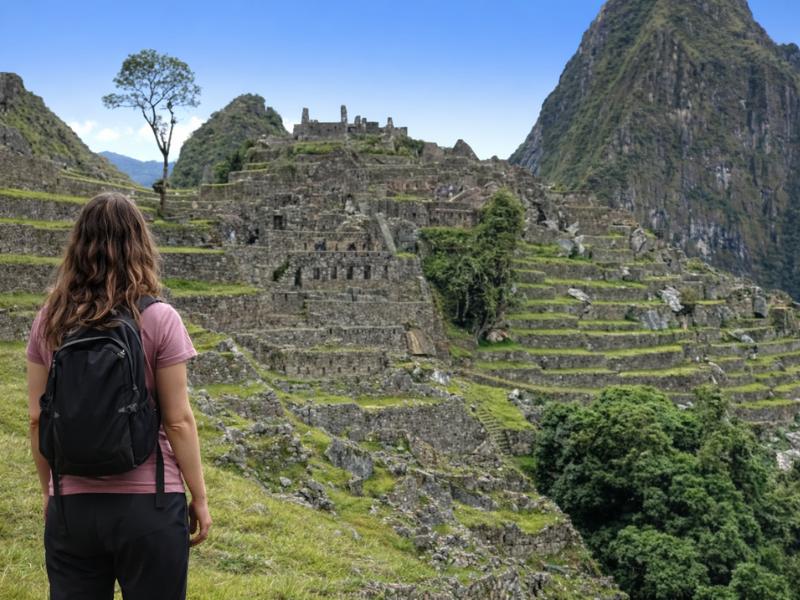
Two decisions define your comfort at Machu Picchu: your shoes and your rain layer. Get either of those wrong and nothing else on your packing list matters much. Shoes need real grip for wet stone, not necessarily high ankle support. Your rain protection must be a poncho or jacket because umbrellas are banned inside the citadel. Everything else is about managing a 20-degree temperature swing between early morning entry and midday.
People spend a lot of time agonizing over whether to bring convertible pants or trekking pants, whether a fleece or a down vest is the right mid-layer, whether their camera goes in the bag or around their neck. These are genuinely minor choices. The travelers we see struggling at the site are the ones who showed up in flat-soled sneakers on a rainy morning, or who are soaked to the bone because they thought their regular windbreaker would do the job.
The second thing to internalize is the temperature swing. At 6 AM when the gates open, it will feel genuinely cold. You will be glad for a fleece or light insulating layer. By 9 or 10 in the morning, especially on a clear day in dry season, you will be peeling off everything down to a single layer. By noon you may feel warm. This is not a bug in the Andean climate, it is standard behavior at cloud forest elevation, and it means you need clothing that adapts rather than clothing that is perfect for a single condition.
The bag limit matters too. The official maximum is 40 x 35 x 20 cm, roughly 20 liters. This is enforced at entry. A standard daypack fits within these dimensions; most travel backpacks do not. If you bring a full-size travel bag, it goes into the cloakroom at the entrance and you cannot access it mid-visit. No re-entry means no mid-tour bag swap. Everything you need for your 2 to 4 hours inside goes in with you on day one.
What Shoes Should You Wear to Machu Picchu?
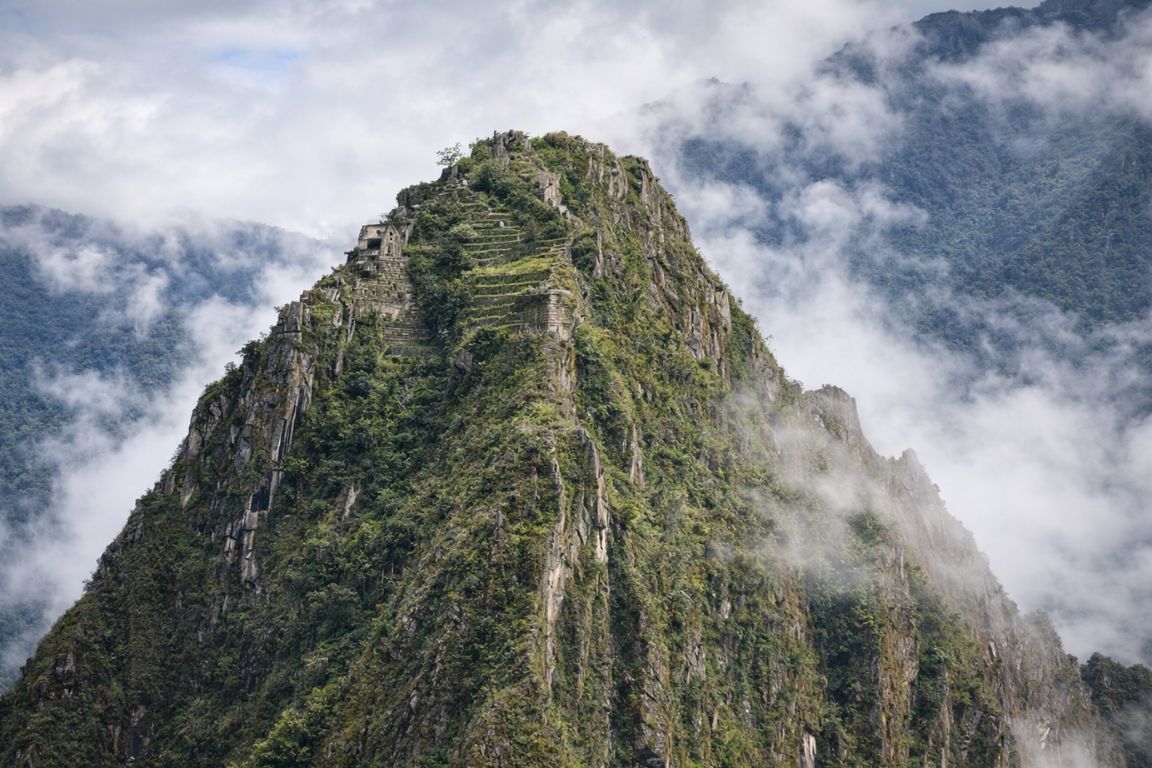
The most important feature in Machu Picchu footwear is grip on wet stone. The citadel’s paths are not hiking trails: they are ancient stone staircases, polished granite terraces, and narrow passages that become genuinely slippery when wet. Trail running shoes with aggressive tread are the right call for most citadel-only visitors. Full hiking boots are worth the weight if you are adding Huayna Picchu or Machu Picchu Mountain. Flat-soled sneakers, sandals, and dress shoes are bad ideas in any season.
Most articles say “wear hiking boots” without explaining what the actual surface at Machu Picchu looks like. This matters because the recommendation changes depending on what that surface is. If you are imagining dirt trail and loose rock, ankle support becomes the priority. If you are walking on 500-year-old stone steps that are permanently damp from cloud forest moisture, traction becomes the priority. Machu Picchu is overwhelmingly the second kind of terrain.
The paths inside the citadel are primarily flat or stepped stone, maintained but ancient. The steps are uneven in height and sometimes narrow. When it has rained, and in wet season that means most mornings, those surfaces have the same friction as polished tile. The danger is not rolling your ankle on loose ground. The danger is a slip on a wet stone step with nothing to grab. That distinction changes the footwear calculus considerably.
What actually works, based on what our guides wear and what we observe across thousands of visitor days at the site:
Trail running shoes with a proper lugged outsole are the sweet spot for the citadel. They are lighter than boots, dry faster if they get wet, and the modern Vibram-style soles on quality trail runners grip wet stone exceptionally well. Brands like Salomon, Merrell, and Hoka all make trail runners that perform well here. The key is the outsole pattern: deep, multidirectional lugs grip stone; flat road-running soles do not.
Waterproof hiking boots make sense if you are visiting in wet season, adding a mountain hike, or simply prefer the foot protection and do not mind the weight. The waterproofing matters more than the ankle height. A low-cut hiking shoe with Gore-Tex or equivalent membrane in the wet season is often better than a high-cut boot without it.
Whatever you bring, break it in before Peru. Blisters on Inca stone are a particular misery because you cannot stop. The circuit system means you are always moving forward. We have seen more trips partially ruined by brand-new boots than by any weather condition.
One honest note on sandals: some visitors do the citadel in Keen hiking sandals with no problems in dry season. It works. It is not ideal, especially if rain arrives. We mention it because multiple guides and experienced Peru travelers confirm it as viable, not to suggest it is the best option.
What Should You Wear for Rain at Machu Picchu?
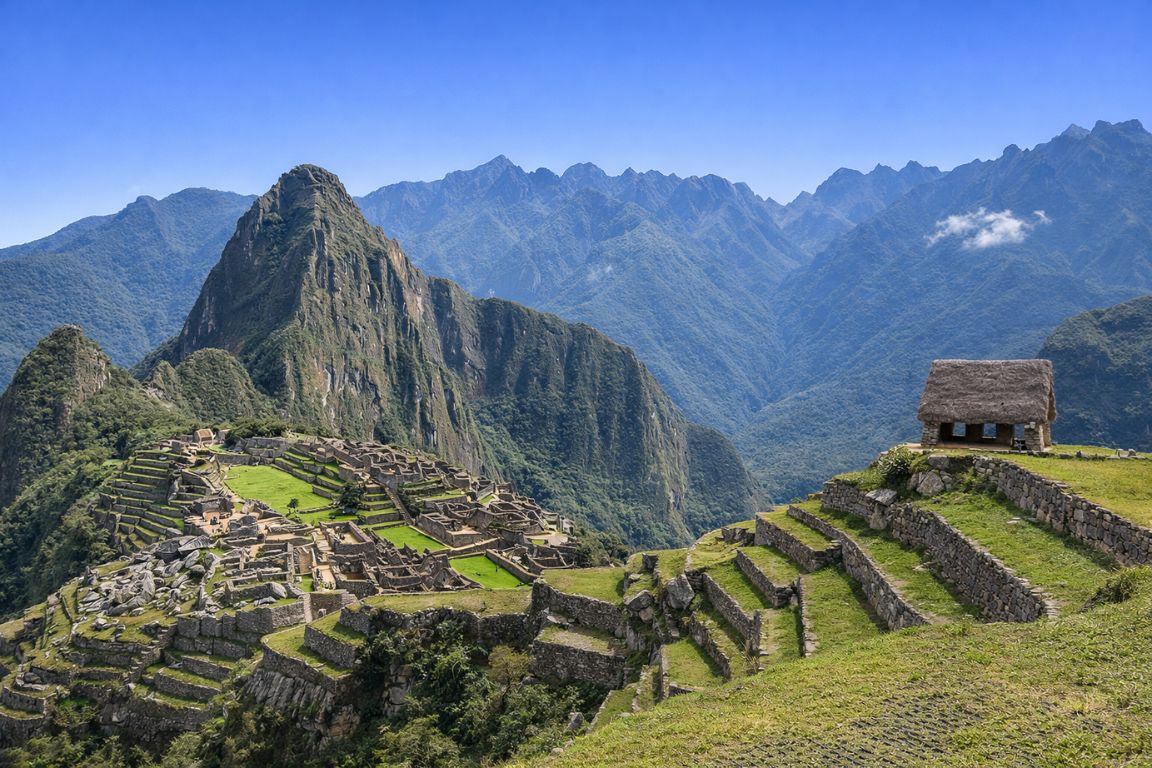
You need a waterproof outer layer at Machu Picchu in every season. Umbrellas are prohibited inside the site, so your only protection from rain is what you wear. In wet season (November to March), a proper waterproof jacket with hood plus lightweight waterproof pants is the right setup. In dry season (May to September), a compact packable rain jacket covers the occasional afternoon shower. A local poncho from Aguas Calientes works as a budget backup but not as a primary layer.
Rain at Machu Picchu does not announce itself. One of the distinctive patterns at this elevation, in cloud forest climate, is that weather transitions happen fast. You can be standing in sun at the Guardian’s House viewpoint and be in a heavy downpour 15 minutes later. The cloud cover rolls in from the Amazon basin direction and the change is visible if you watch for it, but there is rarely enough warning to make decisions about gear at that point. You wear it before you need it, or you do not have it when you do.
The umbrella prohibition is real and enforced. Rangers will ask you to collapse or remove umbrellas. The reasoning is that umbrellas become crowd-control problems on narrow paths and near viewpoints where large groups compress together. Ponchos and jackets solve the same problem without the span. The local ponchos sold in Aguas Calientes for a few soles are functional, cover a daypack worn on your front or back, and are disposable enough that you can leave them behind. They are not comfortable or breathable, and in warm humid conditions they trap heat. But they are better than nothing and they pack to almost nothing.
For anyone visiting in the shoulder months of April, October, or November, a true waterproof jacket is the most useful single item you can bring. Not water-resistant. Waterproof. The distinction matters when you are standing in steady rain for an hour on the agricultural terraces. A jacket that beads water for 20 minutes and then soaks through is not a rain jacket in any practical sense.
Rain pants are overkill for most citadel visits in dry season, genuinely useful in wet season for anyone doing more than two hours at the site. Quick-dry synthetic pants or zip-off convertibles are a reasonable compromise: they are not waterproof but they dry fast when wet, which matters when you sit down for lunch in Aguas Calientes afterward.
How Does the Season Affect What You Pack?
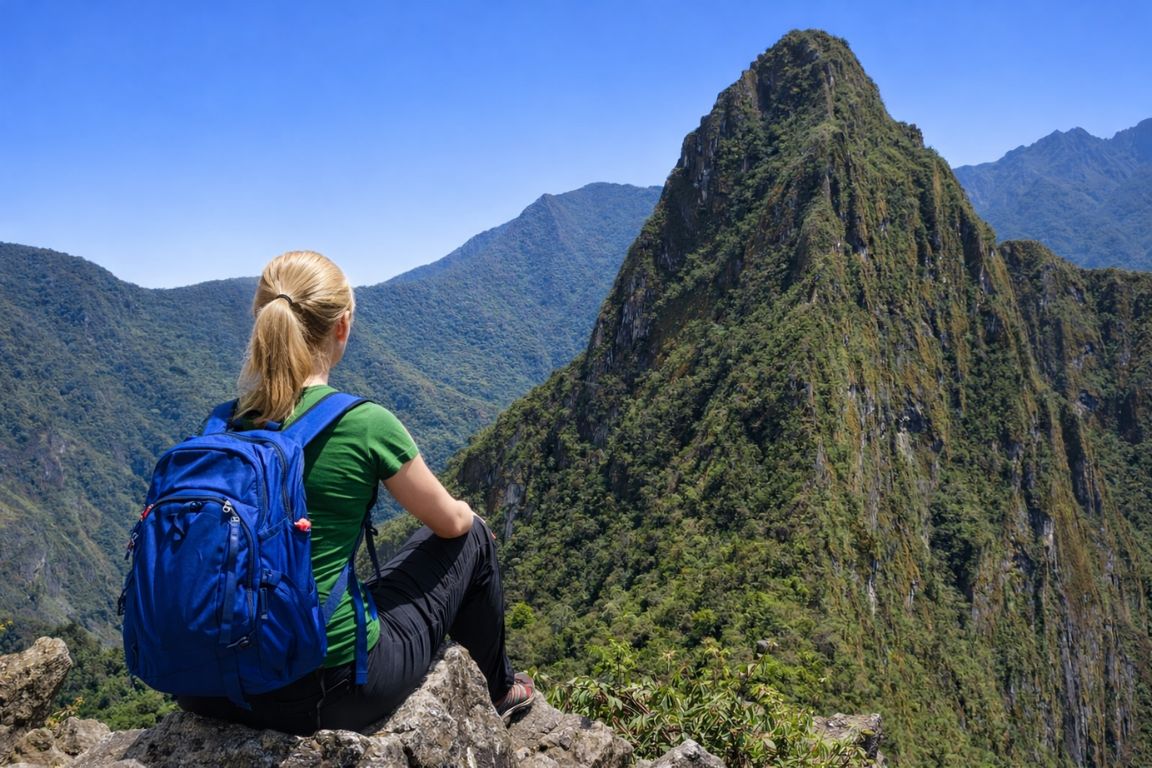
Dry season (May to September) visitors can dress lighter but still need a rain layer and warm morning layers. Wet season (November to March) visitors need full waterproof coverage and should expect slippery conditions. The shoulder months of April and October-November give you greener landscapes and fewer crowds but genuine unpredictability: morning sun and afternoon rain on the same day is common. No season completely eliminates rain risk at Machu Picchu.
The seasons at Machu Picchu are real and they matter, but the difference between them is smaller than most people expect. The site sits in a cloud forest. Even in July at the height of dry season, moisture is part of the environment. The terraces stay green, the stonework stays damp, and an afternoon shower is a genuine possibility. Dry season means significantly less rain and far more reliable clear mornings, not zero rain.
What actually changes by season is the priority order of your layers:
In dry season (May to September), your morning layers matter most. Clear dry-season mornings can feel cold at the 6 AM entry slot, especially in June and July when nights drop near freezing at this elevation. A fleece or lightweight down jacket over a moisture-wicking base layer is the right start. You will compress the insulating layer into your pack within an hour. Your rain protection is the backup layer you hope not to need but carry anyway.
In wet season (November to March), the rain layer becomes your most important piece of clothing. Waterproof jacket as the outer shell over whatever base you choose. Quick-dry fabric through every layer underneath. Cotton is genuinely problematic: it absorbs water, loses insulating value, and takes hours to dry. Synthetic base layers and midlayers that wick and dry quickly make a real difference when you are alternating between light drizzle and warm patches throughout the morning.
In shoulder months (April, late September to October), pack for both scenarios in the same bag. The conditions on those days are genuinely impossible to predict a week out. Mornings often start clear, afternoons often turn wet. If you leave the rain jacket in the hotel because the morning looked fine, you will get the afternoon rain. This is the one scenario where we tell travelers to slightly overpack: carry both the warm morning layer and the rain layer, because on shoulder days you may genuinely need both within a single visit.
Timing can make or break your experience up there. The best time to visit Machu Picchu guided tours depends on weather, fog levels, and how many other tourists you’re willing to share the ruins with.
| Dry Season (May-Sept) | Warm morning layers, sun hat, SPF 50, compact rain jacket, grip shoes | Rain pants (unless mountain hike), heavy insulation | Cold at 6 AM; UV is intense even on clear days; occasional afternoon shower |
| Wet Season (Nov-Mar) | Full waterproof jacket with hood, quick-dry layers (no cotton), grip shoes, waterproof poncho backup | Heavy down jacket (too humid), cotton anything | Wet stone is genuinely dangerous; heavy mist reduces visibility; afternoon downpours common |
| Shoulder (Apr, Oct-Nov) | Both morning layers AND full rain gear; carry both in daypack | Making assumptions about the weather based on the morning | Conditions can change twice in a single visit; you may genuinely need everything |
| Mountain Hike add-on (any season) | Waterproof boots (not trail runners), rain jacket, an extra warm layer, hiking poles if allowed | Cotton socks; new-out-of-box footwear | Machu Picchu Mountain reaches 3,082 m; temperature and rain exposure increase significantly above citadel |
What Are the Dress Code Rules and What Gets You Turned Away?
The official Machu Picchu dress code prohibits costumes, revealing clothing, and inappropriate attire at this UNESCO World Heritage Site. In practice, rangers enforce the rule against costumes most actively. Crop tops, short shorts, and beachwear are discouraged but rarely lead to expulsion unless extreme. The rule that does get enforced with consequences is the bag size limit: bags larger than 40 x 35 x 20 cm cannot enter the citadel at all.
The Ministry of Culture‘s code of conduct for Machu Picchu specifically lists “undressing” and “wearing costumes” as prohibited behaviors. The costume rule became stricter after several high-profile incidents, including people arriving in elaborate Inca-era reproductions and using the ruins as photography backdrops in ways that disrespected the site’s status as an active cultural heritage site. If you have seen photos of visitors in traditional attire at Machu Picchu, those were taken before the current rules tightened.
Wondering where the famous viewpoint actually is? Check out our guide on how to get the classic Machu Picchu photo – the circuit you book determines if you’ll even get there.
Modest dress is the standard phrasing used by the Ministry, and in practice this means clothing that would not be out of place at a national park or museum. Standard hiking clothes: pants, shorts of reasonable length, t-shirts, light layers. Nobody is measuring hemlines at the gate. But someone arriving in a bikini top would be asked to cover up, and someone in a full ceremonial costume would not be admitted.
What actually gets people held at the gate or sent to the cloakroom is the bag size. Rangers check dimensions at entry. If your daypack is oversized, you must check it before entering. The cloakroom at the entrance has limited space and charges a fee. It is not a disaster, but it adds time and stress to an already tightly timed visit. Better to use the right bag from the start.
Aerosol sunscreen is also technically prohibited inside the citadel. Use stick or lotion SPF instead. This is a practical detail most articles miss: aerosols fall under the aerosol prohibition that also covers spray paint. Bring a lotion sunscreen in your bag and apply before and at the entrance.
What Should You Wear If You’re Hiking Huayna Picchu or Machu Picchu Mountain?
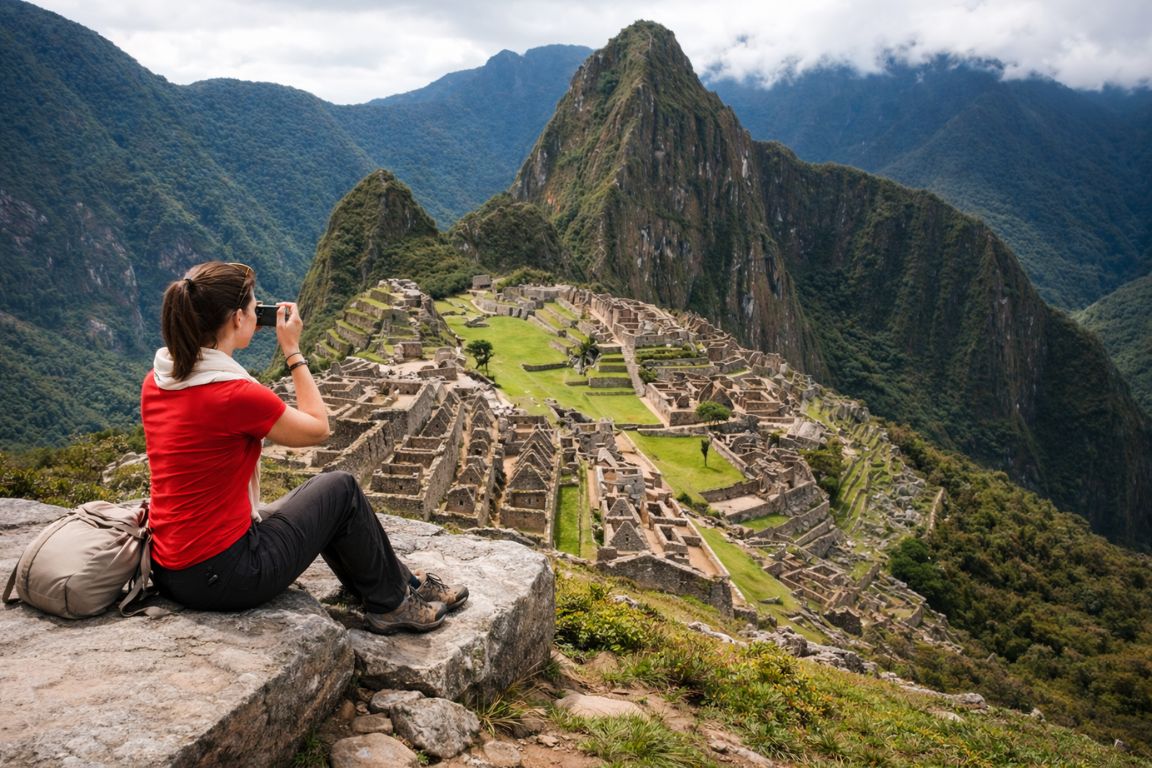
Huayna Picchu and Machu Picchu Mountain are different physical challenges from a citadel walk, and your clothing should reflect that. Waterproof hiking boots with aggressive tread are the correct choice for both hikes, not trail runners. An extra warm layer is needed for Machu Picchu Mountain specifically, which reaches 3,082 meters. Hiking poles are useful but check current permit rules, as regulations on poles have changed before.
Both mountain hikes involve terrain that is categorically different from the flat stone paths of the citadel. Huayna Picchu is steep and at points genuinely exposed, with cable-assisted sections on the most vertical passages. The trail is narrow and the stone faces can be wet and mossy. Machu Picchu Mountain is less technically demanding but longer, climbing 650 meters above the citadel over several kilometers of trail. At 3,082 meters the summit sits well above the citadel and noticeably colder.
For footwear on either hike, grip and waterproofing matter more than they do at the citadel. A trail runner with a lugged sole handles the citadel well on a dry morning. Huayna Picchu in the wet season, on that narrow mossy trail, is a different situation. Boots with real tread, a stiff midsole, and a waterproof membrane are the right equipment. We have seen visitors attempt Huayna Picchu in sandals. Rangers have intervened. It is not just uncomfortable, it is a safety issue on the technical sections.
The extra warm layer for Machu Picchu Mountain is worth taking seriously. At 3,082 meters you are approaching Cusco’s altitude in terms of cold exposure, and the hike takes 3 to 4 hours roundtrip with meaningful wind exposure at the top. A thin packable down or synthetic insulating jacket that fits in a jacket pocket is worth the minimal weight.
Socks deserve a mention here. Merino wool hiking socks prevent blisters better than cotton and manage moisture better than synthetic on multi-hour climbs. Bring two pairs so you can swap if one gets wet. It is a small thing that makes a real difference on a long hike.
Wondering if you should attempt it? Check out our guide on is hiking Huayna Picchu dangerous in Machu Picchu guided tours – the answer depends a lot on your fitness and fear of heights.
What Should You Leave at the Hotel?
Leave your full-size travel backpack, tripod, selfie stick, umbrella, aerosol sunscreen, and any clothing you do not specifically need for the 3 to 4 hours you will be inside. The 40 x 35 x 20 cm bag limit means this question is partly forced: what cannot fit goes in the hotel room. But beyond the rules, overpacking the bag you do bring is the more common problem. A heavy bag on steep Inca stairs for three hours is misery.
The typical visitor thinks about what to bring and does not think about what not to bring. The result is a daypack full of things that stay in the bag the entire visit while the back of the carrier aches. Here is what we see left in bags at the end of tours, unused:
Full-size first aid kits. A small kit is fine. Bring band-aids, blister care, and ibuprofen. Leave the multi-tool and the flare kit. Rain pants in dry season unless you are doing a mountain hike. The jacket handles citadel showers. Heavy camera equipment beyond your primary camera. Tripods and monopods are prohibited. A large gimbal rig weighs half a kilogram and serves no legal purpose inside the site. More than one lens, unless you are a professional photographer with a specific plan. Heavy water bottles. One 500ml reusable bottle is enough for the citadel circuit. Refilling options exist at the entrance. Multiple changes of clothes. You will not re-enter once out. One set of clothing goes in and comes out.
The bag that works at Machu Picchu is light enough that you forget you are carrying it after the first 20 minutes. The bag that does not work is the one where you spend the morning shifting weight from shoulder to shoulder and stop enjoying the site around hour two. Pack for what the day actually is: a 2 to 4 hour circuit walk at moderate altitude with variable weather. Not a two-day trek. Not a camping trip.
| Wrong shoes (flat soles, dress shoes, sandals in wet season) | ~20% | Slipping on wet stairs; reduced confidence on any incline; miserable last hour |
| No rain layer or only water-resistant (not waterproof) | ~30% in wet season | Soaked mid-visit with no way to dry off; cold and uncomfortable for hours |
| Bag too large for size limit | ~8% | Bag checked at entrance cloakroom; separated from gear for entire visit |
| No sun protection despite overcast day | ~25% | Sunburn at altitude hits harder and faster than at sea level; UV penetrates cloud cover |
| New footwear not broken in | ~12% | Blisters by hour two; painful completion of circuit; sometimes cannot finish mountain hike |
| Cotton base layers in wet season | ~15% | Wet cotton stays wet; cold discomfort amplifies over duration of visit |
| Overpacked daypack (more than needed for 3-4 hr circuit) | ~35% | Shoulder fatigue; reduced enjoyment second half of visit; slow on steep sections |
If you’re concerned about breathing at elevation, here’s the altitude at Machu Picchu guided tours explained so you can prepare properly and know what symptoms to watch for.
Frequently Asked Questions
Do I need hiking boots for Machu Picchu?
Not necessarily. For a standard citadel visit, trail running shoes with a good lugged outsole perform as well as hiking boots on Machu Picchu’s stone paths, and are lighter and faster-drying. Hiking boots become worth the weight if you are visiting in heavy wet season, adding a mountain hike, or have a history of ankle problems. The single requirement that cannot be compromised is grip: flat-soled sneakers, sandals, and dress shoes are unsafe on wet stone.
Can I bring an umbrella to Machu Picchu?
No. Umbrellas are officially prohibited inside the citadel under the Ministry of Culture’s code of conduct. Rangers enforce this rule. Your rain protection needs to be a poncho or a waterproof jacket with hood. Cheap local ponchos are available in Aguas Calientes for a few soles and work as a backup layer.
Is there a dress code at Machu Picchu?
Yes, though it is modest in scope. The official rules prohibit costumes and revealing clothing, and ask visitors to dress appropriately for a UNESCO World Heritage Site. Standard hiking clothing, shorts of normal length, t-shirts, and layers are all fine. Bikini tops, theatrical costumes, and beachwear are not. No specific colors or styles are required beyond basic modesty.
What bag size is allowed into Machu Picchu?
The maximum bag size is 40 x 35 x 20 cm, which corresponds to roughly a 20-liter daypack. Standard daypacks from Osprey, Deuter, and similar brands typically fit within these dimensions. Full-size travel backpacks do not. Oversized bags must be checked at the entrance cloakroom before you enter the site.
What should I wear to Machu Picchu in the rain?
A waterproof jacket with a hood and a packable poncho as backup are the right setup. Avoid water-resistant materials that soak through after 20 to 30 minutes of steady rain. Under the jacket, quick-dry synthetic layers work far better than cotton, which stays wet and cold. Grip footwear becomes especially important in rain: wet Inca stone is genuinely slippery.
What should I wear to Machu Picchu in the morning versus the afternoon?
Morning entry (6 to 8 AM) requires a warm layer, 7 to 13°C (45 to 55°F) is typical, plus your rain layer in the pack. By 10 AM you will usually strip to a single base layer. Afternoon entry (1 to 3 PM) is warmer but more likely to coincide with weather changes. The same layered approach works: carry the warm layer even if you do not expect to need it early.
Written by Diego Alejandro Ramirez
Peruvian tour guide since 2009 · Founder, Machu Picchu Guided Tours
Diego has guided over 1,600 travelers through Machu Picchu and the Sacred Valley since founding the agency.
Pack For The Experience You Book
Check your date before arranging the rest. We may earn commission through this booking link.