Lima To Cusco Overland: The Bus Route Most Travelers Take
Flying Lima to Cusco takes about 80 minutes. Some travelers spend two weeks doing the same trip by bus instead, through the desert, the coast, and two Andean cities most flights skip entirely. Here's what that route actually involves.
Cusco sits about 1,100 km from Lima by road. A direct flight covers it in roughly 80 minutes. Going overland means either a single 15 to 22-plus hour overnight bus with Cruz del Sur or Oltursa, or a multi-day hop-on hop-off route with Peru Hop that stops in Paracas, Huacachina, Nazca, Arequipa and Puno along the way. Neither bus option reaches Machu Picchu itself: Cusco is the end of the road, and the citadel is a separate train-and-bus leg from there.
Should You Fly Or Go Overland From Lima To Cusco?
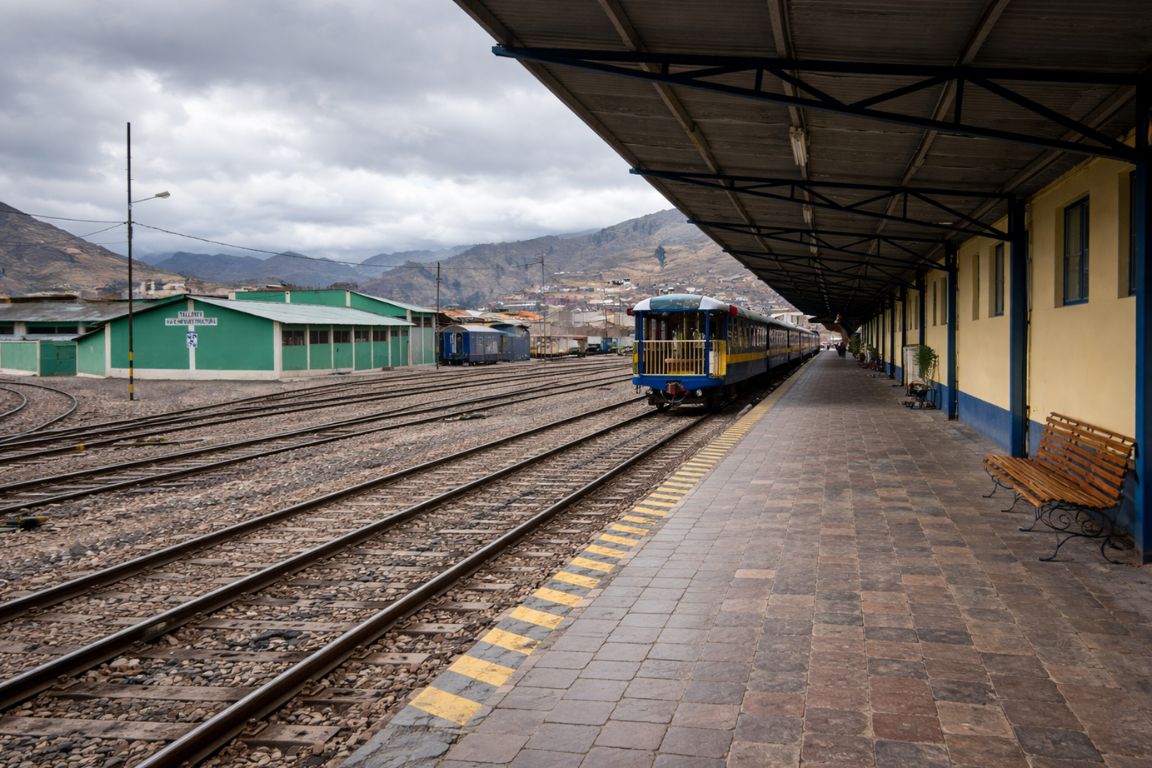
For most travelers with limited time, flying is the practical choice: Lima to Cusco (CUZ) is a roughly 1 hour 20 minute nonstop flight, run by LATAM, JetSMART and Sky Airline with dozens of daily departures between them. Going overland instead means committing anywhere from one long overnight bus ride to a two-week itinerary, depending on which option you pick and how many stops you make.
The honest case for flying is time. An 80-minute flight gets you into Cusco the same day you leave Lima, leaving more of the trip for the Sacred Valley and Machu Picchu itself. Most independent travelers on a fixed vacation schedule fly this leg and spend their bus budget, if they have one, on shorter regional trips instead.
The honest case for going overland is what a flight skips. Flying from sea-level Lima straight to Cusco at roughly 3,399 meters puts you at altitude within two hours of takeoff, which is exactly the kind of abrupt ascent that makes the first day or two in Cusco rough for a lot of visitors. It also skips Paracas, the Nazca Lines, colonial Arequipa and Lake Titicaca entirely, all of which sit along the road route and none of which are quick add-ons once you're committed to a Cusco-based itinerary.
The table below lines up the three realistic options: flying, a direct overnight bus, and Peru Hop's hop-on hop-off route.
Fly vs Direct Bus vs Peru Hop: How the Options Compare
| Option | Total Time | Stops Along the Way | Best For |
|---|---|---|---|
| Direct flight (LATAM, JetSMART, Sky) | ~1 hr 20 min | None | Fixed schedules, limited vacation days |
| Direct overnight bus (Cruz del Sur, Oltursa) | ~15–22+ hrs | None scheduled; a continuous route | Budget travelers who still want to skip the plane, no interest in stopping |
| Peru Hop hop-on hop-off pass | ~6 days minimum; 7–14 days typical with stops | Paracas, Huacachina, Nazca, Arequipa, Puno (Bolivia extension optional) | Travelers who want the coastal and highland stops as part of the trip, not just transport |
Flight and direct bus timings compiled from airline schedule data and Cruz del Sur/Oltursa route information current as of 2026. Actual fares and schedules vary by date and should be checked directly with the airline or bus company before booking.
Not sure whether Machu Picchu itself fits into a tight schedule either way? Our guide on how many days you need for Machu Picchu breaks down realistic day counts once you're in the Cusco region.
How Does Peru Hop's Lima To Cusco Route Work?
Peru Hop runs a hop-on hop-off bus network rather than a single point-to-point ticket. You buy a pass covering the southern route, choose your own pace, and get on and off at any of the scheduled stops between Lima and Cusco. Passes are valid for a year, and trip changes go through their app (up to 12 hours before departure) or WhatsApp.
The mechanics matter more than the marketing here. Every bus has hotel or hostel pickup and drop-off at each stop (Airbnbs use a nearby meeting point instead), so you're not managing separate taxis to a bus terminal with your luggage at either end. A bilingual English/Spanish host rides every bus, which is the detail that matters most for travelers who don't speak Spanish and would otherwise be navigating unfamiliar terminals and schedule changes on their own.
Peru Hop also builds in stops most direct routes skip: the Chincha slave tunnels at Hacienda San José, a viewing tower over the Nazca Lines, and a Pisco vineyard visit are included on the way through, not sold separately. Whether that matters to you depends on how much you want the journey itself to be part of the trip rather than just transport.
On safety, the operational details are: mostly daytime legs rather than all-night driving on every segment, GPS-tracked buses with enforced speed limits, and two drivers assigned on the longer legs. Door-to-door pickup also means less time standing around a bus terminal with bags, which is a real, if unglamorous, safety difference for solo travelers.
How long the full trip takes depends entirely on your pace, since the pass is flexible. Riding straight through with minimal stopping can be done in around 6 days. Travelers who spend a night or two at most stops typically take 7 to 14 days for the whole southern route into Cusco, and 10 to 12 days is a commonly reported comfortable pace for seeing everything without rushing.
Worth knowing before you book: the ticket itself costs more than a bare Cruz del Sur or Oltursa seat for the same route. Once you add the taxis to and from terminals and the separate day tours you'd otherwise book on your own at each stop, budget travelers often find the totals land closer together than the sticker prices suggest. Some legs are genuinely long, Nazca to Arequipa in particular, and a few later segments run in the evening. If you want the single cheapest seat and no stops, this isn't that option; if you want the stops handled for you, it's built for exactly that.
The Direct Bus: Cruz del Sur And Other Overnight Options
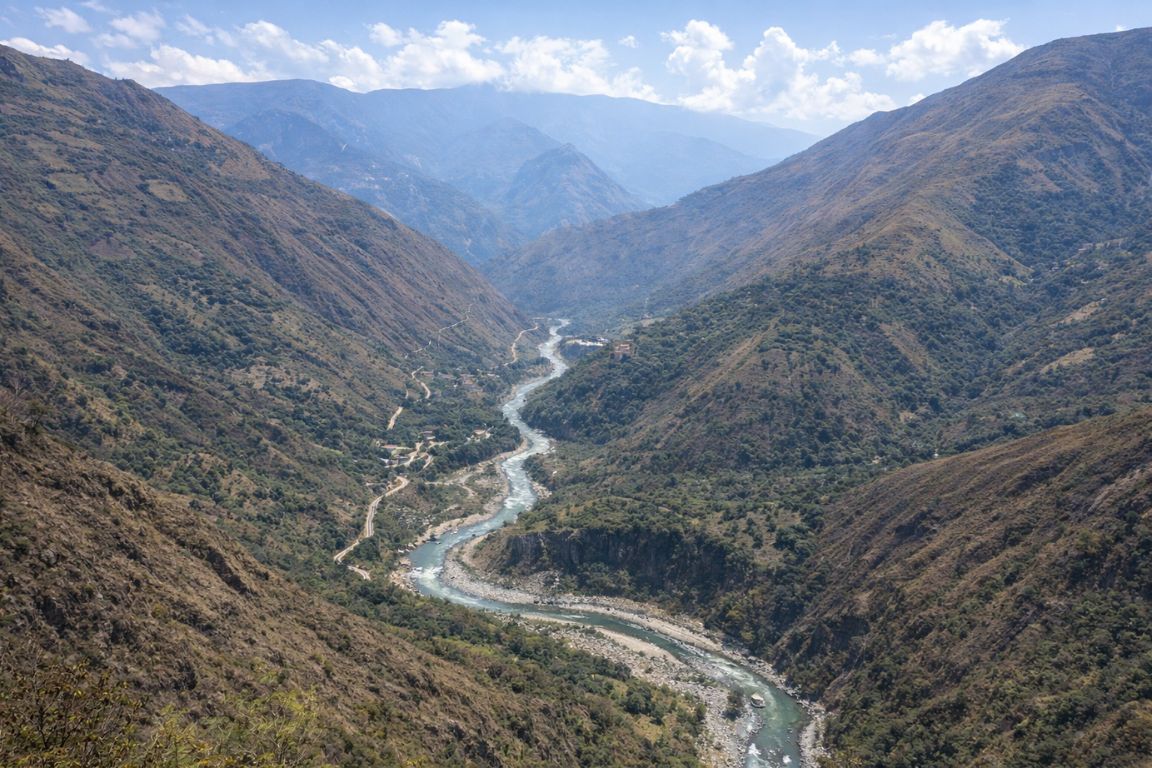
Cruz del Sur and Oltursa both run a direct Lima-Cusco service without the multi-day stopping pattern. It's the option for travelers who want to skip flying but don't want a week-plus itinerary: one continuous overnight (or nearly two-day) trip, typically 15 to 22-plus hours depending on route and class, for a one-way fare generally in the $28 to $70-plus range.
The road distance is around 1,097 km, and driving conditions through the Andes push the realistic total time well past what the straight-line distance suggests. Both companies sell tiered seating, with cama (reclining, bed-like) seats the standard choice for the overnight portion. Higher tiers add more recline and better service; the base economy tier is the cheapest way to do the route without stopping, but it's a long single sitting either way.
This is a genuinely different trip from Peru Hop's version of the same route. You board once, in Lima, and get off once, in Cusco. There's no built-in stop in Paracas or Arequipa, no hotel pickup at intermediate points, and no bilingual host riding along, just a single ticket and a long ride. For travelers who've already seen the coast and highlands, or who simply want to get to Cusco without turning the journey into a trip in itself, it's a reasonable and considerably cheaper way to avoid flying.
Direct Overnight Bus: What the Fare Tiers Actually Buy You
| Service Tier | Approx. One-Way Fare | What Changes |
|---|---|---|
| Economy / semi-cama | ~$28–40 | Reclining seat, standard legroom, no meal service guaranteed |
| Cama | ~$40–55 | Deeper recline, more legroom, better suited to the overnight stretch |
| VIP / premium cama | ~$55–70+ | Widest recline, priority boarding, onboard service; priced closer to a discounted flight |
Fares compiled from Cruz del Sur, Oltursa and third-party fare-comparison data current as of 2026. Prices fluctuate with date and demand; check the operator's own site before booking.
Planning the budget side of the whole trip, not just this leg? Our guide on visiting Machu Picchu on a budget covers the Cusco-to-citadel costs this page doesn't.
Stop By Stop: Paracas, Huacachina, Nazca, Arequipa, Puno
The five main stops on the southern overland route, in order: Paracas (Ballestas Islands boat trips, a desert reserve), Huacachina (a desert oasis town built around sandboarding and dune buggies), Nazca (the Nazca Lines, best seen from a viewing tower or a small overflight), Arequipa (Peru's second city, colonial white volcanic-stone architecture, roughly 2,335 meters), and Puno (on Lake Titicaca, roughly 3,827 meters, the highest point on the route before Cusco).
Paracas is the first real stop south of Lima, a coastal town used as the base for boat trips out to the Ballestas Islands to see sea lions, Humboldt penguins and seabird colonies, plus the adjacent Paracas National Reserve, a stretch of desert coastline. It's a half-day to a full day depending on how much of the reserve you want to see.
Huacachina is a small oasis town built around a natural lagoon surrounded by towering sand dunes, a short detour from the nearby city of Ica. Sandboarding and dune-buggy rides are the reason travelers stop here; it's a compact, self-contained stop that most itineraries treat as an overnight rather than a quick pass-through.
Nazca is where the Nazca Lines sit, the enormous geoglyphs etched into the desert floor that are difficult to make sense of from ground level. A viewing tower gives a partial view included on most overland itineraries; a small aircraft overflight (booked separately) is the only way to see the full figures from above.
Arequipa, Peru's second-largest city, sits at roughly 2,335 meters, built largely from white volcanic sillar stone that gives the historic center its name, the White City. It's a genuine city stop, not just a transit point: colonial architecture, a real restaurant scene, and the Colca Canyon within reach for travelers with an extra day or two.
Puno sits on the shore of Lake Titicaca at roughly 3,827 meters, higher than Cusco itself. The floating Uros Islands, built from reeds, are the main draw, along with the lake crossing toward the Bolivia border at Copacabana for travelers extending the route. Puno's altitude is worth taking seriously in its own right, not just as a step toward Cusco; see the next section.
Elevation Along the Route: Lima to Cusco
| Stop | Approx. Elevation | Note |
|---|---|---|
| Lima | ~154 m / 505 ft | Near sea level |
| Paracas | Near sea level | Coastal |
| Huacachina | ~400 m / 1,300 ft | Desert oasis |
| Nazca | ~590 m / 1,935 ft | Desert plateau |
| Arequipa | ~2,335 m / 7,661 ft | First real altitude step |
| Puno | ~3,827 m / 12,556 ft | Highest point on the route, above Cusco |
| Cusco | ~3,399 m / 11,152 ft | End of the Peru Hop route |
Elevation figures compiled from mapping and travel-reference sources current as of 2026; individual sources vary by 10–20 meters depending on the exact point measured within each city.
Does Going Overland Help With Altitude?
It can help, in general terms, but it isn't a guarantee and it isn't a medical strategy. Flying directly from sea-level Lima to Cusco at 3,399 meters is the kind of abrupt ascent that altitude guidance generally advises against. The overland route spreads that gain across several days and two intermediate cities instead, which gives your body more time to adjust than a two-hour flight does.
We've written in more detail about the mechanics of acclimatization in our altitude at Machu Picchu guide, including the general guidance many travel medicine sources cite: avoid ascending to a sleeping elevation above roughly 2,750 meters in a single day from low altitude, and limit further sleeping-elevation gains to around 500 meters per night once above 3,000 meters. Flying straight into Cusco skips past both of those thresholds in one flight. The overland route through Arequipa (2,335 m) gives you a stop below that first threshold, and Puno (3,827 m) is itself well above Cusco's elevation.
That last point is worth being honest about: Puno is higher than Cusco, not a gentle halfway step. Some travelers find Puno the hardest part of the route precisely because of this, not the easiest. The overland route's real advantage isn't a smooth staircase up to exactly Cusco's altitude, it's simply more days at progressively higher elevation before you arrive, rather than none at all.
None of this replaces the basic advice for Cusco itself: rest on arrival, avoid alcohol for the first day or two, drink more water than feels necessary, and don't schedule a strenuous hike the day you get in, whether you arrived by plane or by bus. This isn't a medical claim, and going overland doesn't remove the need to acclimatize properly once you're actually in Cusco. It just changes how abruptly you got there.
From Cusco To Machu Picchu: The Last Leg
Neither Peru Hop nor the direct overnight bus goes anywhere near Machu Picchu. Cusco is the end of the road, literally: there is no road to Aguas Calientes, the town at the base of the citadel, and every visitor reaches it by train, on foot via the Inca Trail, or a combination of transport and walking through the Hidroeléctrica route.
Once you're in Cusco, the standard route to the citadel is: taxi or shared shuttle to Ollantaytambo in the Sacred Valley (1.5 to 2 hours by road), then a train to Aguas Calientes (about 1.5 hours from Ollantaytambo, longer from Cusco directly), then a Consettur shuttle bus up to the site entrance (25 to 30 minutes). We've laid out every part of that route, including the budget Hidroeléctrica alternative and the Inca Trail, in how to get to Machu Picchu from Cusco.
If you'd rather not plan the train, entry ticket and bus timing separately after a long overland trip, the 2-day Sacred Valley and train tour books those pieces together, with an overnight in Aguas Calientes and a guided citadel visit. A full-day trip from Cusco is the faster version if you're tight on time after the trip up from Lima.
Recommended Tours From Cusco
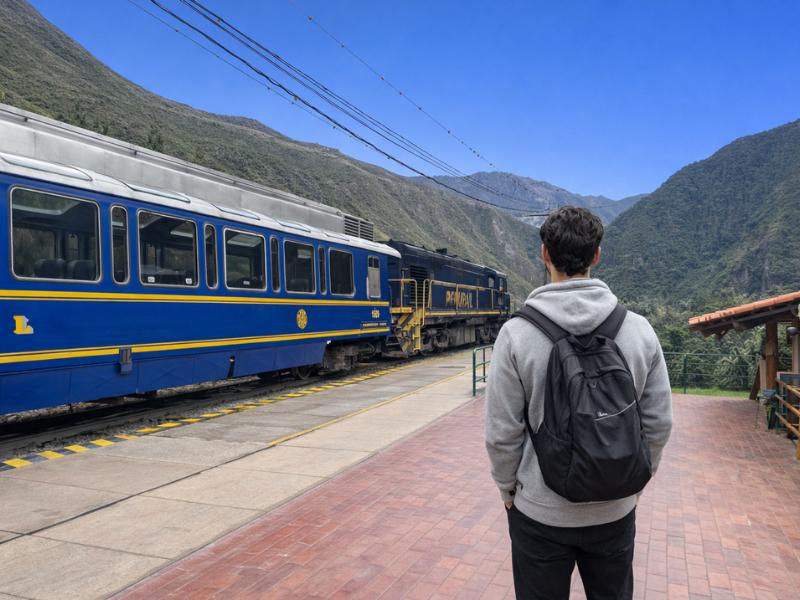
Machu Picchu Day Trip from Cusco – Panoramic Train & Guided Ruins
Panoramic train from Cusco, shuttle bus, and a guided visit to the citadel. About 15 hours door to door.
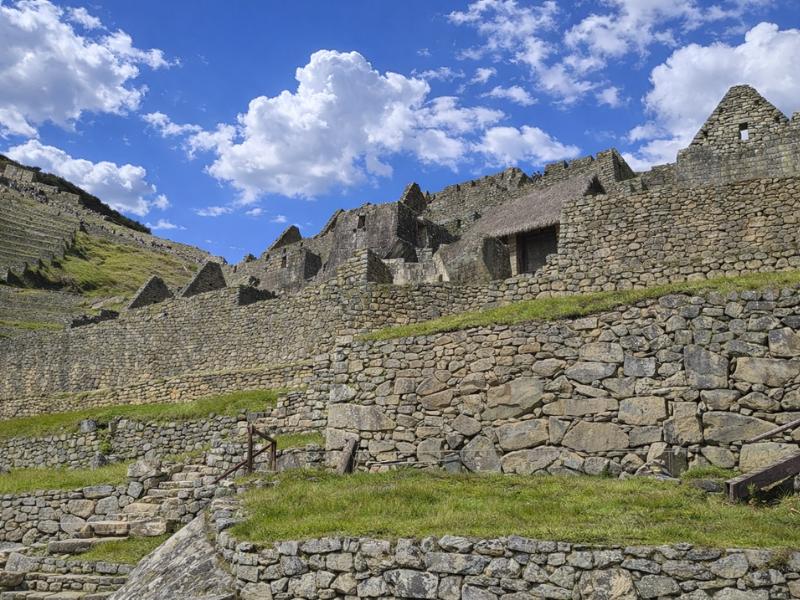
Cusco to Machu Picchu: 2-Day Tour with Sacred Valley & Train
Sacred Valley stops on day one, overnight in Aguas Calientes, guided citadel visit on day two. Train and bus included.
FAQ
Does Peru Hop Go All the Way to Machu Picchu?
No. Peru Hop's southern route ends in Cusco. Machu Picchu itself is reached separately, by train from Cusco or Ollantaytambo to Aguas Calientes and then a shuttle bus, or on foot via the Inca Trail. There is no road to the citadel.
Is the Overland Route Cheaper Than Flying?
Not necessarily once you add hotel nights along the way. A direct Lima-Cusco flight runs about 1 hour 20 minutes and a one-way economy fare is often close to a direct overnight bus fare. The overland route costs more in total time and accommodation, and it buys you the coastal and highland stops a flight skips entirely, not a lower bill.
How Long Does the Full Peru Hop Route From Lima to Cusco Take?
It depends on how long you stay at each stop, since the pass is hop-on hop-off. Travelers spending a night or two at most stops typically take 7 to 14 days for the full southern route to Cusco, with around 10 to 12 days being a commonly reported comfortable pace. Riding straight through with minimal stops can be done in about 6 days.
Do You Need a Visa or Special Documents for the Bolivia Extension?
Travelers from the US, UK, EU, Canada and Australia generally enter Bolivia visa-free for tourism, though requirements change and should be confirmed before travel. A valid passport and Bolivia's free online SIGEMIG pre-registration are standard for the Copacabana and Lake Titicaca crossing. This only applies if you extend past Puno into Bolivia; it isn't needed for the Lima-to-Cusco route itself.
Is a Direct Overnight Bus a Reasonable Alternative to Peru Hop?
Yes, for travelers who just want to get to Cusco without stopping. Cruz del Sur and Oltursa both run direct Lima-Cusco services, typically 15 to 22-plus hours depending on the route and class, with cama (reclining) seats for the overnight legs. It skips the coastal and highland stops but gets you to Cusco in one continuous trip rather than a multi-day itinerary.
Written by Diego Alejandro Ramirez
Peruvian tour guide since 2009 · Founder, Machu Picchu Guided Tours
Diego has guided over 1,600 travelers through Machu Picchu and the Sacred Valley since founding the agency. This page covers the journey before Cusco; the guided tours themselves start once you're in the Sacred Valley.